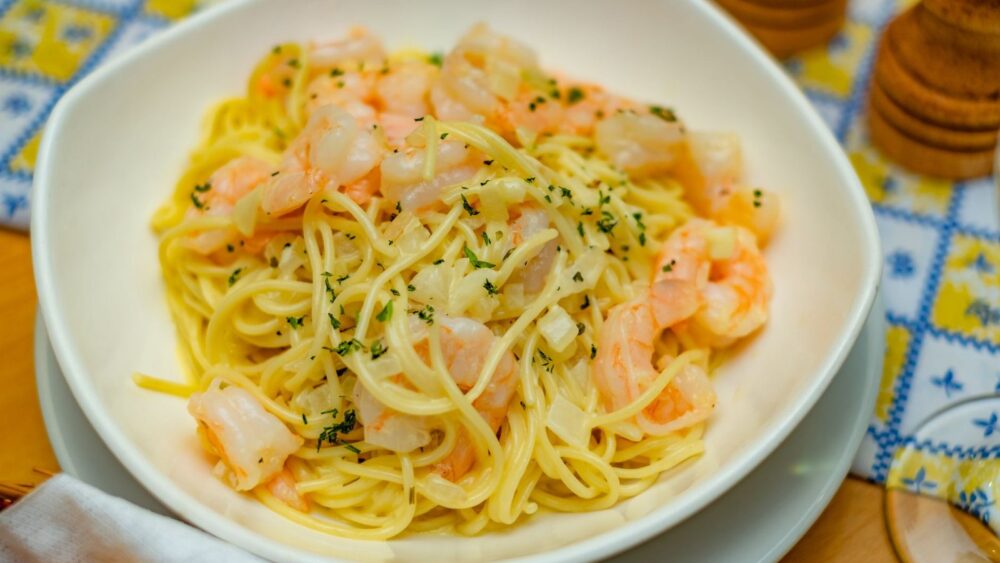
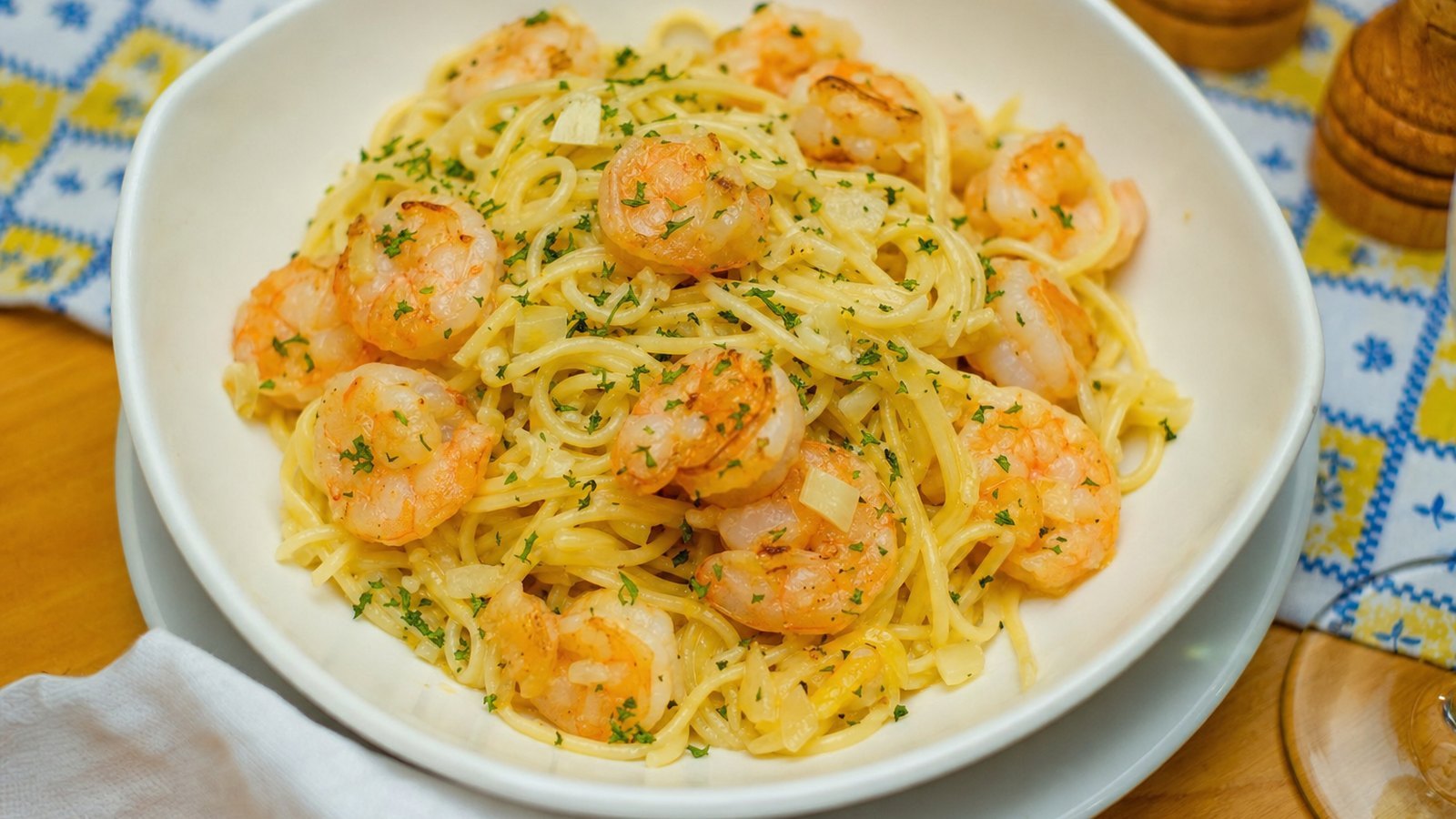
Garlic butter shrimp pasta is proof that a great dinner does not need a long ingredient list. Plump shrimp, a generous amount of garlic, real butter, a splash of white wine and a squeeze of lemon come together over linguine in about 35 minutes.
The sauce is light but clings to every strand, thanks to a little starchy pasta water whisked into the butter. It tastes like something from a seaside restaurant, yet everything comes from a regular grocery run.
The shrimp cook in two minutes, so the whole meal moves fast once the water boils. Have everything chopped and measured before you start.
Why this recipe works
- Shrimp cooked hot and fast. A quick sear in a hot pan gives the shrimp color and snap. Two minutes per side is all they need before they turn rubbery.
- Garlic cooked gently. The garlic goes into the pan after the shrimp come out and cooks over medium heat, so it turns sweet and golden instead of bitter.
- Wine and lemon for brightness. Butter alone is heavy. Acid from white wine and fresh lemon makes the sauce taste clean and lively.
- Pasta water to bind. The starch in the reserved cooking water helps the butter emulsify into a glossy sauce rather than pooling as grease.
- Butter added in two stages. Some butter cooks with the garlic for flavor, and cold butter is swirled in at the end for a silky finish.
Ingredients you’ll need
Full amounts are in the recipe card. Here is what matters about the main ingredients.
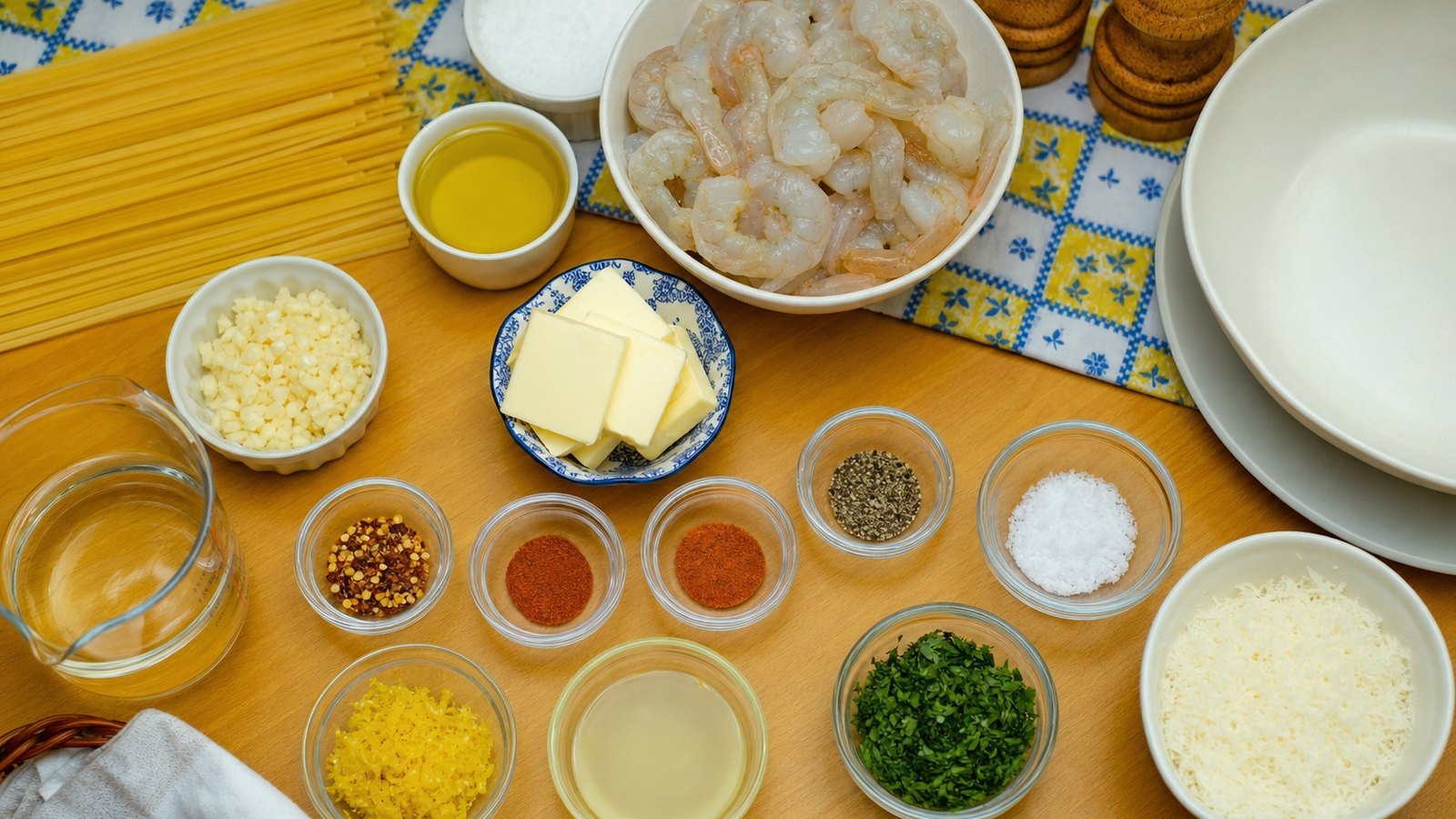
- Shrimp. One pound of large shrimp, about 21 to 25 per pound, peeled and deveined. Tails on or off is your call.
- Linguine. Twelve ounces. Its flat, narrow shape carries a light butter sauce well.
- Butter. Six tablespoons of unsalted butter, divided. It is the heart of the sauce, so use a brand you like.
- Garlic. Five cloves, thinly sliced or minced. This is a garlic forward dish, so do not hold back.
- Dry white wine. A half cup of something crisp like Pinot Grigio or Sauvignon Blanc. Chicken broth works as a substitute.
- Lemon. One lemon for both zest and juice. The zest adds aroma and the juice adds brightness.
- Red pepper flakes and parsley. A pinch of heat and a handful of fresh green at the end.
- Parmesan. Optional but good. A light sprinkle adds savory depth without turning this into a cream sauce.
Ingredient notes and smart substitutions
Shrimp
Large shrimp labeled 21 to 25 count are ideal because they stay juicy during a quick sear. Jumbo shrimp at 16 to 20 count work too and need about 30 seconds longer per side. Medium shrimp cook in barely a minute per side.
Frozen raw shrimp are often fresher than the thawed ones at the counter. Thaw them overnight in the refrigerator or in a bowl of cold water for 15 to 20 minutes, then pat very dry.
Avoid precooked shrimp if you can. If it is what you have, skip the sear and toss them into the sauce at the very end just to warm through.
Pasta
Linguine, spaghetti, angel hair and fettuccine all swap one to one. Angel hair cooks in about 3 minutes, so start the shrimp before the pasta goes in. Short shapes like penne work but hold less sauce.
Butter
Unsalted butter lets you control the seasoning. If you use salted butter, cut the added salt in half. For a dairy free version, use a good olive oil for the cooking fat and finish with 2 tablespoons of a plant based butter.
Wine
Any dry white wine works. Swap in an equal amount of chicken or vegetable broth plus an extra teaspoon of lemon juice to replace the acidity.
Lemon
Fresh lemon only. Bottled juice tastes flat here. One medium lemon gives about 2 tablespoons of juice and 1 teaspoon of zest, which is the right amount for this recipe.
Parsley
Flat leaf parsley is standard. Fresh basil or a mix of parsley and chives also work. Dried herbs do not have the same fresh lift, so if you have none, skip them and add extra lemon zest.
How to make it
1. Boil the pasta
Bring a large pot of water to a boil with 1 tablespoon of salt. Cook the linguine until just shy of al dente, about 1 minute less than the package says. Reserve 1 cup of pasta water before draining.
2. Dry and season the shrimp
While the water heats, pat the shrimp completely dry with paper towels. Toss with salt, pepper and a little paprika for color. Dry shrimp sear. Wet shrimp steam and turn pale.
3. Sear the shrimp
Heat the olive oil and 1 tablespoon of the butter in a large skillet over medium high heat. Add the shrimp in a single layer and cook 1 1/2 to 2 minutes per side, until pink, opaque and curled into a loose C shape. Transfer to a plate.
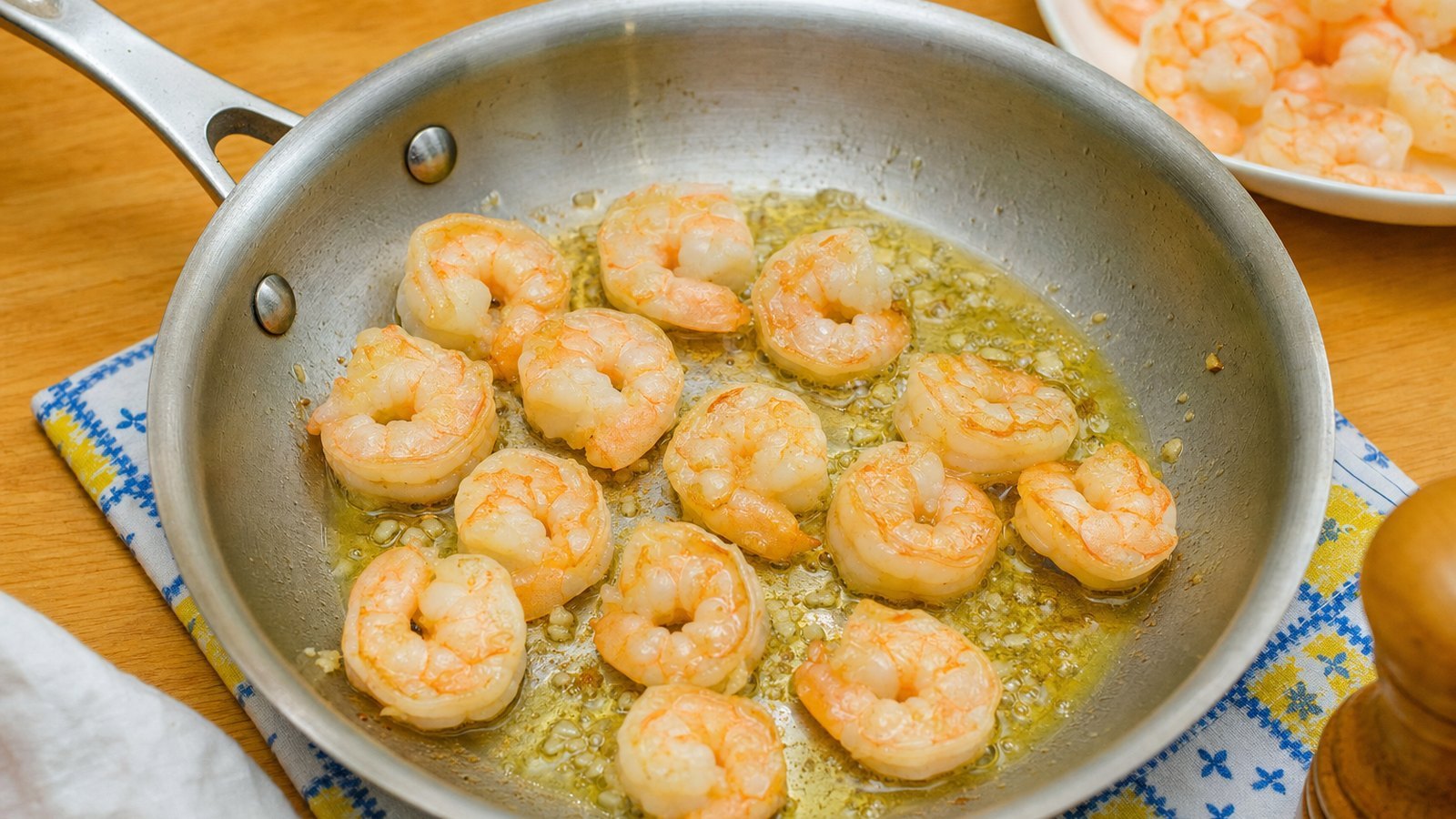
Cook in two batches if your skillet is smaller than 12 inches. Crowding drops the pan temperature.
4. Cook the garlic
Reduce the heat to medium. Add 2 tablespoons of butter, the garlic and the red pepper flakes. Cook, stirring, for 1 to 2 minutes until the garlic is fragrant and just golden at the edges. Do not let it brown darkly.
5. Deglaze and reduce
Pour in the wine and scrape the bottom of the pan. Let it bubble for 2 to 3 minutes until reduced by about half. Add the lemon zest and juice.
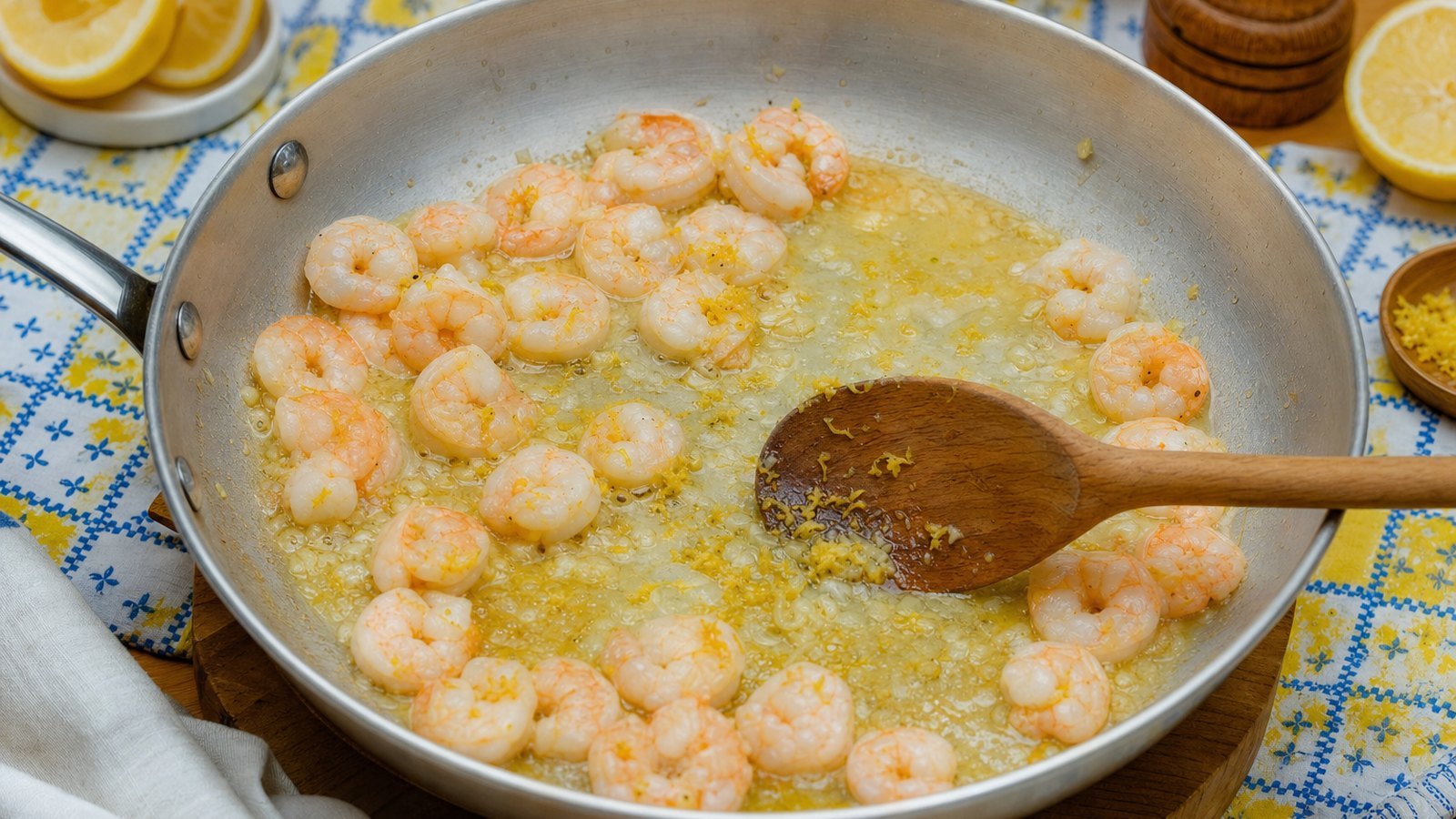
6. Build the sauce
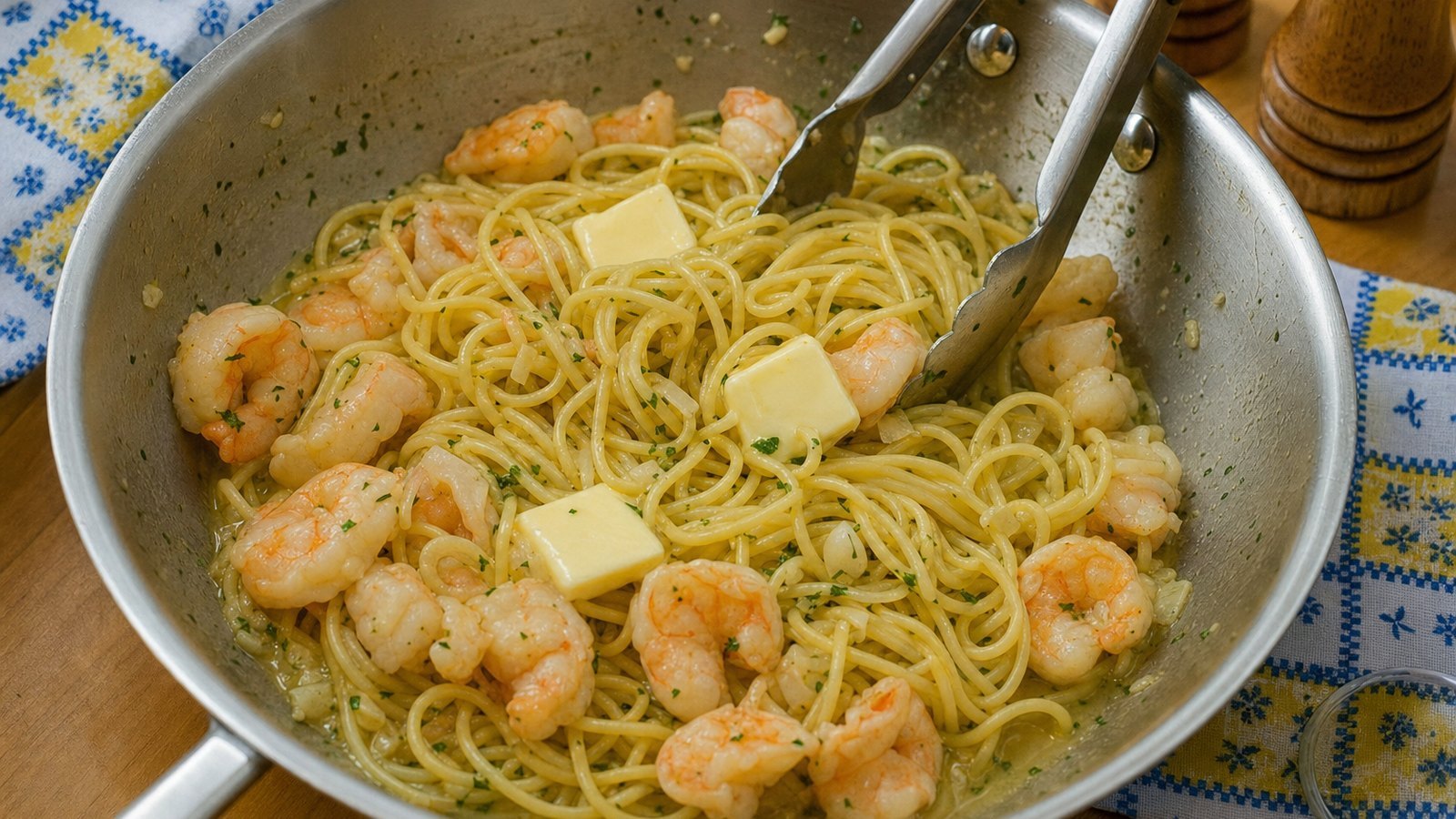
Add the drained pasta and 1/2 cup of the reserved pasta water. Toss over medium heat for 1 minute. Add the remaining 3 tablespoons of cold butter a piece at a time, tossing constantly, until the sauce turns glossy and coats the noodles.
7. Finish and serve
Return the shrimp to the pan along with the parsley and toss for 30 seconds to warm through. Season with salt and pepper, add Parmesan if using, and serve immediately with lemon wedges.
Common mistakes and how to fix them
Rubbery shrimp. They cooked too long. Pull them as soon as they are opaque and curled into a C. A tight O shape means they are overdone.
Bitter garlic. The pan was too hot. Lower the heat before the garlic goes in and stir constantly. Slices burn more slowly than minced garlic, so slice if you tend to walk away.
Greasy, separated sauce. Not enough pasta water or the butter was added too fast. Add a splash more pasta water and toss vigorously. The starch pulls the butter back together.
Dry pasta. The sauce tightened while it sat. Loosen it with more reserved pasta water, a tablespoon at a time.
Watery shrimp that will not brown. They were not dried well or were still partly frozen. Pat them dry and let them sit on paper towels for 5 minutes before seasoning.
Timing and make ahead plan
This dinner takes about 35 minutes. Around 15 minutes go to prep, including thawing and drying the shrimp, and 20 to cooking, with the pasta boiling while you sear.
The dish is best served right away, but you can get most of the prep done ahead. Peel and devein the shrimp, slice the garlic, zest and juice the lemon and chop the parsley up to a day in advance. Keep everything covered in the refrigerator.
If you want to serve it for guests, boil the pasta an hour early, toss it with a little olive oil and hold it at room temperature. Reheat it in the sauce with extra pasta water at the end.
Frozen shrimp can move from freezer to refrigerator the night before so they are ready when you get home.
Tips for the best garlic butter shrimp pasta
Buy shrimp by count, not by vague size words. The count per pound tells you exactly how big they are and how long they will take to cook.
Salt the pasta water well. With so few ingredients, underseasoned pasta stands out.
Keep the last 3 tablespoons of butter cold. Swirling cold butter into the hot pan creates a smoother, glossier sauce than melted butter would.
Taste before adding Parmesan. The cheese adds salt, so season the pasta first and adjust after.
Serve on warm plates. A light butter sauce cools and tightens quickly on a cold plate.
Have every ingredient measured and within reach before the shrimp hit the pan. This recipe moves quickly at the end, and the difference between perfect and overcooked shrimp is about a minute.
Leave the tails on if you want the dish to look restaurant style, and remove them if you want it easy to eat with a fork. Tails do add a little flavor to the pan while the shrimp sear.
Slice the garlic rather than mincing it if you like distinct golden chips of garlic in the finished pasta. Minced garlic melts into the sauce and gives a stronger, more even flavor.
Variations
Creamy garlic shrimp pasta. Stir in 1/2 cup heavy cream after the wine reduces and simmer 2 minutes before adding the pasta. For a fully creamy alternative, the chicken Alfredo uses the same skillet method.
Tomato and spinach shrimp pasta. Add 1 cup halved cherry tomatoes with the garlic and 2 cups baby spinach with the pasta.
Cajun shrimp pasta. Season the shrimp with 2 teaspoons of Cajun seasoning instead of salt and paprika and skip the red pepper flakes.
Shrimp scampi style. Double the wine, add an extra tablespoon of lemon juice and serve over angel hair.
Extra vegetables. Toss in 2 cups of asparagus pieces or broccoli florets with the pasta for the last 3 minutes of boiling.
Equipment that makes this easier
A 12 inch skillet is important. It gives a full pound of shrimp room to sear in one layer and later holds all the pasta for tossing. Stainless steel shows you the color of the garlic clearly.
A microplane zests the lemon in seconds without hitting the bitter white pith. Tongs make tossing long pasta easy.
A large pot of at least 6 quarts keeps the pasta from clumping. Paper towels for drying the shrimp are not optional.
Scaling up or down
For two, halve everything and use a 10 inch skillet. The cooking times stay the same since the shrimp still cook in a single layer.
To feed six or eight, double the ingredients and sear the shrimp in three or four batches. Use a wide Dutch oven to toss the pasta, since 24 oz of linguine will not fit in a skillet.
When doubling, reduce the wine a minute longer and add the pasta water gradually. A large batch needs proportionally less liquid.
What to serve with it
Keep the sides fresh and simple. An arugula salad with shaved Parmesan and lemon, or a plate of roasted asparagus, matches the bright flavors of the pasta.
Warm crusty bread is essential for the garlic butter left on the plate. A bowl of creamy tomato soup makes a lovely starter on a cool evening.
For a heartier meal, a small portion of Tuscan white bean soup with kale alongside adds greens and fiber. Any of these fall side dishes also work well.
How to store, freeze and reheat
Refrigerator. Store leftovers in an airtight container for up to 2 days. Shrimp do not keep as long as other proteins.
Freezer. Not recommended. Cooked shrimp turn rubbery after freezing and the butter sauce separates.
Reheating. Warm gently in a skillet over medium low heat with a splash of water or broth, tossing until the pasta is hot and the shrimp are just warmed through, about 3 to 4 minutes. Avoid the microwave if you can, since it overcooks the shrimp quickly. If you must, use 50 percent power in short bursts and heat only until steaming.
Leftover ideas
Chop leftover shrimp and pasta and toss with arugula, cherry tomatoes and a little extra lemon for a cold pasta salad.
Warm a small portion and pile it onto toasted garlic bread for an open faced shrimp toast.
Pull the shrimp out, warm them briefly and fold them into scrambled eggs with chives.
Nutrition notes
One serving, about a quarter of the recipe, comes to roughly 550 to 650 calories, with 30 to 35 grams of protein and 20 to 28 grams of fat. That varies with the size of the shrimp, how much butter you use and whether you add Parmesan.
To lighten it, reduce the butter to 4 tablespoons and increase the pasta water, or swap half the pasta for spiralized zucchini added with the shrimp at the end.
Garlic Butter Shrimp Pasta
Seared shrimp tossed with linguine in a light, glossy sauce of butter, garlic, white wine and lemon.
Equipment
- Large pot
- 12 inch skillet
- Microplane or zester
- Tongs
Ingredients
- 12 oz linguine
- 1 tbsp salt for the pasta water
- 1 lb large raw shrimp (21 to 25 count), peeled and deveined, patted dry
- 1/2 tsp kosher salt
- 1/4 tsp black pepper
- 1/2 tsp paprika
- 1 tbsp olive oil
- 6 tbsp unsalted butter, divided (3 tbsp kept cold)
- 5 cloves garlic, thinly sliced or minced
- 1/4 tsp red pepper flakes
- 1/2 cup dry white wine or chicken broth
- 1 tsp lemon zest plus 2 tbsp fresh lemon juice (about 1 lemon)
- 1/4 cup chopped fresh parsley
- 1/3 cup grated Parmesan cheese, optional
- Lemon wedges for serving
Instructions
- Bring a large pot of water to a boil with 1 tbsp salt. Cook the linguine 1 minute less than the package directs. Reserve 1 cup pasta water, then drain.
- Pat the shrimp very dry and toss with the salt, pepper and paprika.
- Heat the olive oil and 1 tbsp butter in a 12 inch skillet over medium high heat. Add the shrimp in a single layer and cook 1 1/2 to 2 minutes per side until pink, opaque and curled into a loose C shape. Transfer to a plate.
- Reduce the heat to medium. Add 2 tbsp butter, the garlic and red pepper flakes. Cook, stirring, 1 to 2 minutes until fragrant and just golden.
- Pour in the wine and scrape the pan. Simmer 2 to 3 minutes until reduced by half. Stir in the lemon zest and juice.
- Add the drained pasta and 1/2 cup reserved pasta water. Toss 1 minute over medium heat. Add the remaining 3 tbsp cold butter one piece at a time, tossing until the sauce is glossy and coats the pasta.
- Return the shrimp to the pan with the parsley and toss 30 seconds to warm through. Season to taste, sprinkle with Parmesan if using, and serve with lemon wedges.
Notes
- Thaw frozen shrimp overnight in the refrigerator or in cold water for 15 to 20 minutes, then dry thoroughly.
- Shrimp are done when opaque throughout and curled into a C. A tight O means overcooked.
- Keep leftovers no more than 2 days and reheat gently in a skillet, not the microwave, so the shrimp stay tender.
Frequently asked questions
How do you know when shrimp are done cooking?
Shrimp are done when they turn pink and opaque all the way through and curl into a loose C shape. Large shrimp take about 1 1/2 to 2 minutes per side in a hot pan. A tight O shape means they are overcooked.
Can I use frozen shrimp for shrimp pasta?
Yes. Thaw them overnight in the refrigerator or in a bowl of cold water for 15 to 20 minutes, then pat them very dry so they sear instead of steam.
What can I use instead of white wine?
Use an equal amount of chicken or vegetable broth and add an extra teaspoon of lemon juice to make up for the acidity.
Why is my garlic butter sauce oily?
The butter separated because there was not enough starchy pasta water to bind it. Add a splash of reserved pasta water and toss vigorously, and add the final butter cold, a piece at a time.
Can I make garlic butter shrimp pasta ahead?
It is best fresh, but you can prep the shrimp, garlic, lemon and parsley a day ahead. Leftovers keep 2 days in the refrigerator and reheat gently in a skillet with a splash of water.
About the author