
Items That Make It Easier to Take Care of an Aging Parent
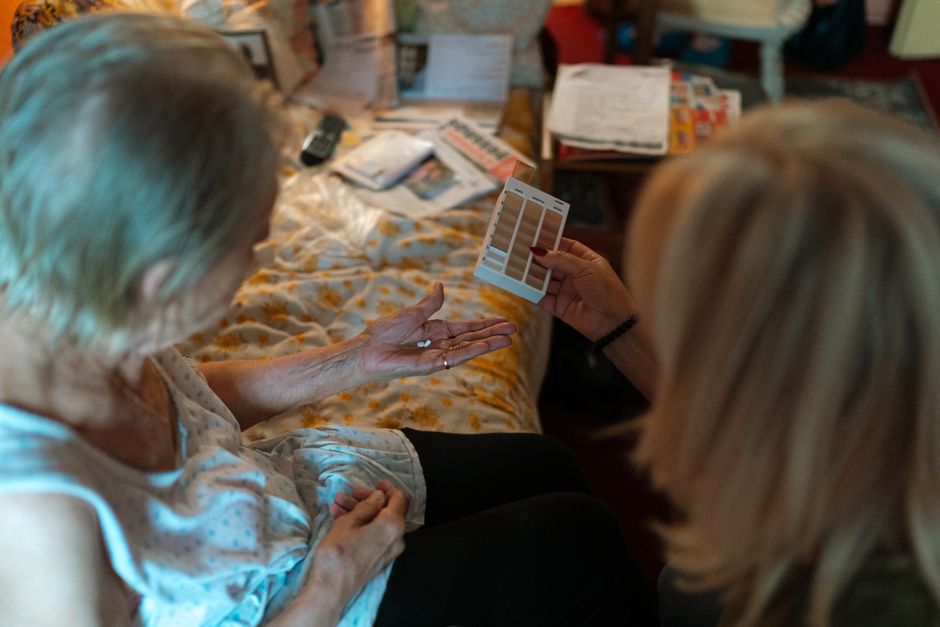
My mom came to stay with us in late November. A fall at home left her with a sore hip and a doctor who did not want her living alone for a while. My husband moved the guest bed to the first floor. My kids gave up the playroom closet for her suitcases. I thought I was ready.
I was not ready. The first few days showed me every spot in our house that was built for a young family and not for a woman recovering from a fall. The bathroom was the worst. The stairs were close behind. I spent a lot of that first week driving to the pharmacy and the hardware store, buying things I did not know existed a month earlier.
I also asked readers of this blog what helped them when a parent moved in or needed more care. The replies were practical and kind. Below is the list of items that made the biggest difference during the weeks my mom lived with us. None of this is medical advice. I am a former teacher and a stay at home mom, not a nurse. These are simply the things that made a hard stretch easier for all of us.
A shower chair takes the fear out of bathing
The second morning my mom was with us, I stood outside the bathroom door and listened to the water run. My mom was inside, holding the towel bar with both hands and trying to wash her hair standing on tile. The towel bar is not built to hold a person. I knew it. My mom knew it. Neither of us said anything.
That afternoon my husband brought home a plastic shower chair with rubber feet. It fit in our tub with room to spare. The next morning my mom sat down, washed up, and came out with wet hair and a dry face. The worry was gone from both of us.
A shower chair lets an aging parent sit while bathing, which removes the single most dangerous moment of the day.
A handheld shower head makes the chair actually useful
The shower chair solved the standing problem. It created a new problem. Our shower head was mounted high on the wall and pointed at the spot where a standing adult would be. My mom sat on the chair and the water hit the wall behind her. My mom tried to lean forward into the spray and nearly slid off the seat.
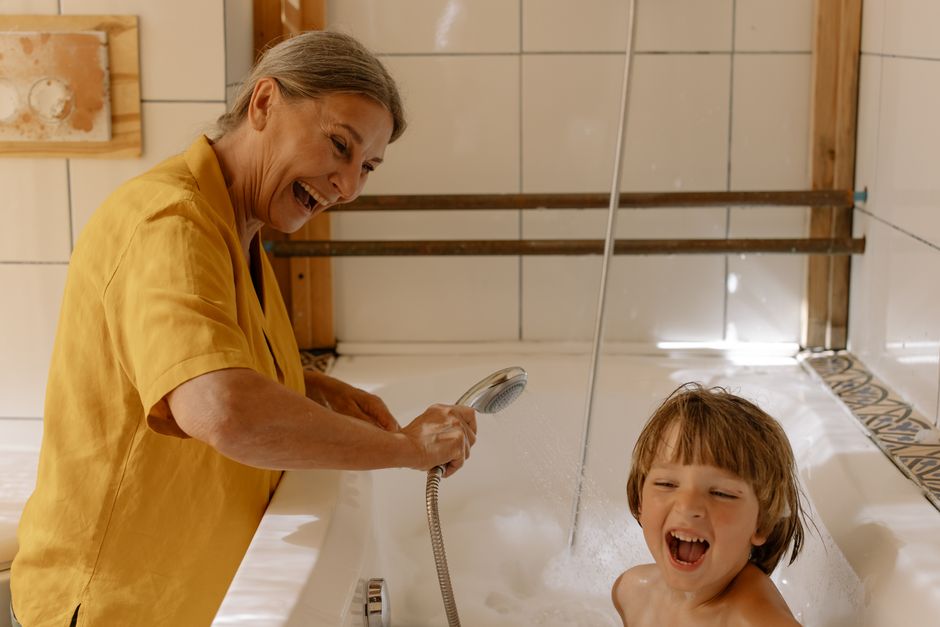
My husband swapped the fixed head for a handheld one on a long hose. It took him about twenty minutes and no special tools. Now my mom can hold the water where it needs to go. My kids think it is great too. Rinsing shampoo out of a small child’s hair is easier with a hose.
A handheld shower head lets a seated person control the water instead of chasing it.
Grab bars give something solid to hold
Our bathroom had a towel bar and a toilet paper holder. That was it. My mom was using both as handholds, and both wobbled. I watched my mom pull herself up from the toilet by the towel bar one morning and felt my stomach drop.
My husband put in two grab bars that weekend. One went next to the toilet and one went inside the tub, right where my mom’s hand lands when standing up from the shower chair. He screwed them into the studs, not just the drywall. My mom tested each one by yanking hard. Nothing moved.
A grab bar is the difference between a safe place to pull up and a towel bar that will one day come off the wall.
A raised toilet seat saves the hip

The toilet in our downstairs bathroom sits low. My kids have no trouble with it. My mom, with a sore hip, had a very hard time. Getting down was slow. Getting up was worse. I could hear a small groan through the door every time.
A reader named Carol M., 61, from Lincoln, Nebraska, wrote to me about this exact thing. She said, “The raised seat was the first thing my dad asked for after his surgery. He said it gave him his dignity back because he did not need me in the bathroom with him.”
I bought a raised seat with arms that clamps onto the bowl. My mom sits higher now and pushes up on the arms. No more groan. No more waiting outside the door.
A raised toilet seat with arms turns a hard daily task back into a private one.
A rubber bath mat keeps wet feet from sliding
Our tub floor is smooth and slick. I had a cloth mat on the floor outside the tub but nothing inside it. My mom stepped out of the shower on the third day and slid an inch before catching the new grab bar. One inch was enough to scare both of us.
I bought a long rubber mat with suction cups for the inside of the tub. I also replaced the cloth mat outside with a rubber backed one that stays put. My youngest helped me press down all the suction cups and declared the job done.
A rubber mat inside the tub and a rubber backed mat outside it stop the slide before it starts.
A pill organizer ends the morning guessing

My mom came to our house with a paper bag of prescription bottles. Some were taken in the morning, some at night, and one was taken every other day. By the second morning my mom could not remember if she had taken the blood pressure pill. I could not remember either. We stood at the counter and stared at the bottle.
I bought a weekly organizer with a morning and an evening row. Every Sunday night I sit at the kitchen table and fill it while my husband does the dishes. My mom checks it each morning and each night. If the little box is empty, the pill is taken. If it is full, it is not.
A weekly pill organizer replaces memory with a box you can see.
Motion sensor night lights make the hallway safe

The guest room is at the end of our downstairs hall. The bathroom is at the other end. The light switch for the hall is next to the bathroom door. My mom was walking the whole hall in the dark each night, one hand on the wall, before reaching the switch.
I bought plug in night lights that turn on when they sense movement. I put one by the bed, one halfway down the hall, and one in the bathroom. The first night I heard my mom get up and saw the hall glow softly as she walked. My mom did not need to find a switch. She just walked.
Motion sensor night lights light the path before a person reaches for a switch.
A reacher tool keeps the floor from being a problem

My mom dropped a sock on the bedroom floor and stood looking at it. Bending down was painful. Kneeling was worse. My mom was waiting for one of my kids to come by and pick it up.
A reader named Diane W., 57, from Chattanooga, Tennessee, told me her mother keeps a reacher in every room. She wrote, “My mom calls it her extra arm. She picks up the remote, the mail, her slippers, anything. She hates asking for help and the reacher means she does not have to.”
I bought two reachers. One stays by the bed and one stays by the recliner. My mom used one to pull the sock up off the floor and smiled. My kids fight over who gets to use it when my mom is not looking.
A reacher tool lets an aging parent handle small drops without bending or waiting.
A walker with a seat allows rest anywhere
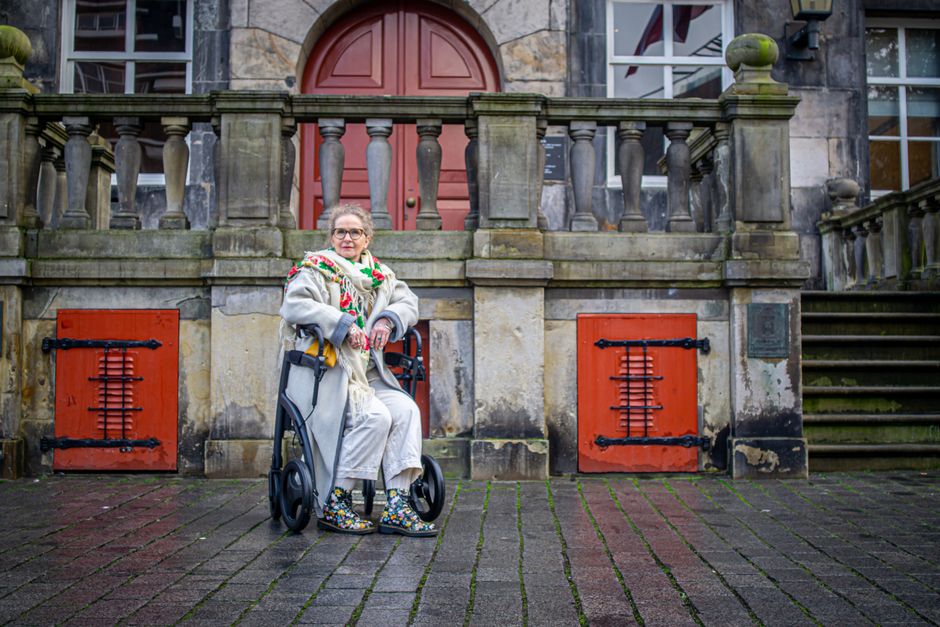
The physical therapist sent my mom home with a basic walker. It worked indoors. It did not work on the walk from the car to the pharmacy door, where my mom got tired halfway and had nowhere to sit. My husband ended up running to get a chair from inside while I held my mom’s arm in the parking lot.
I asked around and found a rolling walker with a built in seat and a basket. It has hand brakes. When my mom needs a rest, my mom locks the brakes, turns around, and sits. The basket holds a purse and a water bottle. It folds flat in the trunk.
A rolling walker with a seat gives an aging parent a place to rest no matter where the tiredness hits.
A bed rail makes getting up less of a struggle
The guest bed is a normal bed with nothing to hold onto. My mom was rolling to the edge, grabbing the nightstand, and pulling up. The nightstand is not heavy. On the fourth night it tipped, and a lamp hit the floor. My husband and I both came running.
The next day my husband installed a bed assist rail. It slides between the mattress and the box spring and has a handle that sits beside the bed. My mom now grips the handle, swings her legs over, and stands with support. The nightstand stays where it belongs.
A bed assist rail gives a solid handle for sitting up and standing, so furniture does not have to do that job.
A big button phone removes a daily frustration
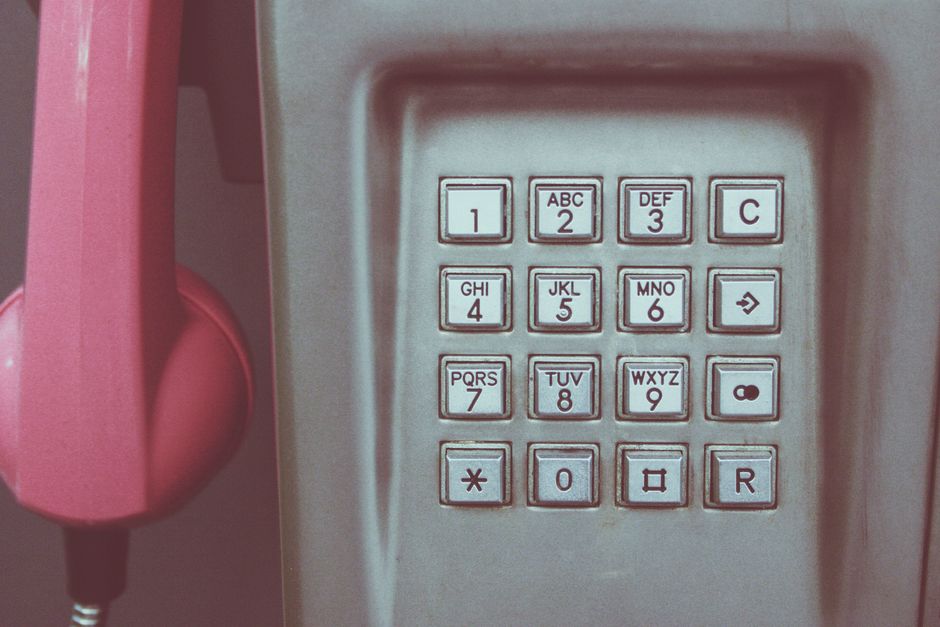
My mom has a cell phone. The screen is small and the icons are smaller. I watched my mom try to call my husband one afternoon and open the camera instead. Then the calculator. Then the flashlight. My mom put the phone down and gave up.
A reader named Linda P., 59, from Spokane, Washington, wrote, “I got my dad a phone with real buttons and a few photo speed dials. He presses my face and it calls me. That is the whole phone. He uses it every day now.”
I ordered a large button phone for the guest room and set it up with my number, my husband’s number, and the doctor’s office. My mom can call any of us without putting on glasses.
A phone with large buttons and photo speed dials makes calling for help simple.
A shared notebook keeps the questions in one place

Appointments piled up fast. Physical therapy, a follow up with the doctor, a pharmacy call about a refill. My mom would remember a question for the doctor at breakfast and forget it by the time we got to the office. I would remember a different question in the car and forget it in the waiting room.
I bought a plain spiral notebook and left it on the kitchen counter with a pen clipped to it. Anyone can write in it. My mom writes down symptoms. I write down questions. My husband writes down what the pharmacy said on the phone. The notebook comes with us to every appointment.
A shared notebook on the counter catches the questions before they are lost.
An electric kettle with auto shutoff lets tea be independent
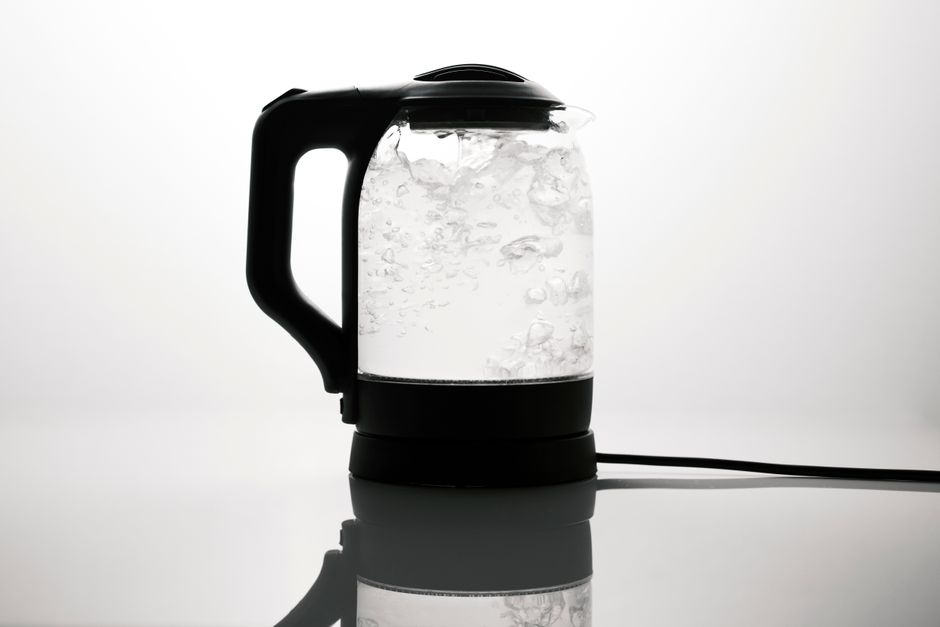
My mom likes tea in the afternoon. The first week my mom used our stovetop kettle. My mom put it on, sat down in the recliner, and forgot. The kettle whistled for a long time before I heard it from the laundry room. My mom felt terrible. I felt terrible for her.
I bought an electric kettle that turns itself off when the water boils. It sits on the counter next to the mugs and tea bags. My mom fills it, presses the button, and walks away. If my mom forgets, nothing happens. The water just cools down.
An electric kettle with auto shutoff lets an aging parent make a hot drink without anyone watching the stove.
Slippers with backs and rubber soles prevent trips
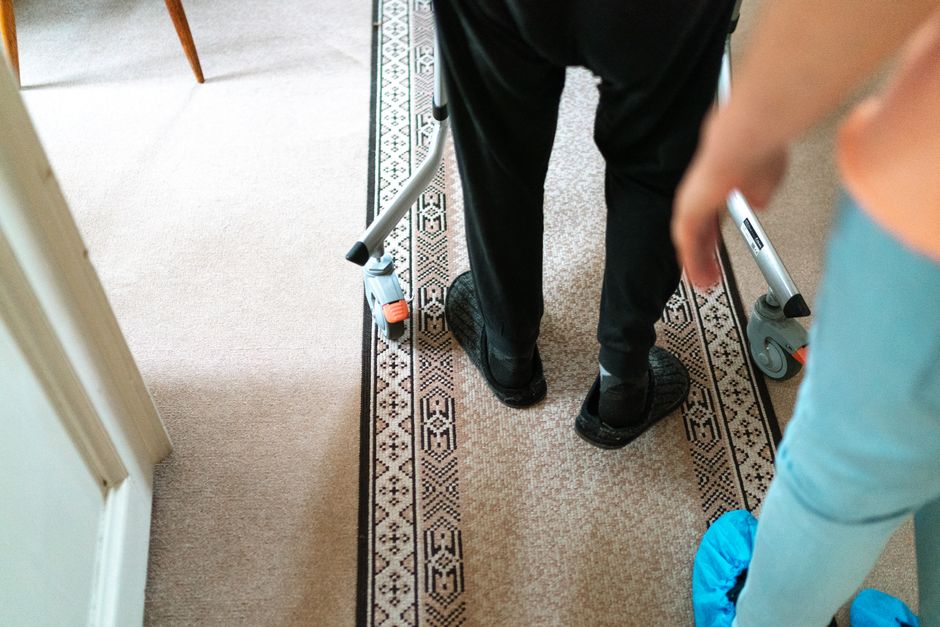
My mom arrived with a pair of soft open backed slippers. They were cozy and they were dangerous. One caught on the edge of the rug in the living room and my mom stumbled into the arm of the couch. No fall, but close.
I went to the store and found slippers with a closed back, a firm sole, and rubber grips on the bottom. They look like regular shoes. My mom said they were not as soft. My mom also stopped catching the rug. I also took the small throw rug out of the hallway entirely.
Closed back slippers with rubber soles keep feet from catching on rugs and edges.
A medical alert button lets everyone breathe

I run errands. My husband works all day. My kids have school. There were a few hours every weekday when my mom was alone in the house. I kept my phone in my hand the whole time. I checked it at red lights. I was not fully present anywhere.
We got my mom a medical alert pendant that connects to a service. If my mom presses it, someone talks to her and calls for help. It also calls me. My mom wears it on a cord around her neck. The first week I asked about it constantly. Now I do not. I leave for the grocery store and I think about the groceries.
A medical alert button gives the whole family a way to step away without fear.
My mom is still with us as I write this. Her hip is getting better, slowly. Our house looks different than it did at the start of November. There are bars on the bathroom walls and little lights in the hall. There is a notebook on the counter and a kettle that shuts itself off. My kids have adjusted. My husband has become handy with a drill.
None of these items fixed the hard parts of caring for a parent. The worry is still there. The tiredness is real. But every item on this list took one small problem off the pile, and the pile is lighter now. If you are in the middle of this season, I hope one or two of these helps you too.
What is one item that made caring for your own parent easier?
About the author