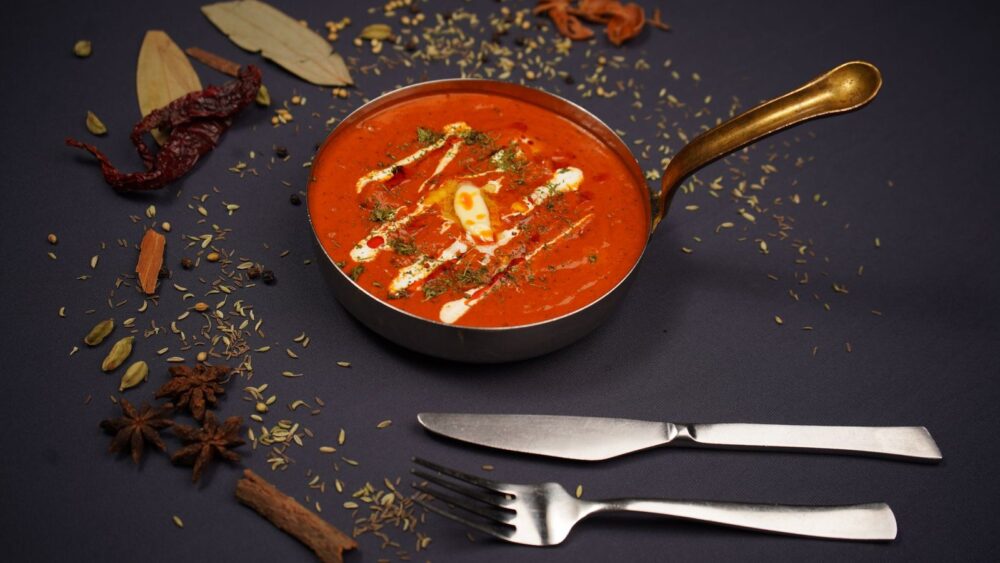

Chicken tikka masala is one of the most popular curries in the world, and it is surprisingly doable at home. Tender pieces of spiced chicken get a little char, then simmer in a creamy, gently spiced tomato sauce.
This chicken tikka masala recipe uses a yogurt marinade, a hot broiler and pantry spices. The result is a sauce with real depth, not just sweetness, and chicken that stays juicy.
Start the marinade in the morning or the night before and dinner comes together in under an hour.
Why this recipe works
- Yogurt marinade. Yogurt’s mild acidity and enzymes tenderize the chicken while helping the spices cling to it.
- Chicken thighs. Thighs stay juicy under high heat and in the sauce, where breasts can dry out.
- Broiler char. A few minutes under a hot broiler gives the smoky, charred edges you’d get from a tandoor oven.
- Bloomed spices. Cooking the ground spices in fat for a minute before adding tomatoes wakes up their flavor.
- Cream at the end. Adding cream after the tomatoes have simmered keeps the sauce smooth and rich without dulling the spices.
Ingredients you’ll need
Exact amounts are in the recipe card. Here is what each part does and what you can swap.
- Boneless, skinless chicken thighs. Cut them into large bite-size pieces, about 1 1/2 inches, so they don’t overcook. Chicken breast works if you prefer; just cut larger pieces and watch the cooking time closely.
- Plain whole-milk yogurt. Whole-milk yogurt clings best. Greek yogurt works too; thin it with a tablespoon or two of water or lemon juice.
- Garam masala. A warm spice blend that usually includes cinnamon, cardamom, clove and black pepper. It is the backbone of the flavor here.
- Cumin, coriander, paprika and turmeric. Smoked or sweet paprika both work. Kashmiri chili powder, if you can find it, adds bright red color and gentle heat.
- Fresh garlic and ginger. Grate them on a microplane. Jarred ginger-garlic paste is a fine shortcut.
- Crushed tomatoes and tomato paste. Crushed tomatoes give body; tomato paste deepens color and flavor.
- Heavy cream. Gives the sauce its signature richness. Full-fat coconut milk is a good dairy-free swap.
Ingredient notes and smart substitutions
Chicken
Two pounds of boneless, skinless thighs is 6 to 8 thighs. Trim the big pockets of fat but leave a little; it keeps the pieces juicy under the broiler. To use breasts, buy 2 pounds, cut them into 2-inch pieces and broil for 7 to 10 minutes, pulling them the moment they hit 165°F. Bone-in thighs are not a good swap here because they take too long to cook through.
Yogurt
One cup of plain whole-milk yogurt makes the marinade. Greek yogurt is thicker, so thin 3/4 cup of it with 1/4 cup water. Low-fat yogurt works but clings less and gives less char. For dairy-free, use 1 cup unsweetened coconut yogurt. Do not use vanilla or sweetened yogurt.
Garam masala
Blends vary widely. Some lean on cinnamon and clove; others on cumin and coriander. Buy a small jar so it stays fresh, and use the 4 teaspoons total called for. If you are out, mix 1 teaspoon each ground cumin and coriander with 1/2 teaspoon each cinnamon, black pepper and cardamom for a workable stand-in.
Paprika or Kashmiri chili
Kashmiri chili powder gives the vivid red-orange color with very mild heat. Sweet paprika gives the color with no heat, and smoked paprika adds a smoky note that works well with the broiler char. Regular chili powder from the taco aisle contains cumin and oregano; use it only in a pinch and cut the added cumin in half.
Tomatoes
One 28-ounce can of crushed tomatoes gives the right body. Tomato puree or a can of whole peeled tomatoes crushed by hand both work. Diced tomatoes are firmer and need the blender step to smooth out. If the can tastes very acidic, that is what the optional teaspoon of sugar is for.
Heavy cream
One cup of heavy cream makes the sauce rich and stable at a simmer. Half-and-half works if you keep the sauce below a boil after adding it. Full-fat canned coconut milk (1 cup, well shaken) is the best dairy-free swap and adds a mild sweetness. Cashew cream (1/2 cup raw cashews blended with 3/4 cup water) is a neutral option.
Ginger and garlic
You need about 2 tablespoons grated ginger and 7 cloves garlic across the marinade and sauce. Two tablespoons of jarred ginger-garlic paste covers the marinade portion, and another 2 tablespoons covers the sauce. Dried ground ginger is not a good substitute; it tastes harsh here.
How to make it
1. Marinate the chicken
Stir the yogurt with lemon juice, garlic, ginger, spices and salt, then toss the chicken in it until well coated. Refrigerate for at least 1 hour and up to 24 hours. Longer marinating means more flavor and more tender chicken.
Use a glass or plastic bowl or a zip-top bag rather than an aluminum pan, since the acidic marinade can react with the metal.
2. Broil the chicken
Set a wire rack over a foil-lined sheet pan, oil the rack, and arrange the chicken on it in a single layer. Shake off excess marinade first so the chicken chars rather than steams.
Broil 4 to 5 inches from the heat for 8 to 12 minutes, flipping once, until charred in spots and cooked through to 165°F. Thighs are forgiving, so a little extra time won’t dry them out.
3. Make the masala sauce
While the chicken broils, melt butter with oil in a large skillet or Dutch oven. Cook the onion until soft and golden, then add garlic, ginger and the tomato paste. Stir in the ground spices and cook for about a minute until fragrant.
Add the crushed tomatoes and a little water, scrape up the bottom, and simmer for 15 minutes so the tomatoes lose their raw edge and the sauce thickens.
4. Finish with cream and chicken
For a smooth, restaurant-style sauce, blend it with an immersion blender. Stir in the cream, add the chicken and any juices, and simmer gently for 5 to 10 minutes. Finish with a squeeze of lemon and fresh cilantro.
The sauce should be thick enough to coat the back of a spoon but still spoonable over rice. If it gets too thick, add a splash of water; if it looks thin, simmer a few minutes longer before adding the chicken.
Common mistakes and how to fix them
The chicken steamed instead of charring. Too much marinade was left on, or the pieces were crowded. Shake each piece well, arrange them with a little space on the rack and make sure the broiler is fully preheated for 5 minutes. If the chicken is pale after 12 minutes, move the rack one notch closer for the last 2 minutes.
The chicken is dry. Breast pieces cut too small, or thighs left in the sauce at a boil. Cut pieces at least 1 1/2 inches, pull the chicken from the broiler as soon as it reaches 165°F and keep the final simmer gentle.
The sauce tastes raw or acidic. The tomatoes did not simmer long enough. Give them the full 15 minutes at a steady simmer before adding cream. If it is still sharp, add the optional teaspoon of sugar and a pinch of salt.
The spices taste bitter. They scorched in the pan. Ground spices need only 30 to 60 seconds over medium heat, and they should smell toasty, not smoky. If they burn, the only fix is to start the sauce over.
The sauce is orange and greasy on top. The cream broke from boiling. Lower the heat, whisk in 2 tablespoons of cold cream or a splash of water and stir constantly until it comes back together.
The sauce is thin. Watery tomatoes or extra chicken juices. Simmer uncovered for 5 more minutes before adding the chicken, or stir in 1 extra tablespoon of tomato paste.
The color is dull brown. Paprika was skipped or old. Add 1/2 teaspoon of Kashmiri chili or sweet paprika bloomed in a teaspoon of butter, then stir it in.
Timing and make-ahead plan
- The day before: Mix the marinade and add the chicken. Twenty-four hours is the maximum; longer and the yogurt starts to make the texture mealy.
- Also the day before (optional): Make the sauce through the blending step, before adding cream. Cool and refrigerate.
- Morning of: Take the chicken out of the marinade bowl and spread it on the oiled rack, cover and refrigerate. Cook the basmati rice and hold it in the fridge.
- 30 minutes before: Heat the broiler. Warm the sauce over medium-low, stir in the cream, then broil the chicken and add it to the sauce.
- Holding it warm: The finished curry holds in a covered pot over the lowest heat for 30 minutes, or in a slow cooker on warm for 2 hours. Stir in a splash of cream before serving if it thickens.
Tips for the best chicken tikka masala
- Don’t skip the marinade time. Even 1 hour makes a difference. Overnight is ideal.
- Use a rack for broiling. Elevating the chicken lets heat reach all sides and keeps the pieces from sitting in liquid.
- Keep the heat moderate for the spices. Ground spices burn quickly. If they start to smell acrid, the heat is too high.
- Simmer gently after the cream goes in. A hard boil can make the sauce separate.
- Taste and balance. If the sauce tastes sharp, add a pinch of sugar. If it tastes flat, add salt or a squeeze of lemon.
- Cook the onion until golden. Taking the time to soften and lightly brown the onion adds sweetness and body to the sauce, especially if you blend it.
- Buy fresh spices. Ground spices lose their aroma after about a year. If your garam masala smells faint, a new jar makes a big difference here.
Variations
- Grilled chicken. Thread the marinated chicken on skewers and grill over medium-high heat until charred and 165°F.
- Skillet method. No broiler? Sear the chicken in batches in a hot cast-iron skillet with a little oil.
- Dairy-free. Marinate in coconut yogurt, use oil instead of butter and swap the cream for full-fat coconut milk.
- Vegetarian. Replace the chicken with cubes of paneer or roasted cauliflower and a can of chickpeas.
- More heat. Add a minced serrano with the onion or 1/2 teaspoon cayenne with the spices.
Equipment that makes this easier
- A wire rack that fits your sheet pan. Elevating the chicken lets the broiler hit all sides and keeps the yogurt drippings from pooling and steaming the pieces.
- A 12-inch skillet or 5-quart Dutch oven. The sauce plus 2 pounds of chicken needs room, and a wide pan reduces the tomatoes faster.
- An immersion blender. It smooths the onion and tomato sauce right in the pot in 30 seconds. A regular blender works, but let the sauce cool a few minutes and fill the jar no more than halfway.
- A microplane grater. Grated ginger and garlic dissolve into the marinade and sauce instead of sitting in chunks.
- An instant-read thermometer. Broiled chicken goes from perfect to dry quickly, and 165°F is the number to watch.
- A glass or stainless bowl. The acidic marinade reacts with aluminum, which gives the chicken an off taste.
Scaling up or down
To halve it: Use 1 pound of chicken and half of everything else, but keep the full 28-ounce can of tomatoes only if you want extra sauce; a 14.5-ounce can is the right amount. Broil time stays the same. A 10-inch skillet is big enough.
To double it: Four pounds of chicken will not fit on one sheet pan without crowding. Broil in two rounds or on two pans, rotating them. Make the sauce in a 7-quart pot; the tomatoes take about 25 minutes instead of 15 to reduce, and blending takes longer. Add cream in two additions and taste for salt between them.
Marinating a big batch: Use a gallon zip-top bag rather than a bowl so every piece stays coated, and press out the air before sealing.
What to serve with it
Serve tikka masala over basmati rice with warm naan for dipping. A cool cucumber raita or a simple cucumber and tomato salad balances the spices.
Roasted cauliflower or carrots also make great partners. You’ll find more ideas in our fall side dishes list. For a lighter night later in the week, the spices pair nicely with our hearty lentil soup.
Tikka masala also slots into our 2-week fall weeknight dinner plan as a make-the-marinade-the-night-before meal.
How to store, freeze and reheat
Refrigerate: Store leftovers in an airtight container for up to 4 days. The flavor improves overnight.
Freeze: Cool completely and freeze in portions for up to 3 months. Cream-based sauces can look slightly separated after thawing, but a good stir while reheating brings them back together. Our fall freezer meal prep guide has tips on portioning curries and soups.
Reheat: Thaw overnight in the fridge. Reheat gently on the stove over medium-low heat with a splash of water or cream, stirring, until the chicken is heated through to 165°F. You can also microwave individual portions, stirring every minute.
Leftover ideas
- Tikka masala wraps. Warm the chicken and sauce, wrap in naan or a large tortilla with sliced cucumber and a spoonful of yogurt.
- Tikka masala pasta. Toss the sauce with cooked penne and a splash of pasta water; it behaves like a spiced vodka sauce.
- Loaded rice bowls. Reheat over leftover basmati with roasted cauliflower and a squeeze of lemon.
- Tikka masala pizza. Spread the sauce thinly on naan, top with chopped chicken and mozzarella and bake at 450°F for 8 to 10 minutes.
- Shakshuka-style eggs. Warm the sauce in a skillet, make wells, crack in eggs, cover and cook until the whites set.
- Stuffed baked sweet potatoes. Spoon warmed curry over split baked sweet potatoes and top with cilantro.
Nutrition notes
One serving of the chicken and sauce (a sixth of the recipe, without rice or naan) runs roughly 450 to 520 calories, 32 to 36 grams of protein, 15 to 20 grams of carbohydrates and 30 to 34 grams of fat. A cup of cooked basmati adds about 200 calories and 45 grams of carbohydrates. These are estimates; thigh trimming, cream brand and the size of each portion all move the numbers.
- Lighter: Use 1/2 cup cream plus 1/2 cup whole-milk yogurt stirred in off the heat, and trim thighs closely. This saves roughly 90 calories per serving.
- Leaner protein: Chicken breast cuts fat by about a third; follow the note on cooking time so it stays juicy.
- Gluten-free: The curry itself is naturally gluten-free. Serve with rice instead of naan, and check the garam masala label for additives.
- Dairy-free: Coconut yogurt in the marinade, oil instead of butter and full-fat coconut milk instead of cream. The sauce will be slightly sweeter and a touch thinner.
Chicken Tikka Masala
Yogurt-marinated chicken thighs broiled until charred and simmered in a creamy, spiced tomato sauce.
Equipment
- Rimmed sheet pan
- Wire cooling rack
- Large skillet or Dutch oven
- Immersion blender (optional)
Ingredients
For the chicken marinade
- 2 lb boneless, skinless chicken thighs, cut into 1 1/2-inch pieces
- 1 cup plain whole-milk yogurt
- 1 tbsp lemon juice
- 3 cloves garlic, grated
- 1 tbsp grated fresh ginger
- 2 tsp garam masala
- 1 tsp ground cumin
- 1 tsp paprika or Kashmiri chili powder
- 1/2 tsp ground turmeric
- 1 1/2 tsp kosher salt
For the sauce
- 2 tbsp unsalted butter
- 1 tbsp vegetable oil
- 1 large yellow onion, finely diced
- 4 cloves garlic, minced
- 1 tbsp grated fresh ginger
- 2 tbsp tomato paste
- 2 tsp garam masala
- 2 tsp ground cumin
- 1 tsp ground coriander
- 1 1/2 tsp paprika or Kashmiri chili powder
- 1/2 tsp ground turmeric
- 1 (28 oz) can crushed tomatoes
- 1/2 cup water
- 1 tsp kosher salt, plus more to taste
- 1 tsp sugar, optional
- 1 cup heavy cream
- 1 tbsp lemon juice
- 1/4 cup chopped fresh cilantro
For serving
- Cooked basmati rice
- Naan
Instructions
- In a large bowl, stir together the yogurt, lemon juice, garlic, ginger, garam masala, cumin, paprika, turmeric and salt. Add the chicken and toss to coat. Cover and refrigerate for at least 1 hour and up to 24 hours.
- Position an oven rack 4 to 5 inches from the broiler and heat the broiler to high. Line a rimmed sheet pan with foil, set a wire rack on top and brush the rack with oil.
- Shake excess marinade off the chicken and arrange it in a single layer on the rack. Broil for 8 to 12 minutes, flipping halfway, until charred in spots and the thickest pieces reach 165°F.
- Meanwhile, heat the butter and oil in a large skillet or Dutch oven over medium heat. Add the onion and cook for 8 to 10 minutes, stirring often, until soft and golden.
- Add the garlic, ginger and tomato paste and cook for 1 minute. Add the garam masala, cumin, coriander, paprika and turmeric and cook for 1 minute, stirring constantly, until fragrant.
- Add the crushed tomatoes, water, salt and sugar, if using. Scrape the bottom of the pan, bring to a simmer, then reduce the heat to medium-low and simmer for 15 minutes, stirring occasionally, until thickened.
- For a smooth sauce, blend with an immersion blender until mostly smooth. Stir in the cream.
- Add the broiled chicken and any juices from the pan. Simmer gently for 5 to 10 minutes, until the sauce coats the chicken. Stir in the lemon juice, taste and adjust salt.
- Sprinkle with cilantro and serve with basmati rice and naan.
Notes
- Total time includes 1 hour of marinating.
- Chicken breast: Cut into 2-inch pieces and broil 7 to 10 minutes, just until 165°F, so it stays juicy.
- Dairy-free: Use coconut yogurt, oil instead of butter, and full-fat coconut milk instead of cream.
- Freezing: Freeze cooled leftovers up to 3 months. Reheat gently and stir well.
Frequently asked questions
What is the difference between tikka masala and butter chicken?
They are similar, but tikka masala usually has a brighter, more tomato-forward sauce with more spice, while butter chicken is milder, richer and more buttery.
Can I use chicken breast instead of thighs?
Yes. Cut it into larger pieces and cook it just until it reaches 165°F, since breast meat dries out faster than thighs.
How long should chicken marinate for tikka masala?
At least 1 hour, and up to 24 hours in the fridge. Longer marinating gives more flavor and more tender chicken.
Is chicken tikka masala spicy?
This version is mildly spiced and warm rather than hot. Add cayenne or a fresh chile if you want more heat.
Can I make chicken tikka masala ahead?
Yes. It tastes even better the next day. Refrigerate for up to 4 days and reheat gently.