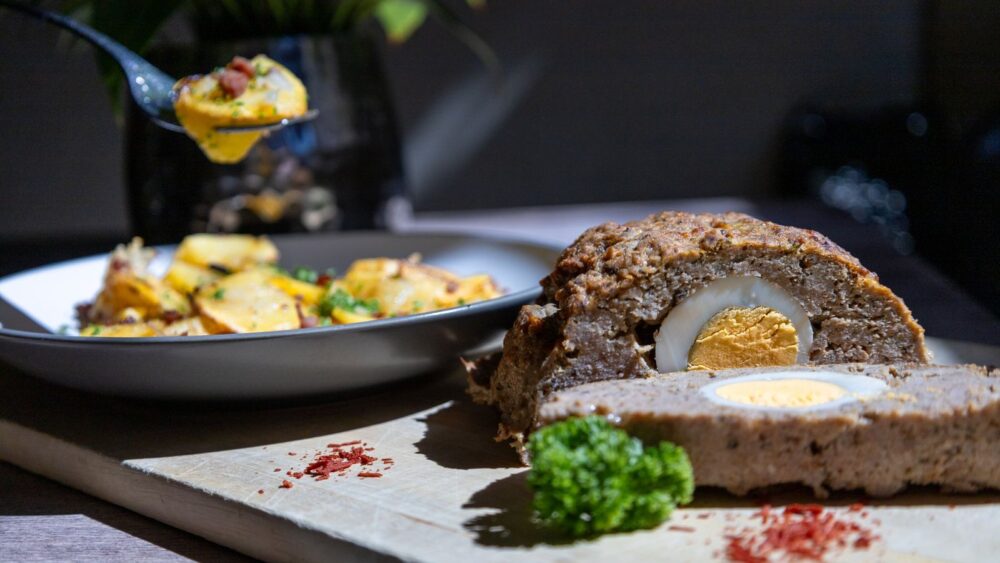
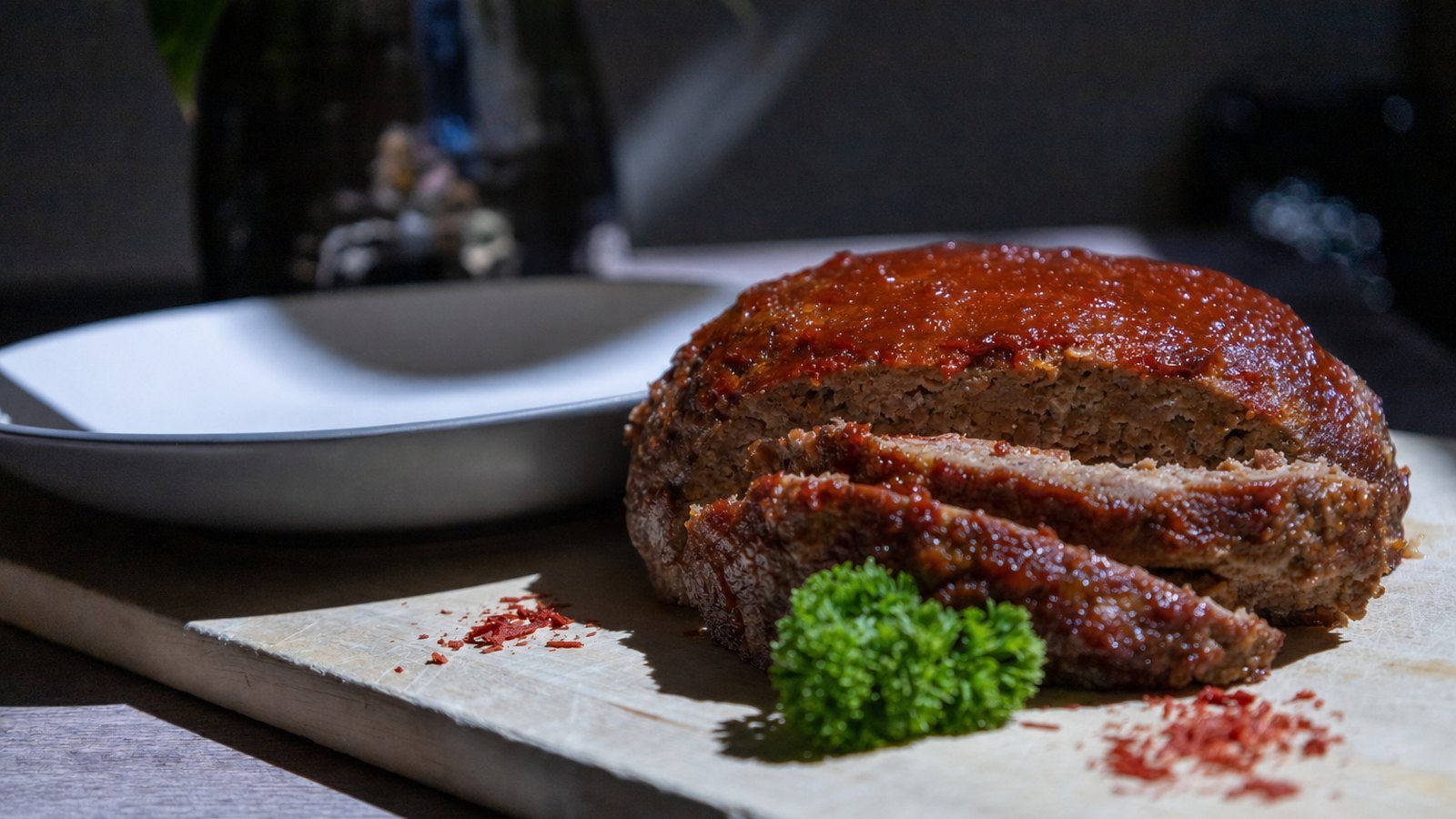
A good meatloaf is tender, juicy and sliceable, with a sweet and tangy glaze that turns sticky at the edges. A bad one is dense, dry and gray. The difference comes down to a few small choices, and this recipe makes all of them for you.
The beef gets a panade of breadcrumbs soaked in milk, which holds moisture as the loaf bakes. The onion is cooked first so it melts into the meat instead of staying crunchy. The mixture is handled gently and shaped by hand on a sheet pan rather than packed into a loaf pan, so the outside browns and the fat drains away.
The glaze is ketchup, brown sugar, cider vinegar and a little Worcestershire, brushed on in two layers so it caramelizes without burning. It is the kind of meatloaf that makes the best sandwiches the next day.
Why this recipe works
- A panade of breadcrumbs and milk traps juices inside the meat, so the loaf stays moist even when cooked fully to 160°F.
- Sautéing the onion and garlic first removes their raw bite and adds sweetness. Raw onion in meatloaf stays crunchy and releases water.
- 85 percent lean ground beef has enough fat for flavor without leaving a puddle on the pan.
- Baking free form on a sheet pan instead of in a loaf pan gives you browned sides and lets rendered fat drain away instead of boiling the meat.
- Two coats of glaze, one before baking and one near the end, give a thick, glossy layer that sets without scorching.
- A 10 minute rest lets the loaf firm up so it slices cleanly instead of crumbling.
Ingredients you’ll need
Ground beef. Two pounds of 85 percent lean is the sweet spot. Leaner beef makes a dry loaf. Fattier beef shrinks a lot and leaves the glaze swimming in grease.
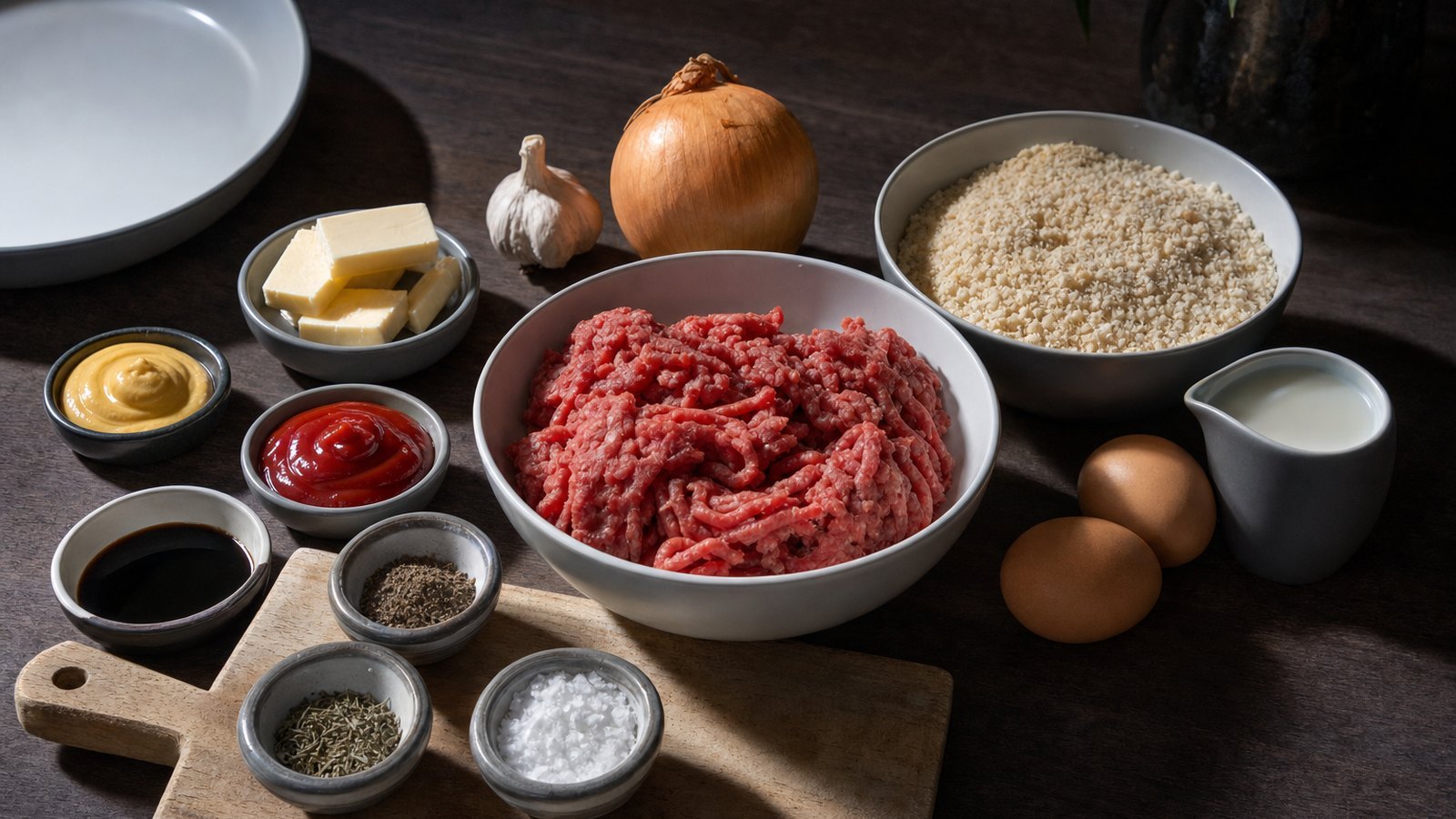
Breadcrumbs and milk. Plain dried breadcrumbs soaked in whole milk form the panade. Panko works too and gives a slightly lighter texture.
Onion and garlic. One medium yellow onion, finely diced, and a couple of garlic cloves, softened in butter before they go into the meat.
Eggs. Two large eggs bind the mixture so it slices. Without them the loaf falls apart.
Seasonings. Worcestershire sauce, Dijon mustard, ketchup, dried thyme, salt and pepper. A splash of Worcestershire adds savory depth that makes the beef taste more like itself.
For the glaze. Ketchup, brown sugar, apple cider vinegar and a little more Worcestershire. Simple, sweet, tangy and sticky.
Butter. Just a tablespoon, for cooking the onion. It adds a little richness and keeps the onion from sticking while it softens.
Ingredient notes and smart substitutions
Ground beef
A mix of 1 pound ground beef and 1 pound ground pork makes a softer, richer loaf. Ground turkey works if you use 93 percent lean, not 99 percent, and add 2 extra tablespoons of milk to the panade. Turkey and chicken loaves must reach 165°F instead of 160°F.
Breadcrumbs
Use 2 slices of fresh sandwich bread, torn small, in place of 3/4 cup dried crumbs. Crushed saltines or gluten free breadcrumbs also work one for one. Quick oats can stand in at the same volume, though the texture is a little more rustic.
Milk
Any milk works, including unsweetened oat or almond milk. Buttermilk adds a slight tang that suits the glaze. Do not skip the liquid, since dry crumbs pull moisture out of the meat instead of adding it.
Ketchup in the glaze
Barbecue sauce can replace the ketchup one for one for a smokier glaze. Cut the brown sugar in half since most barbecue sauces are already sweet. Tomato paste thinned with 2 tablespoons of water plus an extra tablespoon of sugar also works.
Brown sugar
Light or dark brown sugar both work. Maple syrup or honey can replace it at the same measure. The glaze will be slightly thinner, so bake it a few minutes longer to set.
How to make it
1. Soften the onion
Melt 1 tablespoon of butter in a skillet over medium heat. Cook the diced onion with a pinch of salt for 5 to 6 minutes until soft and translucent, then add the garlic for 1 minute more. Let it cool for a few minutes so it does not cook the eggs when you mix.
2. Make the panade
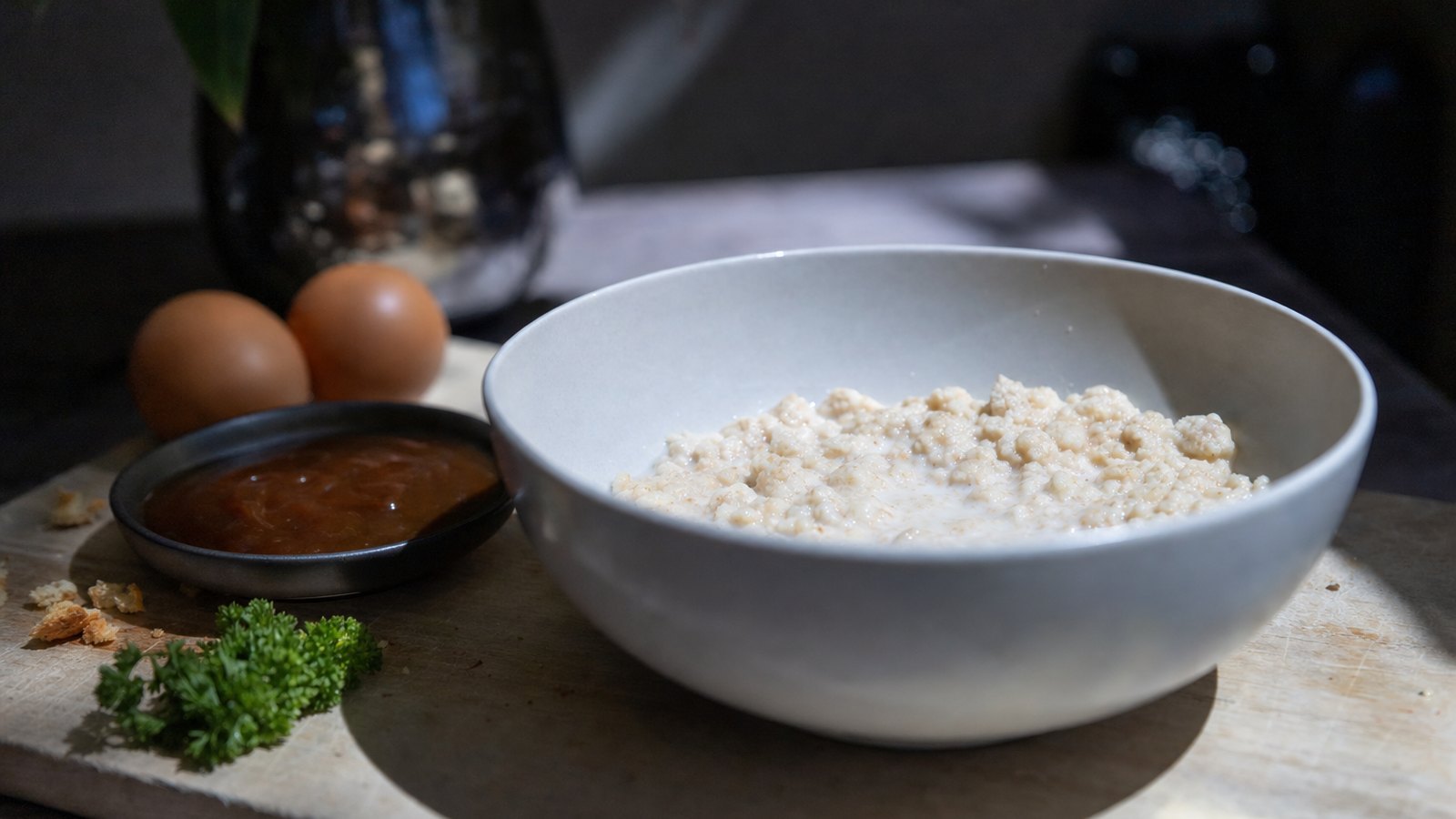
Stir the breadcrumbs and milk together in a large bowl and let them sit for 5 minutes until the crumbs are fully soaked and mushy. This paste is what keeps the loaf tender.
3. Mix gently
Add the eggs, Worcestershire, Dijon, ketchup, thyme, salt and pepper to the panade and whisk until smooth. Add the cooled onion and the ground beef.
Mix with your hands just until everything is evenly combined. Stop as soon as you no longer see streaks. Overmixing squeezes the proteins together and makes a dense, bouncy loaf.
4. Shape
Line a rimmed sheet pan with foil or parchment. Turn the mixture out and shape it into a loaf about 9 inches long, 5 inches wide and 2 1/2 inches tall. Keep the top gently rounded so the glaze does not pool.
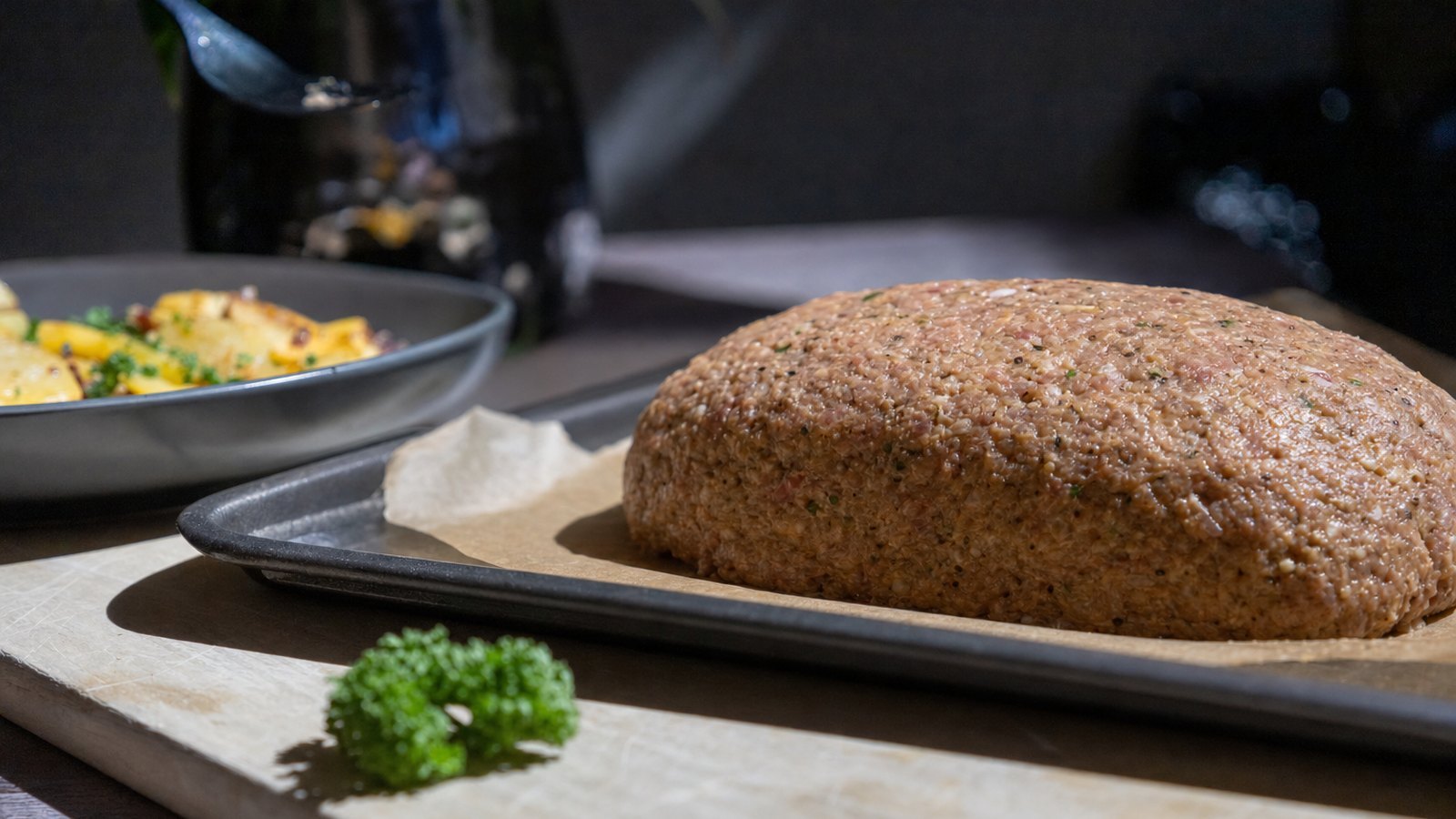
Press out any cracks with damp hands. Cracks widen in the oven and let the glaze run off.
5. Glaze and bake
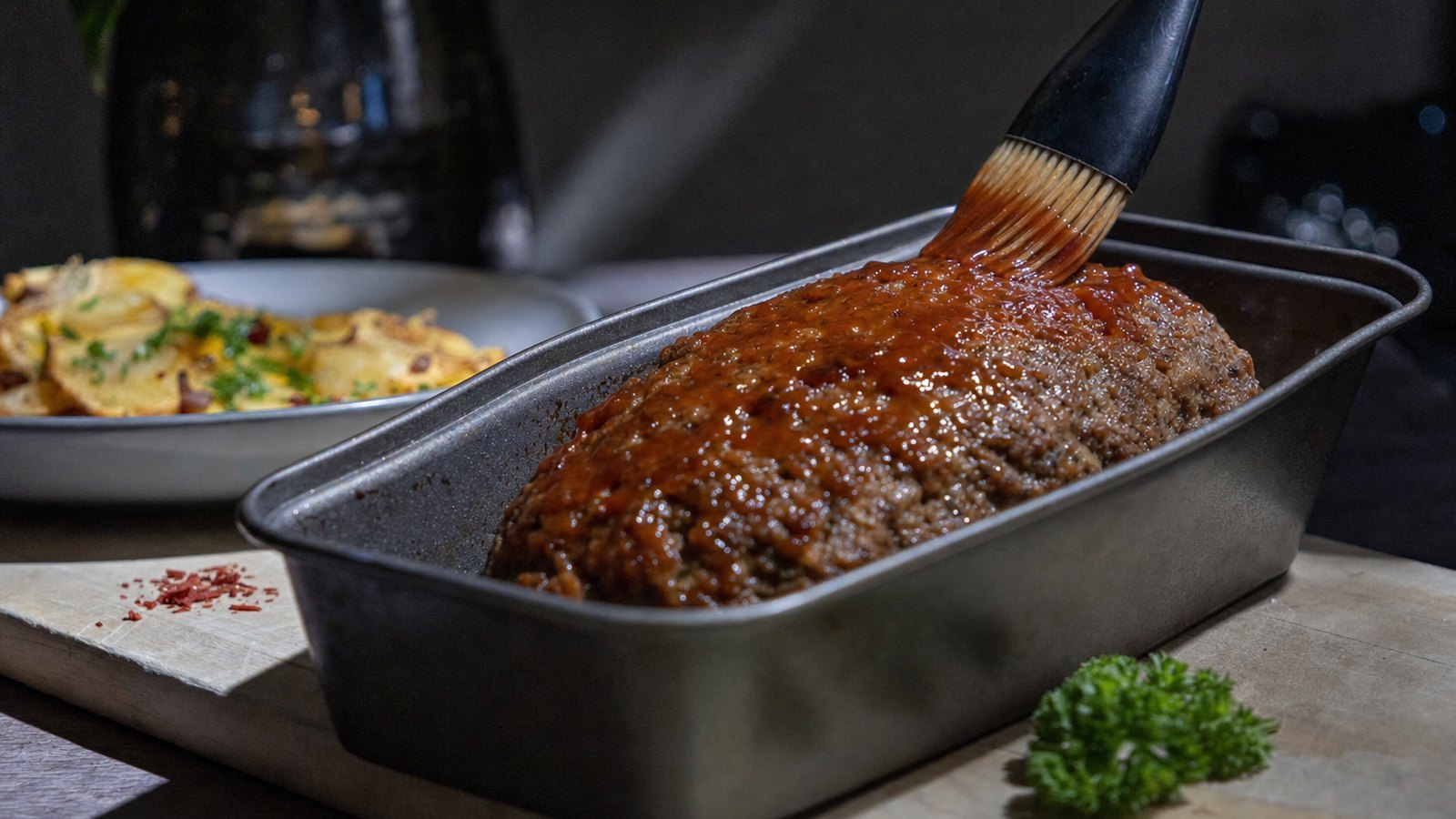
Stir the glaze ingredients together. Brush about half over the top and sides of the loaf. Bake at 350°F for 40 minutes.
Brush on the remaining glaze and bake for 15 to 25 minutes more, until the center reads 160°F on an instant read thermometer. Total time is usually 55 to 65 minutes.
6. Rest and slice
Let the meatloaf rest on the pan for 10 minutes. Slice into 1 inch thick pieces with a sharp knife and serve with any glaze that dripped onto the pan spooned over the top.
Common mistakes and how to fix them
Dry, crumbly meatloaf. Usually too lean a beef, too little panade or overbaking. Stick with 85 percent lean, do not skip the milk, and pull it at 160°F, not a minute later.
Dense, rubbery texture. The mixture was overworked. Mix with a light hand and stop early. Packing the loaf tightly into a pan makes it worse.
Greasy glaze. A loaf pan traps fat around the meat. Bake free form on a sheet pan so the fat runs off, and blot the pan with a paper towel before serving if needed.
The loaf falls apart when sliced. It needs both eggs and a proper rest. Ten minutes on the pan is enough for the juices to redistribute and the proteins to set.
Burnt glaze. All the glaze went on at the beginning. Sugar burns over an hour in the oven. Split it into two coats, with the second one going on for the last 15 to 25 minutes.
Raw onion crunch. Sauté the onion first. It takes 6 minutes and makes a real difference in both texture and sweetness.
Pale, unglazed sides. Only the top was brushed. Run the pastry brush down the sides as well so every slice has glaze on its edge, not just the top.
Timing and make ahead plan
Plan on 20 minutes of prep, 55 to 65 minutes of baking and a 10 minute rest, so about 1 1/2 hours total. Most of it is unattended.
The raw loaf can be shaped, wrapped tightly and refrigerated up to 24 hours ahead. Brush on the first coat of glaze just before baking, and add 5 to 10 minutes to the bake time since it starts cold.
You can also freeze the raw loaf. Shape it on a parchment lined pan, freeze until solid, then wrap well. Thaw overnight in the fridge before baking. Always bake from fully thawed so the center comes to 160°F on schedule.
The glaze keeps in a jar in the fridge for 2 weeks. Make a double batch for the next meatloaf or for brushing on chicken thighs.
Baked meatloaf is one of the best make ahead mains there is. It reheats beautifully and slices better cold, which is exactly what you want for sandwiches. For more freezer friendly ideas, see this fall freezer meal prep plan.
Tips for the best meatloaf
Use a thermometer. Meatloaf has no reliable visual cue for doneness and 160°F is the number for ground beef. Check in the thickest part of the center.
Wet your hands when shaping. The mixture is sticky, and damp hands give you a smooth surface with no cracks.
Do not press the loaf down flat. A gently domed top sheds fat and holds the glaze in a thin, even layer.
Let it rest. Slicing straight from the oven sends the juices onto the pan and leaves you with dry slices.
Taste the mixture for seasoning before it goes in the oven by cooking a teaspoon of it in a hot skillet. It is a 1 minute check that saves a bland loaf. Never taste raw ground beef.
If your oven runs hot and the glaze is darkening too fast, tent a piece of foil loosely over the loaf for the last 10 minutes. It protects the sugar without steaming the meat.
Variations
Bacon wrapped. Lay 8 slices of bacon over the shaped loaf, tucking the ends under. Skip the first coat of glaze and brush it on for the last 20 minutes.
Cheese stuffed. Flatten the mixture into a rectangle, lay 1 cup of shredded cheddar down the center, fold the meat around it and seal well before shaping.
Italian. Swap the thyme for Italian seasoning, add 1/2 cup grated Parmesan and 1/4 cup chopped parsley, and glaze with marinara instead of the brown sugar mixture. It makes a good companion to classic meat lasagna on a red sauce night.
Mini meatloaves. Divide the mixture into 6 small loaves on the sheet pan. They bake in 25 to 30 minutes and every portion gets more glaze.
Smoky. Add 1 teaspoon smoked paprika and 1/2 teaspoon chipotle powder to the meat, and use barbecue sauce for the glaze.
Equipment that makes this easier
A rimmed half sheet pan lined with foil handles the drippings and makes cleanup a matter of tossing the foil. An instant read thermometer is essential. A large mixing bowl gives you room to combine without overworking.
A small skillet for the onion, a pastry brush for the glaze and a sharp slicing knife round it out. No loaf pan required.
Scaling up or down
To halve the recipe, use 1 pound of beef, 1 egg and half of everything else. Shape a smaller loaf about 7 inches long and bake for 40 to 45 minutes to 160°F.
To double, make two separate loaves on the same sheet pan rather than one giant loaf. A very thick loaf takes so long to cook through that the outside overcooks. Two 2 pound loaves bake in the same 55 to 65 minutes.
Glaze scales directly. Make extra for the table, since people always want more.
What to serve with it
Mashed potatoes are the classic partner, and the glaze drippings make a quick sauce for them. Green beans, roasted carrots or buttered peas keep it simple.
Mac and cheese turns it into a serious comfort dinner. For more ideas, browse these fall side dishes or add the loaf to a cozy fall dinner rotation.
Do not forget something sharp on the plate. A spoonful of pickles, a tangy slaw or even a few pickled onions keep the sweet glaze from feeling heavy by the last bite.
How to store, freeze and reheat
Refrigerate leftover slices in an airtight container for up to 4 days. Wrap the whole remaining loaf if you plan to slice it later. It holds moisture better in one piece.
Freeze individual slices separated by parchment in a freezer bag for up to 3 months. Slices thaw quickly and reheat in minutes.
Reheat slices in a covered skillet over low heat with a tablespoon of water, or in a 325°F oven covered with foil for 15 to 20 minutes, until they reach 165°F. In the microwave, cover and heat in 1 minute bursts at medium power to keep them from drying out.
Leftover ideas
The meatloaf sandwich is the reason to make extra. Sear a thick cold slice in a buttered skillet until crusty, then layer it on toasted bread with mayo, sharp cheddar and pickles.
Crumble leftover slices into a skillet of sautéed onions and peppers for a quick hash, or chop them into marinara for a fast, meaty pasta sauce.
Nutrition notes
A 1 inch slice, about one eighth of the loaf, comes in roughly around 380 to 450 calories, with about 25 grams of protein and 12 to 15 grams of sugar, most of it from the glaze.
These are estimates. The fat content of your beef, the amount of glaze that stays on the loaf and your slice size all move the numbers.
Classic Meatloaf with Brown Sugar Glaze
A moist, tender beef meatloaf baked free form on a sheet pan and topped with a sticky brown sugar and ketchup glaze.
Equipment
- Rimmed half sheet pan
- Large mixing bowl
- Small skillet
- Instant read thermometer
- Pastry brush
Ingredients
For the meatloaf
- 1 tbsp unsalted butter
- 1 medium yellow onion, finely diced
- 2 cloves garlic, minced
- 3/4 cup plain dried breadcrumbs
- 1/2 cup whole milk
- 2 large eggs
- 2 tbsp Worcestershire sauce
- 1 tbsp Dijon mustard
- 2 tbsp ketchup
- 1 tsp dried thyme
- 1 1/2 tsp kosher salt
- 1/2 tsp black pepper
- 2 lb 85 percent lean ground beef
For the glaze
- 1/2 cup ketchup
- 3 tbsp packed brown sugar
- 1 tbsp apple cider vinegar
- 1 tsp Worcestershire sauce
Instructions
- Heat the oven to 350°F and line a rimmed sheet pan with foil or parchment.
- Melt the butter in a small skillet over medium heat. Cook the onion with a pinch of salt for 5 to 6 minutes until soft, add the garlic and cook 1 minute more. Set aside to cool.
- In a large bowl, stir the breadcrumbs and milk together and let sit for 5 minutes until the crumbs are soaked.
- Whisk the eggs, Worcestershire, Dijon, ketchup, thyme, salt and pepper into the breadcrumb mixture until smooth. Add the cooled onion and the ground beef.
- Mix gently with your hands just until evenly combined. Do not overmix.
- Turn the mixture onto the lined pan and shape into a loaf about 9 inches long, 5 inches wide and 2 1/2 inches tall with a gently rounded top. Smooth out any cracks with damp hands.
- Stir together the ketchup, brown sugar, vinegar and Worcestershire for the glaze. Brush about half of it over the top and sides of the loaf.
- Bake for 40 minutes. Brush on the remaining glaze and bake for 15 to 25 minutes more, until an instant read thermometer in the center reads 160°F.
- Rest the meatloaf on the pan for 10 minutes, then slice into 1 inch thick pieces and serve.
Notes
- Food safety: Ground beef must reach 160°F. If using ground turkey or chicken, cook to 165°F.
- Make ahead: Shape the raw loaf up to 24 hours ahead and refrigerate, or freeze the raw loaf up to 3 months and thaw fully before baking.
- Storage: Refrigerate slices up to 4 days or freeze up to 3 months. Reheat covered until 165°F.
- Mini loaves: Divide into 6 small loaves and bake 25 to 30 minutes.
Frequently asked questions
What temperature should meatloaf be cooked to?
Beef meatloaf is done at 160°F in the center. Meatloaf made with ground turkey or chicken must reach 165°F. Use an instant read thermometer since color is not a reliable guide.
How long does a 2 pound meatloaf take at 350°F?
About 55 to 65 minutes for a free form loaf roughly 9 by 5 inches. Start checking the center temperature at 55 minutes and pull it as soon as it reaches 160°F.
Why does my meatloaf fall apart?
Usually not enough binder or not enough rest. Use 2 eggs and a milk soaked panade for 2 pounds of beef, and let the loaf rest 10 minutes before slicing so it firms up.
Should I bake meatloaf covered or uncovered?
Uncovered. Covering traps steam, keeps the glaze from setting and gives you a pale, soft top. Bake it uncovered on a sheet pan so the outside browns and the glaze caramelizes.
Can I make meatloaf without breadcrumbs?
Yes. Use 2 slices of torn fresh bread, 3/4 cup crushed saltines, quick oats or gluten free crumbs. The key is soaking whatever you use in the milk first so it adds moisture instead of absorbing it.
Why bake meatloaf on a sheet pan instead of in a loaf pan?
A sheet pan lets the fat drain away and browns the sides, so you get more flavor and a glaze that is not sitting in grease. A loaf pan steams the meat and holds the drippings around it.
About the author