
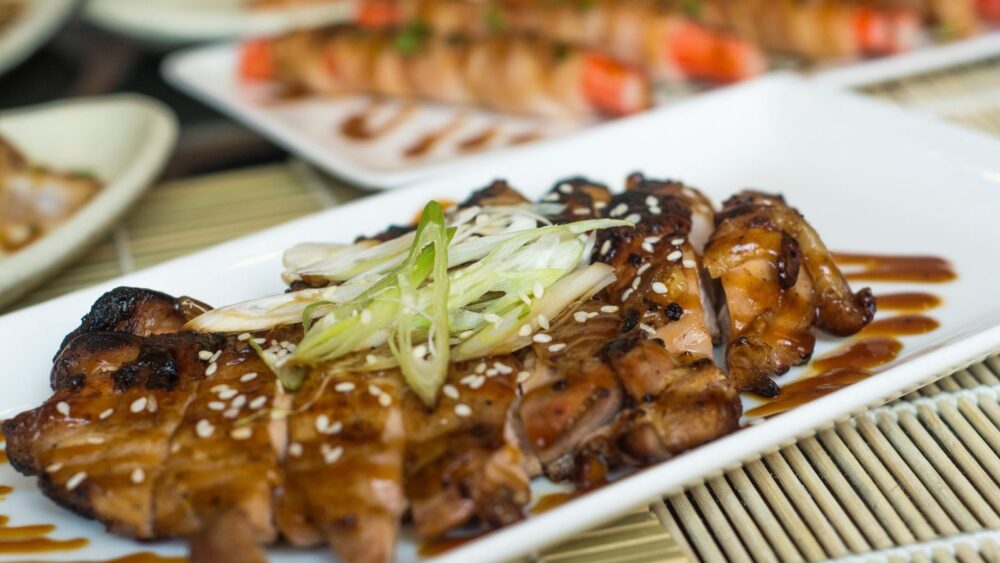
Pork tenderloin is one of the fastest cuts you can roast, and this honey garlic version makes the most of it. A quick sear builds a brown crust, a short trip to the oven keeps the inside juicy, and the glaze comes together in the same skillet while the meat rests.
The sauce is the kind you want to spoon over rice. Honey for sweetness, soy sauce for salt and depth, a lot of garlic, a little vinegar to keep it from tasting flat and a pinch of red pepper flakes for warmth.
Start to finish it takes about 35 minutes, and most of that is hands off roasting time. It looks like a special occasion dinner and cooks like a Tuesday.
Why this recipe works
- Searing first gives the lean tenderloin a deep brown crust that the oven alone cannot manage in 20 minutes.
- Roasting at 400°F and pulling the pork at 145°F keeps it pink, tender and safe. Tenderloin has almost no fat, so overcooking by even 10 degrees makes it dry.
- The glaze reduces in the hot skillet in about 3 minutes, so there is no second pan and no waiting.
- Cornstarch is optional. The honey thickens the sauce on its own as it bubbles, and butter at the end makes it glossy.
- Rice vinegar and a squeeze of lime balance the honey so the sauce tastes bright instead of sugary.
- Everything happens in one oven safe skillet, and dinner is on the table in about half an hour.
Ingredients you’ll need
Pork tenderloin. You want two tenderloins of about 1 to 1 1/4 pounds each. They usually come two to a package. Trim the silver skin, the thin, shiny membrane along one side, or it will tighten and curl the meat as it cooks.
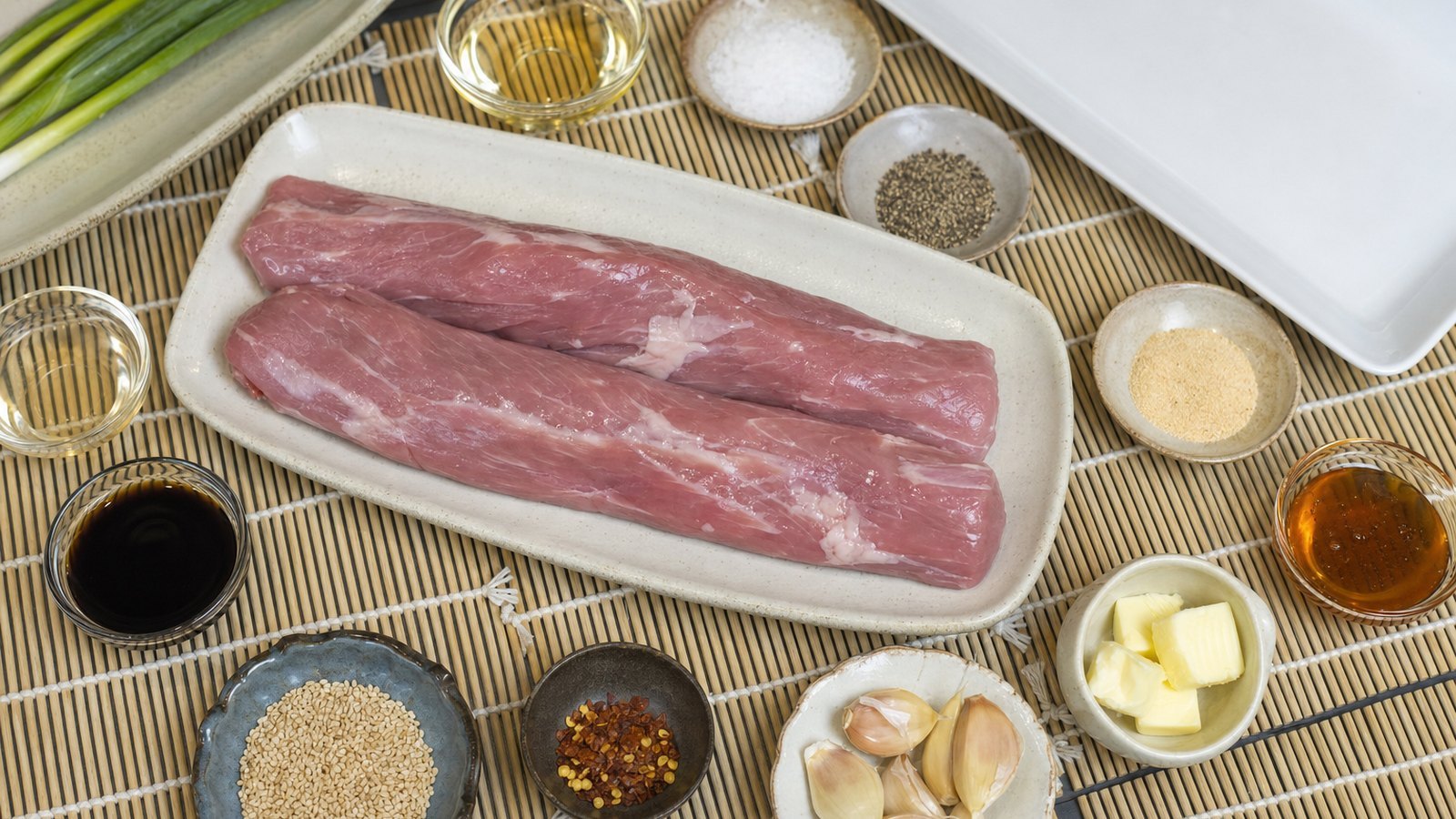
Honey. Any runny honey works. Clover is neutral. Wildflower or orange blossom adds a little character. Avoid heavily flavored honeys like buckwheat, which can taste bitter once reduced.
Soy sauce. Regular or low sodium both work. Low sodium gives you more room to season the pork itself with salt before searing.
Garlic. Fresh cloves, minced, and plenty of them. Six cloves sounds like a lot but the flavor softens as it cooks in the honey.
Rice vinegar and red pepper flakes. The vinegar cuts through the sweetness. The pepper flakes add warmth without real heat. Use a pinch or a full teaspoon depending on your table.
Butter. Two tablespoons whisked in at the end turn a thin, sticky sauce into a glossy glaze that clings to the sliced pork.
Ingredient notes and smart substitutions
Pork tenderloin
Do not confuse tenderloin with pork loin. Loin is a wide, thick roast that needs 45 minutes or more. If you only have loin, cut it into 1 1/2 inch thick chops and cook them as a skillet recipe, searing 4 minutes per side and finishing in the oven until they reach 145°F.
Boneless pork chops about 1 inch thick also work with this glaze. Sear them 3 to 4 minutes per side and skip the oven entirely.
Honey
Maple syrup swaps one for one and gives a slightly darker, less floral sauce. Brown sugar works too. Use 1/3 cup packed brown sugar plus 1 tablespoon of water in place of 1/3 cup honey.
Soy sauce
Tamari is a one for one gluten free swap. Coconut aminos are sweeter and less salty, so use the same amount and add an extra 1/4 teaspoon of salt to the pork before searing.
Rice vinegar
Apple cider vinegar or white wine vinegar substitute one for one. Fresh lime or lemon juice also works, and either one makes the sauce a touch fruitier.
Garlic
Fresh is best here. If you must use jarred, use 2 tablespoons and add it later in the reduction since it burns faster. Garlic powder is a last resort at 1 1/2 teaspoons.
How to make it
1. Trim and season the pork
Pat the tenderloins dry with paper towels and slide a thin knife under the silver skin to remove it. Tuck the thin tail end under itself and tie it with a bit of twine if it is much narrower than the rest, so it does not overcook.
Rub the pork with 1 tablespoon of oil and season all over with salt, pepper and a little garlic powder. Let it sit while the oven heats to 400°F.
2. Mix the glaze
Whisk the honey, soy sauce, rice vinegar, minced garlic and red pepper flakes in a small bowl. Having it ready means you can pour it into the hot pan without fumbling.
3. Sear
Heat a large oven safe skillet over medium high heat until a drop of water sizzles instantly. Add 1 tablespoon of oil and lay the tenderloins in without touching. Sear for 2 to 3 minutes per side, turning three or four times, until browned all over.
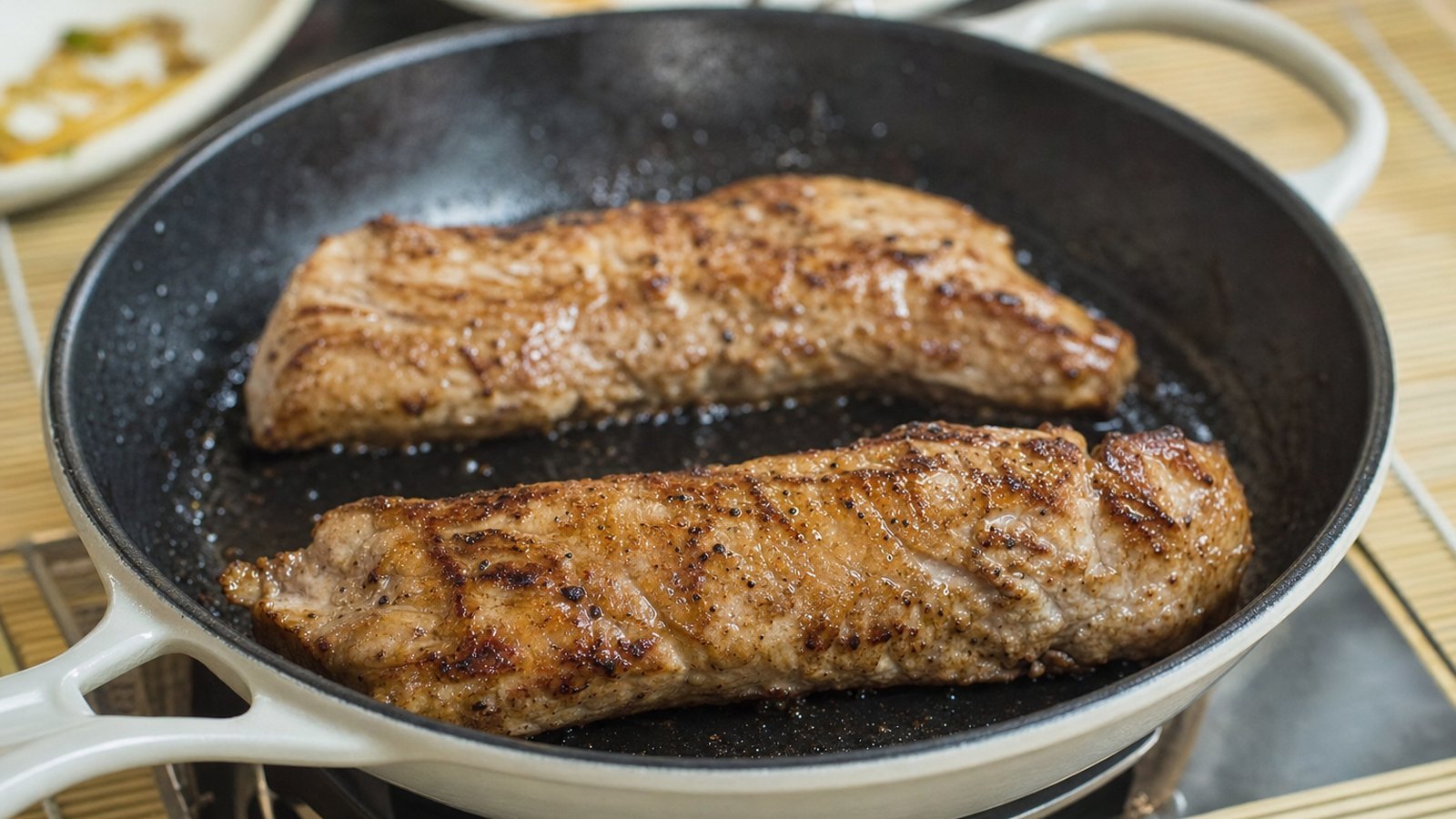
Do not crowd the pan. If your skillet is small, sear one tenderloin at a time and then fit both in for the roast.
4. Roast
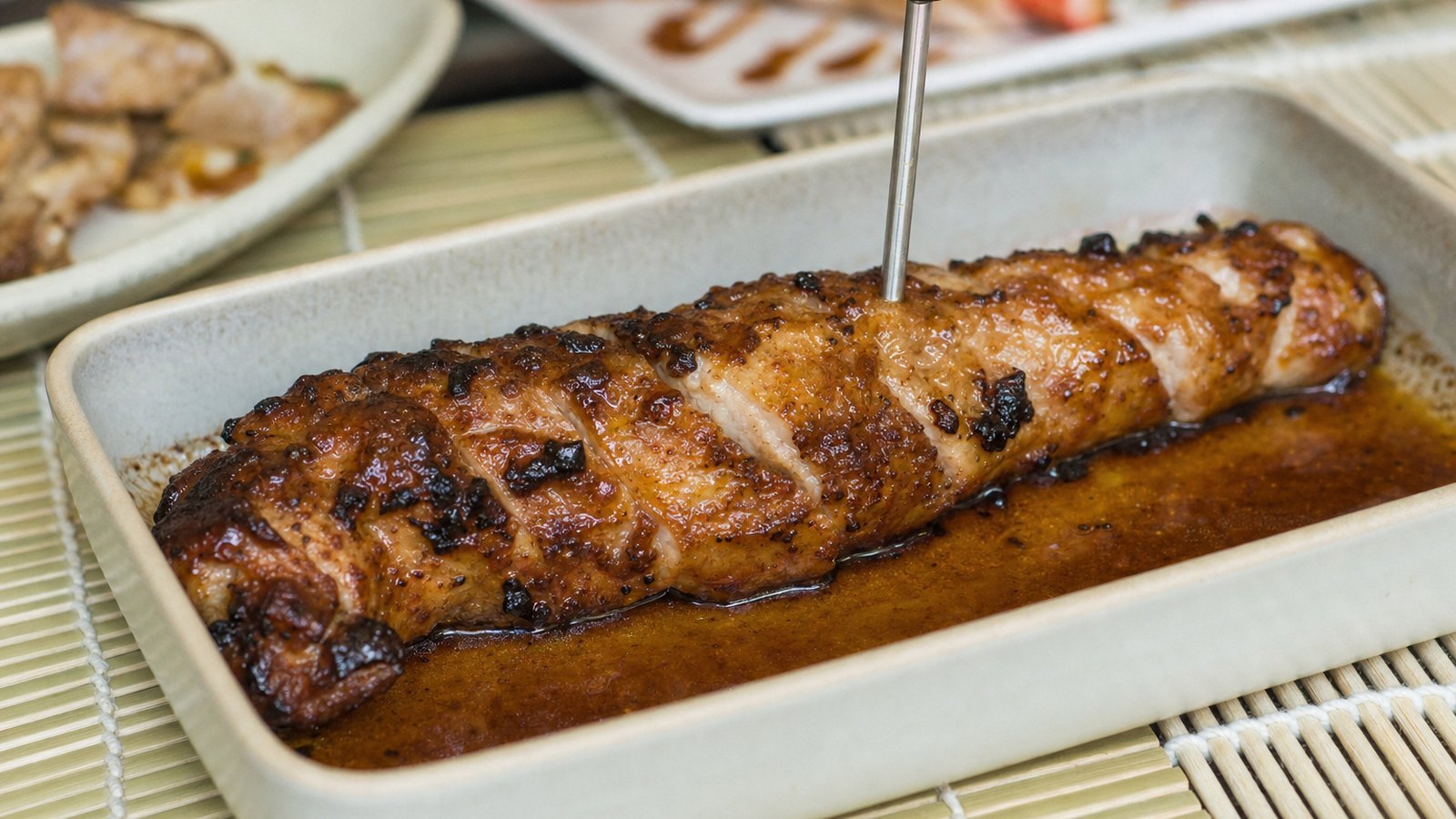
Pour half the glaze over the pork and transfer the skillet to the oven. Roast for 12 to 18 minutes, until a thermometer in the thickest part reads 145°F. A thinner tenderloin will be closer to 12 minutes, a thick one closer to 18.
Check early. The difference between perfect and dry is about 4 minutes with this cut.
5. Rest and reduce
Move the pork to a cutting board and rest it for 5 to 10 minutes. The temperature will climb a few degrees and the juices will settle.
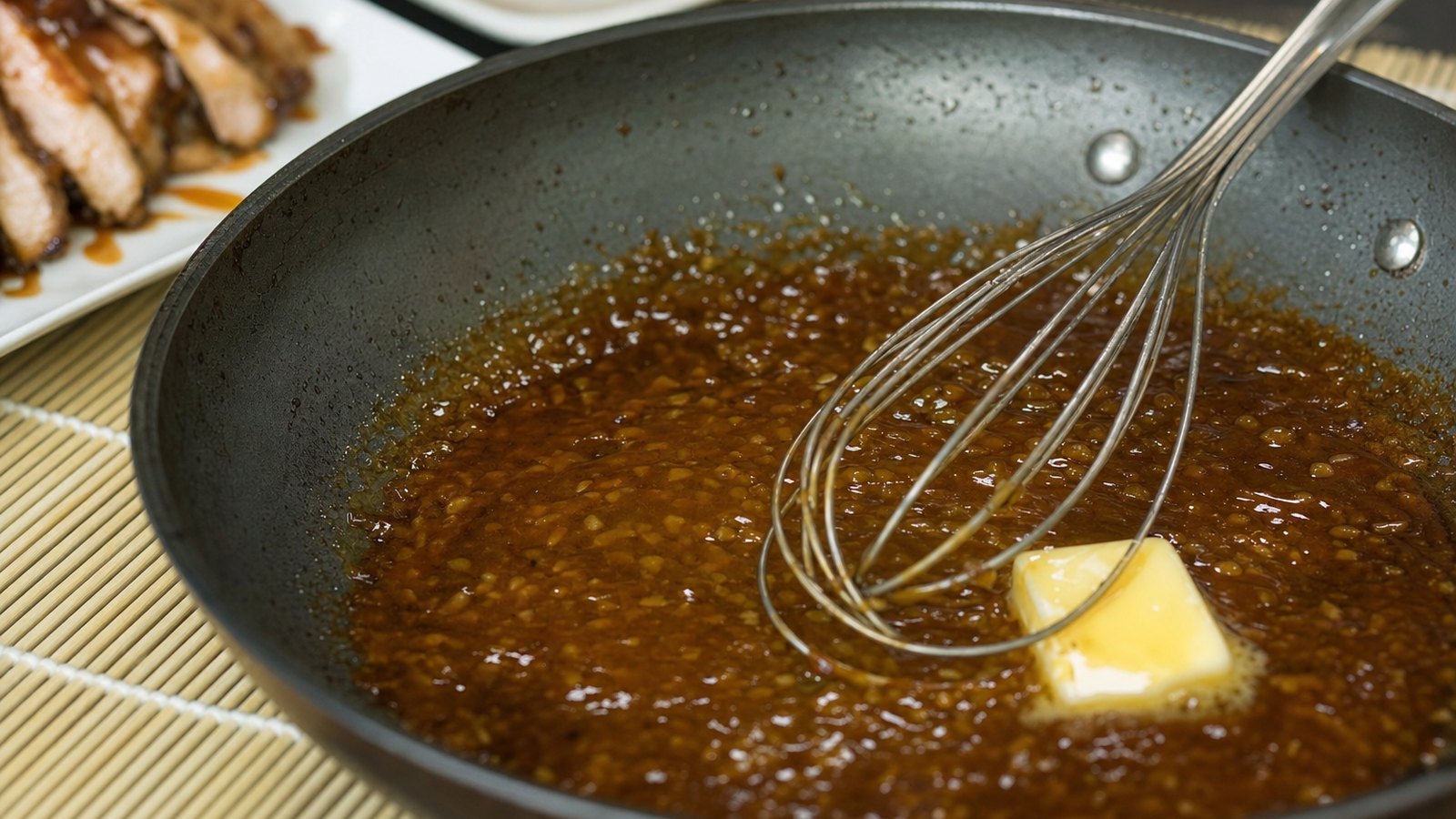
Meanwhile, set the skillet over medium heat, add the remaining glaze and simmer for 2 to 4 minutes until it bubbles thickly and coats a spoon. Whisk in the butter until glossy. Watch the handle, it is still hot from the oven.
6. Slice and serve
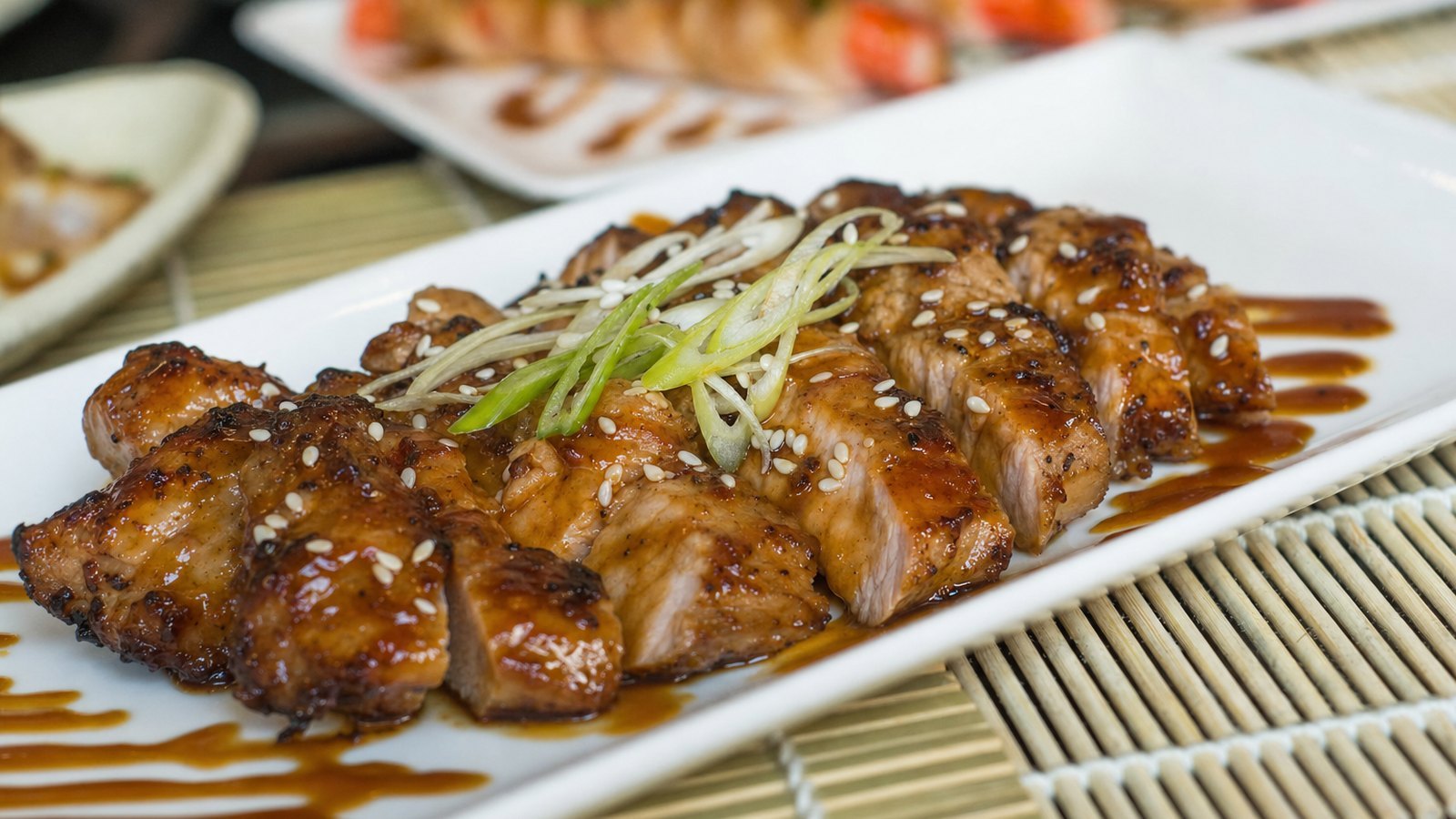
Slice the pork into 1/2 inch medallions, fan them on a platter and pour the glaze over. Scatter with sliced scallions and sesame seeds if you like.
Common mistakes and how to fix them
Dry, gray pork. It was cooked past 145°F. Use a thermometer every time and pull the pork as soon as it hits the number. A little pink in the center is correct and safe for whole cuts of pork.
Burnt glaze. Honey scorches fast over high heat. Reduce the sauce over medium, not high, and stir constantly once it starts to thicken. If it does catch, do not scrape the dark bits into the sauce.
Glaze that will not thicken. It just needs more time, or the pan was not hot enough. Keep simmering. If you are impatient, whisk 1 teaspoon of cornstarch into 1 tablespoon of cold water and stir it in for 30 seconds.
Meat that curls during searing. The silver skin was left on. It shrinks in the heat and pulls the meat into a bow. Trim it next time. For now, press the pork flat with a spatula while it sears.
Uneven cooking. Tenderloins taper. Fold the thin end under and tie it, or simply slice the thin end off after roasting and give it to whoever likes their pork more done.
Timing and make ahead plan
Active time is about 15 minutes, with 12 to 18 minutes of roasting and a 5 to 10 minute rest. Plan on 35 to 40 minutes total.
The glaze can be mixed up to 5 days ahead and refrigerated in a jar. Give it a shake before using since the honey settles.
The pork can be trimmed, seasoned and refrigerated up to 24 hours ahead. Let it sit out for 20 minutes before searing so it browns evenly and cooks through on schedule.
Cooked pork reheats reasonably well, but this is a dish that is at its best fresh. If you want a head start on a busy night, do the trimming and the sauce the day before and the actual cooking will take 30 minutes.
If you are serving rice, start it before the pork goes in the skillet. Rice takes about 20 minutes, which lines up almost exactly with the sear, roast and rest.
Tips for the best honey garlic pork tenderloin
Take the pork out of the fridge 20 to 30 minutes before cooking. Cold meat sears less evenly and takes longer to come up to temperature in the oven, which dries the outside.
Use a thermometer. Tenderloin is so lean that there is no visual cue for doneness. 145°F followed by a rest is the number to hit.
Get the skillet properly hot before the pork goes in. A hard sear in 2 to 3 minutes per side is what builds flavor. A tepid pan just steams the surface.
Slice against the grain, and slice thick. Half inch medallions stay juicier than thin slices, and they hold more glaze.
Taste the glaze before pouring it. If it seems too sweet, add another splash of vinegar. If it seems flat, add a pinch of salt or a few more drops of soy sauce.
Variations
Spicy. Add 1 tablespoon of sriracha or 1 teaspoon of chili crisp to the glaze. The heat pairs well with the honey.
Ginger and sesame. Add 1 tablespoon grated fresh ginger and 1 teaspoon toasted sesame oil to the glaze for a more pronounced Asian flavor.
Mustard and thyme. Skip the soy sauce and vinegar. Use 2 tablespoons Dijon mustard, 1 tablespoon apple cider vinegar and 1 teaspoon chopped fresh thyme with the honey and garlic for a more European glaze.
Orange. Replace the vinegar with fresh orange juice and add the zest of half an orange. Finish with a little chopped rosemary.
Sheet pan version. Sear the pork, then move it to a sheet pan with 1 inch chunks of sweet potato and broccoli florets that you started roasting 10 minutes earlier. Everything finishes together.
Equipment that makes this easier
A 12 inch cast iron or stainless steel skillet that can go from stovetop to oven is the key piece. Nonstick pans are not ideal since most cannot handle 400°F and they do not sear as well.
An instant read thermometer is not optional for this cut. A sharp boning or paring knife makes trimming the silver skin easy, and a small whisk keeps the glaze smooth.
Silicone tipped tongs let you turn the tenderloins without tearing the crust, and a small cutting board with a juice groove keeps the resting juices from running across the counter. Pour those juices into the glaze.
Scaling up or down
For one tenderloin, halve the glaze and keep all the times the same. A single tenderloin roasts in the same 12 to 18 minutes.
For four tenderloins, sear in two batches, then roast on a rimmed sheet pan with space between them. Pour the glaze over and roast for the same time, checking each piece separately since they will not all be the same size.
Double the glaze for a crowd, but reduce it in a wide skillet so it thickens in a reasonable time. A deep saucepan takes twice as long.
What to serve with it
Steamed jasmine rice or a pot of creamy mashed potatoes soaks up the glaze. For a green, quick roasted broccoli, sautéed green beans or a bag of snap peas tossed in a hot pan all work.
Roasted squash is a natural partner in fall. Try the sage roasted squash idea in these fall side dishes, or make a pot of butternut squash risotto when you want something more substantial.
If you love pork with something sweet on the side, apple cider pork chops and baked pork chops with apples and onions are in the same family.
How to store, freeze and reheat
Refrigerate sliced pork with its glaze in an airtight container for up to 4 days. Store the sauce with the meat so it stays moist.
Freeze cooked slices in a freezer bag with a spoonful of glaze for up to 3 months. Thaw overnight in the fridge before reheating.
Reheat gently. Warm the slices in a covered skillet over low heat with a splash of water for 3 to 5 minutes until they reach 165°F. The microwave works in 30 second bursts at half power, but it can toughen the pork if you rush it.
Leftover ideas
Chop the pork and toss it with cold rice, scrambled egg and frozen peas for a quick fried rice. Pile slices into a baguette with pickled cucumbers and cilantro for a banh mi style sandwich.
Thin slices are excellent in a rice bowl with steamed broccoli and extra glaze, or over a salad of shredded cabbage with a sesame dressing.
Nutrition notes
A serving of about 6 ounces of pork with glaze lands in the 330 to 400 calorie range, with roughly 40 grams of protein and 20 to 25 grams of sugar from the honey.
Those numbers are estimates and shift with the size of your tenderloins, how much glaze ends up on the plate and whether you use low sodium soy sauce.
Honey Garlic Pork Tenderloin
Seared and oven roasted pork tenderloin finished with a sticky honey garlic soy glaze made in the same skillet.
Equipment
- 12 inch oven safe skillet
- Instant read thermometer
- Small whisk
Ingredients
For the pork
- 2 pork tenderloins (about 1 to 1 1/4 lb each), silver skin trimmed
- 2 tbsp neutral oil, divided
- 1 tsp kosher salt
- 1/2 tsp black pepper
- 1/2 tsp garlic powder
For the honey garlic glaze
- 1/3 cup honey
- 1/4 cup low sodium soy sauce
- 2 tbsp rice vinegar
- 6 cloves garlic, minced
- 1/2 tsp red pepper flakes, or to taste
- 2 tbsp unsalted butter
- 2 scallions, thinly sliced (optional)
- 1 tsp toasted sesame seeds (optional)
Instructions
- Heat the oven to 400°F. Pat the tenderloins dry and trim off any silver skin. Rub them with 1 tbsp of the oil and season all over with the salt, pepper and garlic powder.
- In a small bowl, whisk together the honey, soy sauce, rice vinegar, garlic and red pepper flakes.
- Heat a 12 inch oven safe skillet over medium high heat until very hot. Add the remaining 1 tbsp oil, then the tenderloins. Sear for 2 to 3 minutes per side, turning to brown all sides, about 8 to 10 minutes total.
- Pour half of the glaze over the pork in the skillet. Transfer the skillet to the oven.
- Roast for 12 to 18 minutes, until an instant read thermometer in the thickest part reads 145°F.
- Transfer the pork to a cutting board and rest for 5 to 10 minutes.
- While the pork rests, set the skillet over medium heat. Add the remaining glaze and simmer, stirring, for 2 to 4 minutes until thick enough to coat a spoon. Remove from the heat and whisk in the butter.
- Slice the pork into 1/2 inch thick medallions. Pour the glaze over the top and garnish with scallions and sesame seeds. Serve warm.
Notes
- Food safety: Whole cuts of pork are safe at 145°F followed by a 3 minute rest. The center will look slightly pink, which is correct.
- Make ahead: The glaze can be mixed up to 5 days ahead and kept in the fridge.
- Storage: Refrigerate leftovers with the glaze for up to 4 days. Reheat gently in a covered skillet until 165°F.
- Glaze too thin? Whisk 1 tsp cornstarch into 1 tbsp cold water and stir into the simmering sauce for 30 seconds.
Frequently asked questions
What temperature should pork tenderloin be cooked to?
Cook pork tenderloin to 145°F in the thickest part, then rest it for at least 3 minutes. The center will be slightly pink and juicy. Cooking it to 160°F or beyond makes this lean cut dry.
How long does pork tenderloin take at 400°F?
After a quick sear, a 1 to 1 1/4 pound tenderloin takes about 12 to 18 minutes at 400°F to reach 145°F. Start checking at 12 minutes since thickness varies.
Can I make honey garlic pork tenderloin without searing it?
Yes. Place the seasoned pork on a foil lined sheet pan, pour over half the glaze and roast at 400°F for 20 to 25 minutes to 145°F. You lose some browning, so broil for the final 2 minutes for color.
Why is my pork tenderloin tough?
It was almost certainly overcooked. Tenderloin has very little fat, so it turns tough and dry quickly past 145°F. Use a thermometer and slice it thick against the grain.
Can I use pork loin instead of tenderloin?
Pork loin is a much larger roast and needs 45 to 60 minutes at 375°F. The glaze works, but the timing in this recipe does not. Cut a loin into 1 1/2 inch chops for a closer match.
Is the honey garlic glaze gluten free?
Not with regular soy sauce. Swap in tamari or a certified gluten free soy sauce one for one and the rest of the recipe is naturally gluten free.
About the author