Sheet pan sausage and vegetables is the dinner to make when you have no plan and even less energy. Cut some vegetables, slice some sausage, toss it all with oil and seasoning, and let a hot oven do the rest.
The trick is staggering the pan. Potatoes go in first because they need the most time. Everything else joins them partway through so nothing is raw and nothing is mush.
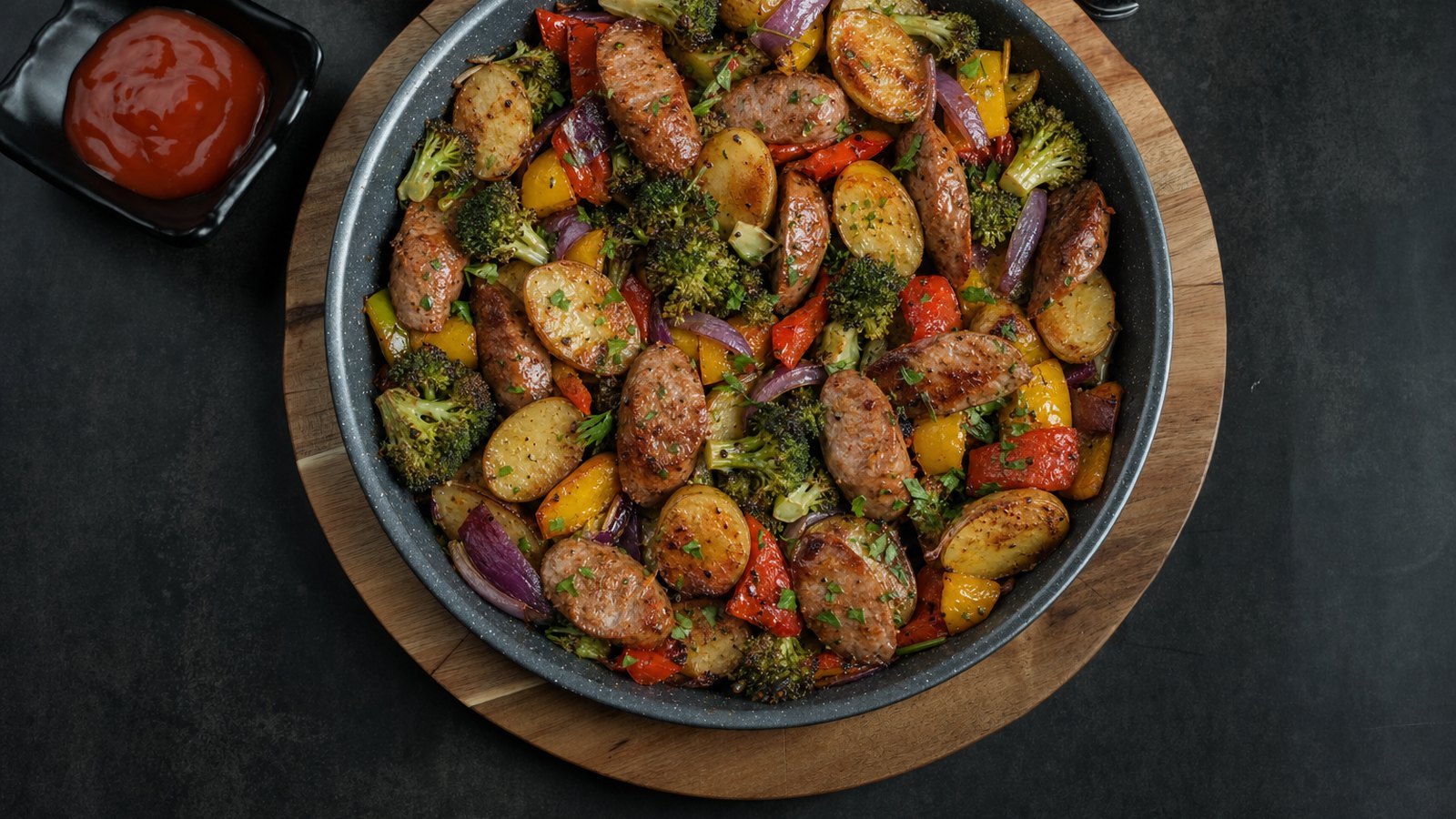
You end up with browned, juicy sausage, potatoes with crisp edges, sweet soft peppers and onions, and broccoli with a little char. One pan, about 40 minutes, and a meal that tastes like more work than it was.
Why this recipe works
- A 425°F oven is hot enough to brown everything without drying out the sausage.
- Giving the potatoes a 15 minute head start means they finish creamy inside and crisp outside at the same moment the peppers are done.
- Cutting the sausage into 1 inch pieces exposes more surface to the heat, so every bite has browned edges and the fat renders into the vegetables.
- A simple seasoning of garlic powder, smoked paprika, Italian seasoning, salt and pepper ties the sausage and vegetables together.
- Spreading everything in a single layer is what makes it roast instead of steam. This recipe is sized for one half sheet pan for exactly that reason.
- It reheats well and packs neatly, so it does double duty as lunch.
Ingredients you’ll need
Italian sausage. Raw pork Italian sausage links, sweet or hot, give the best result. They brown deeply and their fat seasons everything on the pan. Precooked chicken sausage also works and is a leaner option.
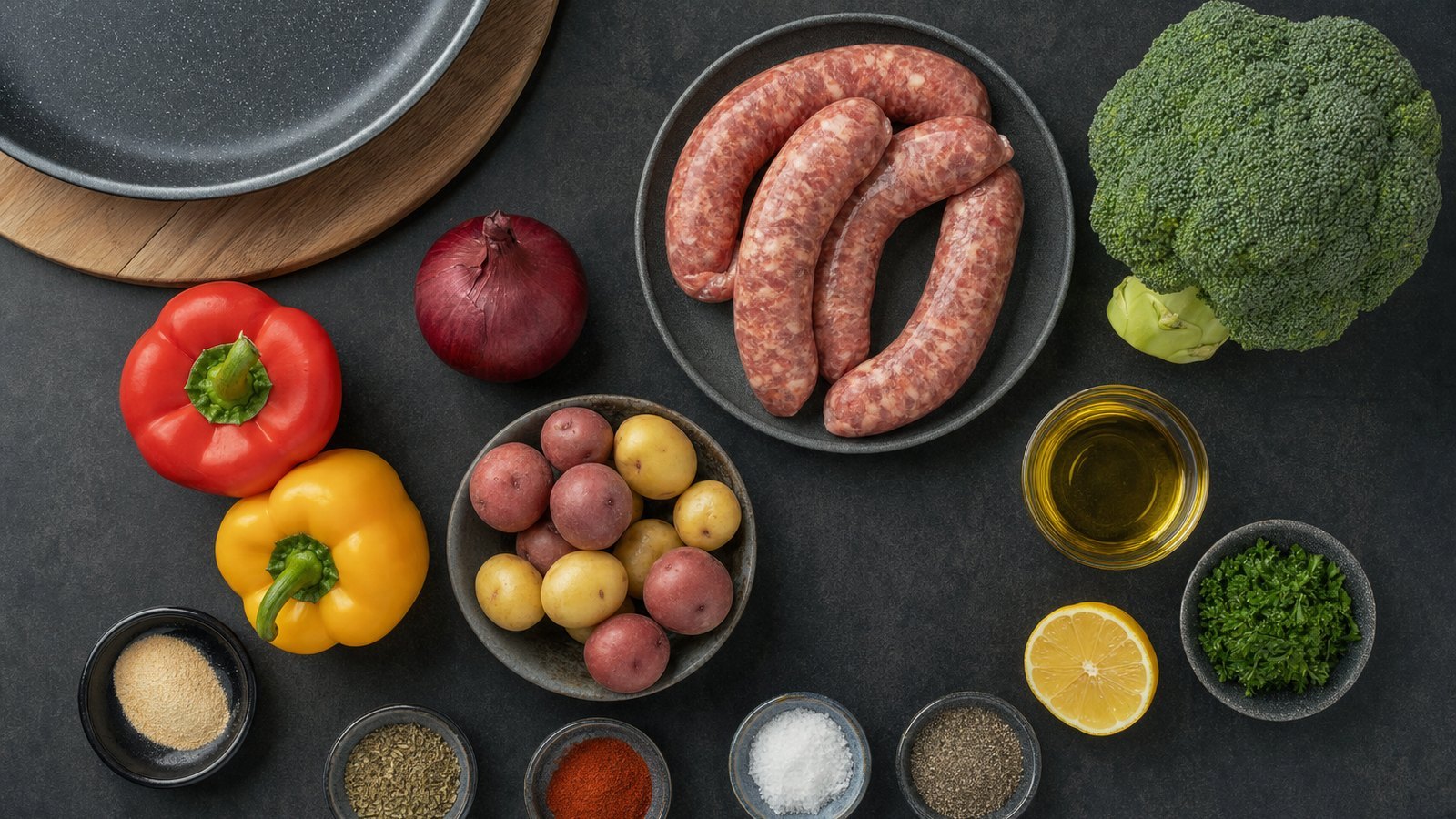
Baby potatoes. Small red or yellow potatoes, halved, are ideal. They hold their shape, crisp on the cut side and need no peeling.
Bell peppers and red onion. Two peppers in different colors and one red onion, cut into thick pieces. They turn sweet and soft with charred edges.
Broccoli. One head cut into medium florets. It roasts fast and picks up a nutty, slightly crisp texture. Add it with the peppers, not with the potatoes.
Olive oil and seasonings. About 3 tablespoons of oil, plus garlic powder, smoked paprika, dried Italian seasoning, kosher salt and black pepper. A squeeze of lemon and a handful of chopped parsley at the end wake everything up.
Optional finishers. Grated Parmesan, a drizzle of balsamic glaze or a spoonful of grainy mustard on the side all fit this dinner.
Lemon and parsley. They go on at the very end and are not optional if you want the dish to taste lively. Roasted food tends to read as sweet and salty, and a little acid and green freshness brings it back into balance.
Ingredient notes and smart substitutions
Sausage
Any fresh link sausage works one for one. Bratwurst, chicken apple sausage, kielbasa and andouille all roast well. Precooked sausages only need to heat through, so they can go in with the peppers instead of the potatoes. Raw pork sausage must reach 160°F, and raw chicken or turkey sausage must reach 165°F.
Potatoes
Swap baby potatoes for 1 1/2 pounds of Yukon Gold or russet cut into 1 inch chunks. Sweet potato works too, cut a bit larger since it softens faster. Skip the potatoes entirely and use 1 pound of butternut squash chunks with the same head start.
Bell peppers
Use any color. Green peppers taste more bitter, so combine them with a red or orange one. Poblano peppers add mild heat and a smoky note.
Broccoli
Brussels sprouts, halved, are a great fall swap and can go in with the potatoes. Green beans, zucchini chunks or cauliflower florets go in with the peppers. Zucchini releases a lot of water, so leave extra space around it.
Seasoning
The blend here is 1 teaspoon each garlic powder, smoked paprika and Italian seasoning, 1 teaspoon kosher salt and 1/2 teaspoon pepper. Swap in 2 teaspoons of Cajun seasoning for a Louisiana take, or 2 teaspoons of za’atar with lemon for something brighter. Cut the added salt if your blend already has it.
How to make it
1. Heat the oven and the pan
Set the oven to 425°F and put the empty sheet pan in while it heats. A hot pan gives the potato cut sides an immediate sizzle and a better crust.
If you like, line the pan with parchment for easier cleanup. Skip foil, which sticks to potatoes.
2. Start the potatoes
Halve the potatoes and toss them in a large bowl with 1 tablespoon of oil, 1/2 teaspoon salt and a third of the seasoning blend. Carefully spread them cut side down on the hot pan and roast for 15 minutes.
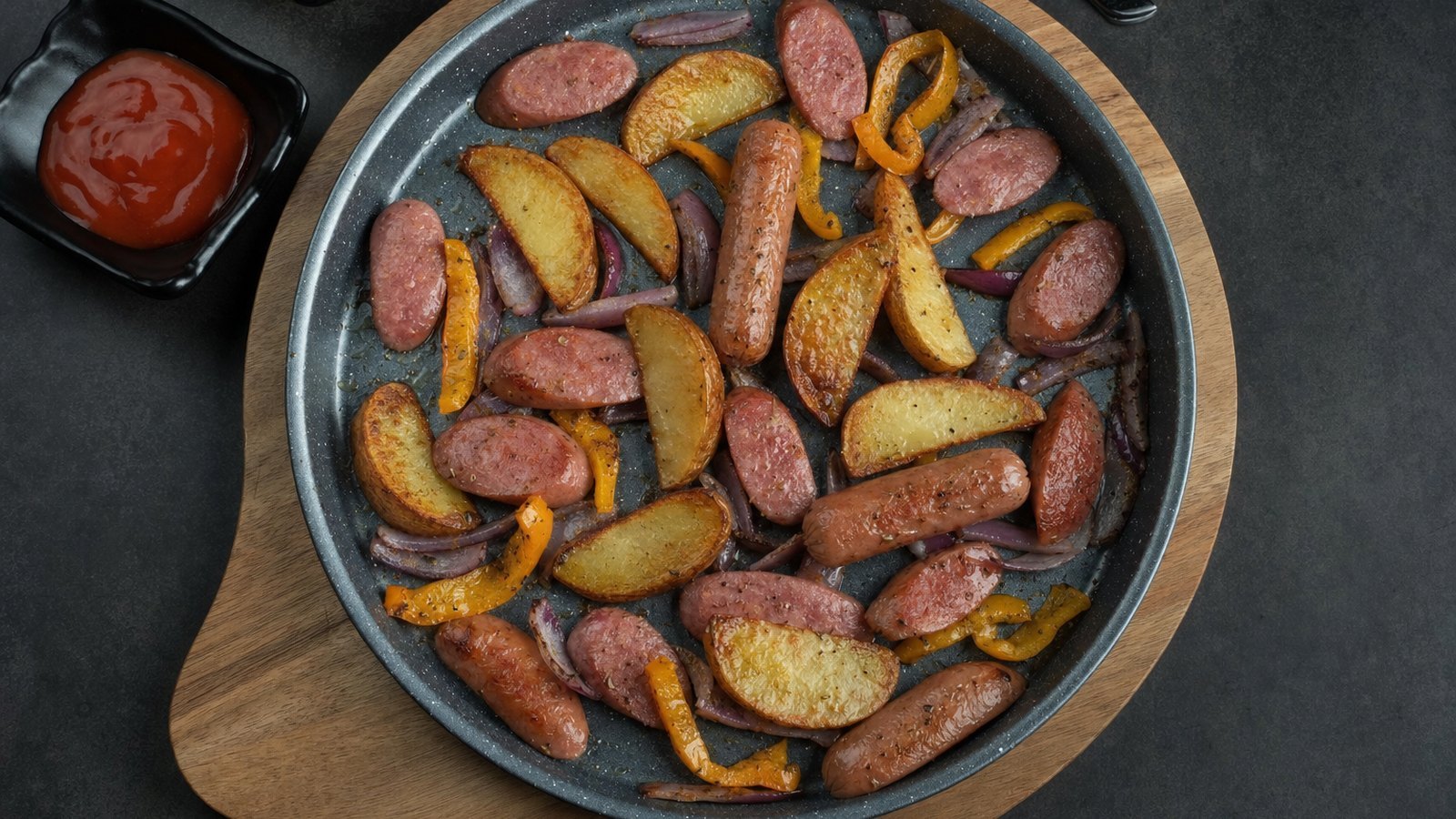
Cut side down matters. The flat surface in contact with the hot metal is what browns.
3. Prep everything else
While the potatoes roast, cut the sausage into 1 inch pieces, the peppers into 1 1/2 inch chunks and the onion into thick wedges. Cut the broccoli into florets about the size of a golf ball.
Toss all of it in the same bowl with the remaining oil, salt and seasoning. Make sure the broccoli gets oil in its crevices, or the florets will dry out.
4. Add and roast
Pull the pan out, flip the potatoes and push them to one side. Add the sausage and vegetables and spread everything into a single layer. Some overlap is fine, but a big pile will steam.
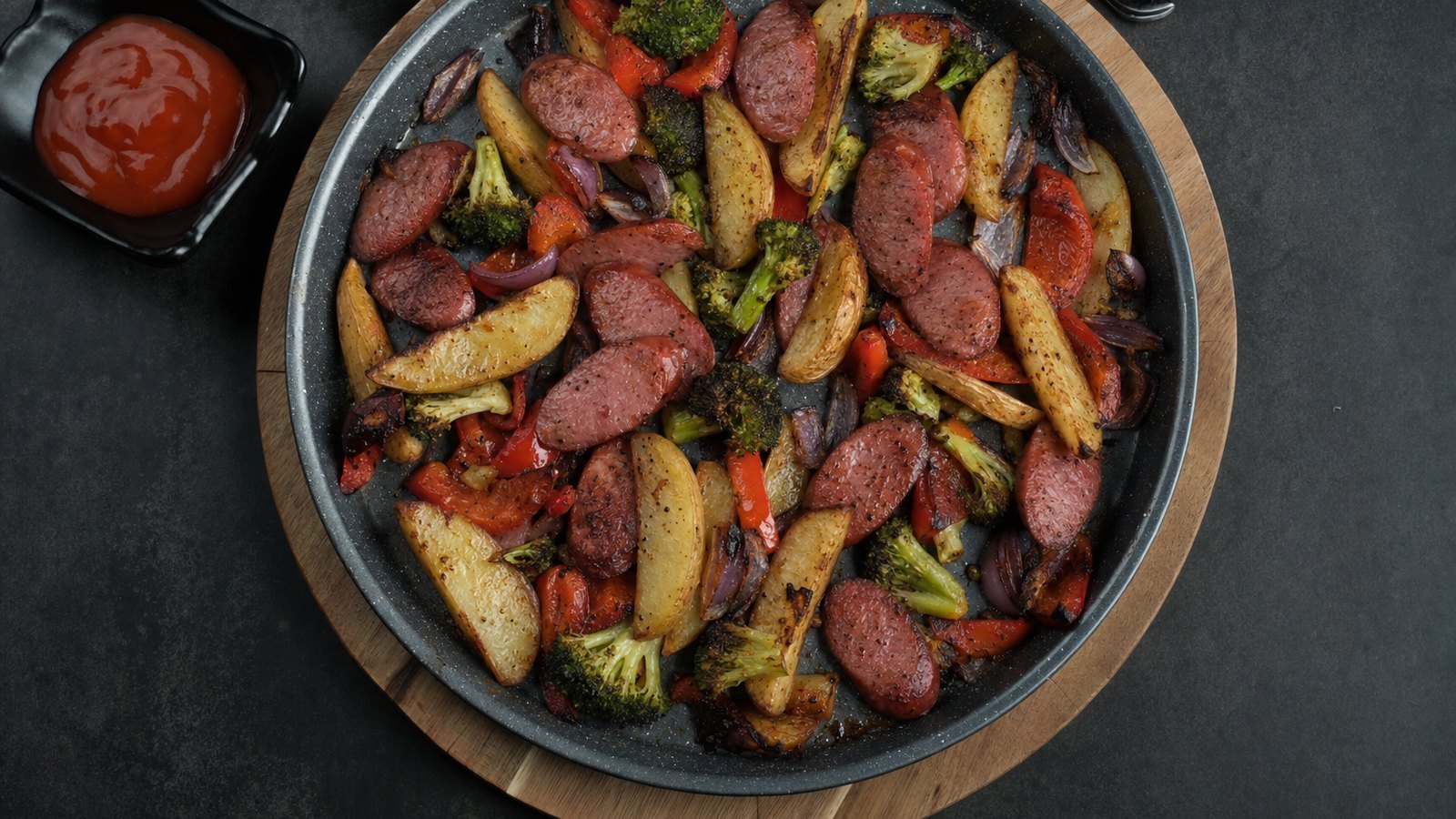
Roast for 20 to 25 minutes more, stirring once at the halfway mark, until the sausage is browned and reaches 160°F, the potatoes are fork tender and the vegetables have charred edges.
5. Finish
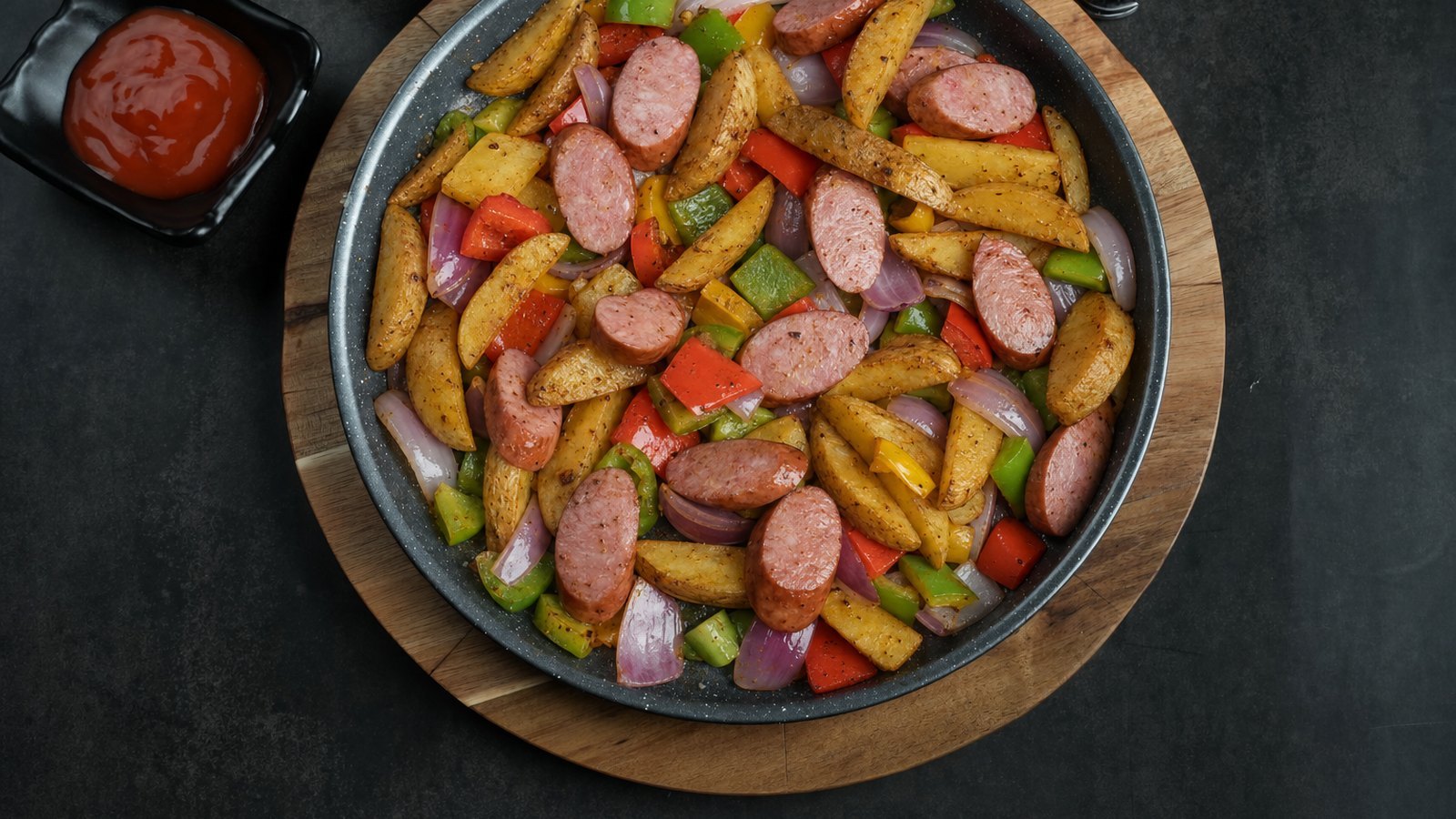
Squeeze half a lemon over the pan, scatter chopped parsley on top and taste a potato. It probably wants a pinch more salt. Serve straight from the pan.
If you want a sauce, whisk 2 tablespoons of grainy mustard with 1 tablespoon of honey and 1 tablespoon of the pan drippings. Spoon it over the sausage at the table.
Common mistakes and how to fix them
Soggy, pale vegetables. The pan was overloaded. Everything needs room for hot air to reach it. If the pile is deep, split it between two pans and rotate them halfway through.
Raw potatoes with burnt broccoli. Everything went in at once. Potatoes need 35 to 40 minutes total, broccoli needs 20. The head start solves this.
Sausage that is browned outside and undercooked inside. The pieces were cut too large or the sausage went in frozen. Cut raw links into 1 inch pieces and always start from thawed. Check with a thermometer for 160°F.
Dry, bland broccoli. It was not oiled well enough. Toss the florets separately if needed so oil gets into the buds, and salt them directly.
Everything tastes the same. Finish with acid and freshness. Lemon juice, a splash of vinegar, fresh herbs or a spoon of mustard on the side makes the flavors distinct again.
Sticking. Potatoes glue themselves to a cold, dry pan. Preheat the pan, use enough oil, and let the cut sides brown before you try to move them. They release once a crust forms.
Timing and make ahead plan
Total time is about 45 minutes, with 10 to 15 minutes of active prep. The potatoes roast alone for 15 minutes, then everything roasts together for 20 to 25.
Up to 2 days ahead, cut the peppers, onion and broccoli and store them in a bag in the fridge. Cut the sausage the same day or freeze it in pieces.
Potatoes can be cut a day ahead if you keep them in cold water in the fridge. Drain and dry them very well before oiling or they will steam.
Mix the seasoning blend in a small jar and keep it on hand. Make a triple batch and this dinner gets even faster.
Fully cooked, this dish holds well in the fridge, which makes it a smart pick for a weeknight meal plan. Roast on Sunday and reheat on Tuesday.
Tips for the best sheet pan sausage and vegetables
Cut everything to a size that suits its cooking time. Potatoes small, peppers medium, broccoli medium, onion in thick wedges so it does not burn.
Use a rimmed half sheet pan, about 18 by 13 inches. It is the right size for this amount, and it is sturdy enough not to warp at 425°F.
Do not stir too often. Once at the halfway point is enough. Every time you open the oven, the temperature drops and the browning slows.
Add a handful of cherry tomatoes for the last 10 minutes. They burst, and their juice turns into a light sauce for everything else.
If the sausage is not as brown as you like at the end, switch the oven to broil for 2 to 3 minutes and watch closely.
Taste the potatoes, not just the sausage, before you call it done. Sausage is seasoned by the butcher. The vegetables depend entirely on you, and they usually need that last pinch of salt.
Variations
Cajun. Use andouille sausage, add 2 teaspoons Cajun seasoning and swap the broccoli for sliced celery and extra peppers. Serve over rice.
Apple and sage. Use chicken apple sausage, swap the peppers for 2 sliced apples added in the last 15 minutes and season with dried sage instead of Italian seasoning.
Kielbasa and cabbage. Use kielbasa, replace the broccoli with thick wedges of green cabbage and finish with grainy mustard. It has a lot in common with this sausage and cabbage skillet.
Greek. Use chicken sausage, add zucchini and red onion, season with oregano and lemon, and finish with crumbled feta and olives.
Harvest. Swap the broccoli for Brussels sprouts and the potatoes for butternut squash chunks, and finish with a drizzle of maple syrup and balsamic.
Equipment that makes this easier
A heavy rimmed half sheet pan is the whole recipe. Thin, flimsy pans warp and cook unevenly. A large mixing bowl lets you coat the vegetables properly without oil ending up all over the counter.
A fish spatula or thin metal spatula scrapes the potatoes up cleanly. An instant read thermometer confirms the sausage is at 160°F without cutting into every piece.
Scaling up or down
For two people, halve everything and use a quarter sheet pan or a large baking dish. Times stay the same.
To double, use two full half sheet pans, not one crowded pan. Put them on separate racks and swap their positions when you stir at the halfway mark. Add 5 minutes if both pans are in at once.
Keep the ratio at roughly 1 pound of sausage to 3 pounds of vegetables. More sausage than that and the pan gets greasy.
Cooking for one? Roast the full batch anyway. Portion it into four containers and you have lunch covered for most of the week for the same amount of effort.
What to serve with it
This is a complete meal, but a few extras stretch it. A green salad with a sharp vinaigrette cuts the richness. Crusty bread or soft dinner rolls catch the pan juices.
For a heartier plate, spoon it over rice, polenta or egg noodles. If you are cooking for a crowd and want a second main, sheet pan chicken thighs with root vegetables can roast at the same temperature on another rack.
More ideas for the side are in this list of fall side dishes.
How to store, freeze and reheat
Cool leftovers within 2 hours and refrigerate in an airtight container for up to 4 days. Keep the lemon and parsley for serving so they stay fresh.
Freeze in portions for up to 3 months. The sausage, peppers and onion freeze fine. The potatoes and broccoli lose some texture but are still good in a hash or soup.
Reheat on a sheet pan at 400°F for 10 to 12 minutes until everything is sizzling and the sausage reaches 165°F. The microwave works for a single portion in 2 minutes, but the potatoes will be soft rather than crisp.
Leftover ideas
Chop everything small and fry it in a skillet with a little oil for a breakfast hash, then top with fried eggs. Tuck it into tortillas with cheese for quesadillas.
Stir leftovers into cooked pasta with a spoonful of pesto, or add them to a pot of broth with a can of white beans for a fast soup.
Cold leftovers are surprisingly good chopped into a grain salad with farro or quinoa, a handful of arugula and a sharp mustard vinaigrette. No reheating needed.
Nutrition notes
A serving with pork Italian sausage lands roughly in the 500 to 600 calorie range, with about 22 to 26 grams of protein and 30 to 35 grams of carbohydrate.
Chicken sausage cuts the fat and calories noticeably. These are estimates and vary with the brand of sausage and how much oil you use.
Sheet Pan Sausage and Vegetables
Italian sausage, baby potatoes, bell peppers, red onion and broccoli roasted together on one sheet pan until browned and crisp.
Equipment
- Rimmed half sheet pan (18 by 13 inch)
- Large mixing bowl
- Instant read thermometer
Ingredients
- 1 lb raw Italian sausage links, sweet or hot, cut into 1 inch pieces
- 1 1/2 lb baby red or yellow potatoes, halved
- 2 bell peppers (red, orange or yellow), cut into 1 1/2 inch pieces
- 1 large red onion, cut into thick wedges
- 1 medium head broccoli, cut into florets (about 4 cups)
- 3 tbsp olive oil, divided
- 1 tsp garlic powder
- 1 tsp smoked paprika
- 1 tsp dried Italian seasoning
- 1 tsp kosher salt, divided
- 1/2 tsp black pepper
- 1/2 lemon
- 2 tbsp chopped fresh parsley
Instructions
- Heat the oven to 425°F with a rimmed half sheet pan inside. In a small bowl, stir together the garlic powder, smoked paprika and Italian seasoning.
- In a large bowl, toss the halved potatoes with 1 tbsp of the olive oil, 1/2 tsp of the salt and about a third of the seasoning blend.
- Carefully remove the hot pan, spread the potatoes on it cut side down and roast for 15 minutes.
- Meanwhile, add the sausage, bell peppers, onion and broccoli to the same bowl. Toss with the remaining 2 tbsp oil, 1/2 tsp salt, the pepper and the rest of the seasoning blend.
- Remove the pan, flip the potatoes and add the sausage and vegetables. Spread everything into a single even layer.
- Roast for 20 to 25 minutes, stirring once halfway through, until the sausage is browned and reaches 160°F, the potatoes are tender and the vegetables are charred at the edges.
- Squeeze the lemon over the pan, scatter with parsley, taste for salt and serve hot.
Notes
- Food safety: Raw pork sausage is done at 160°F. Raw chicken or turkey sausage must reach 165°F. Precooked sausage only needs to heat through and can be added with the peppers.
- Do not crowd the pan: If everything does not fit in one layer, use two pans and rotate them halfway through.
- Storage: Refrigerate up to 4 days. Reheat on a sheet pan at 400°F for 10 to 12 minutes until sizzling and 165°F.
- Make ahead: Cut the peppers, onion and broccoli up to 2 days ahead. Mix the seasoning blend in a jar and keep it on hand.
Frequently asked questions
What temperature do you cook sausage and vegetables in the oven?
425°F is ideal. It is hot enough to brown the sausage and crisp the potatoes in about 40 minutes without drying anything out. Raw pork sausage is done at 160°F.
Do I need to cook the sausage before putting it on the sheet pan?
No. Raw sausage cut into 1 inch pieces cooks through in 20 to 25 minutes at 425°F alongside the vegetables. Just confirm it reaches 160°F for pork or 165°F for chicken or turkey sausage.
Why are my sheet pan vegetables soggy?
The pan was too crowded or the oven was not hot enough. Spread everything in a single layer with a little space between pieces, use a fully preheated 425°F oven and stir only once.
Can I use frozen vegetables?
You can, but the result is softer. Add frozen broccoli or peppers straight from the freezer with the sausage, do not thaw them first, and expect a bit more moisture on the pan.
How do I keep potatoes from sticking to the sheet pan?
Preheat the pan, coat the potatoes well in oil and place them cut side down. Leave them alone for the first 15 minutes so a crust forms. They release easily once browned. Parchment paper also helps.
About the author