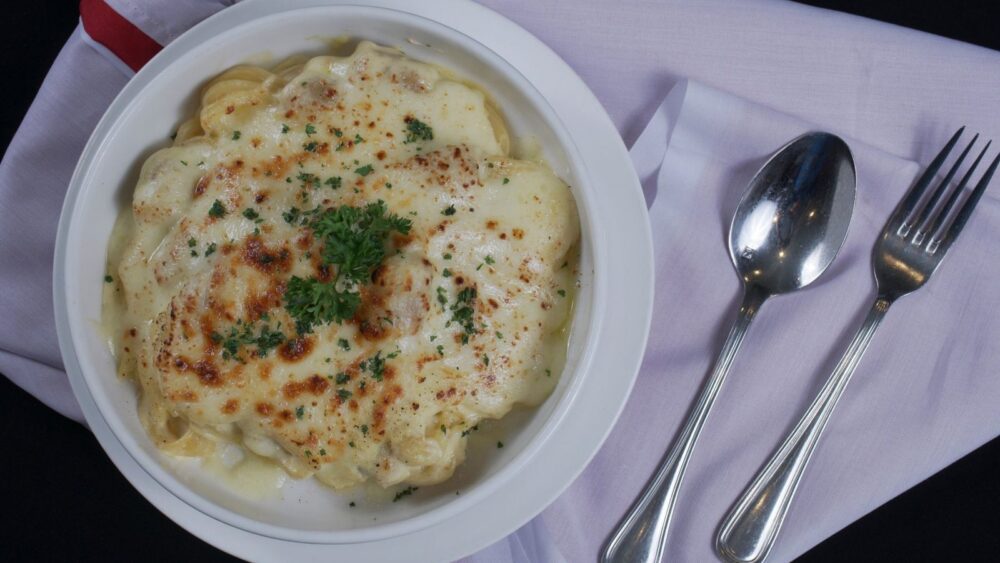
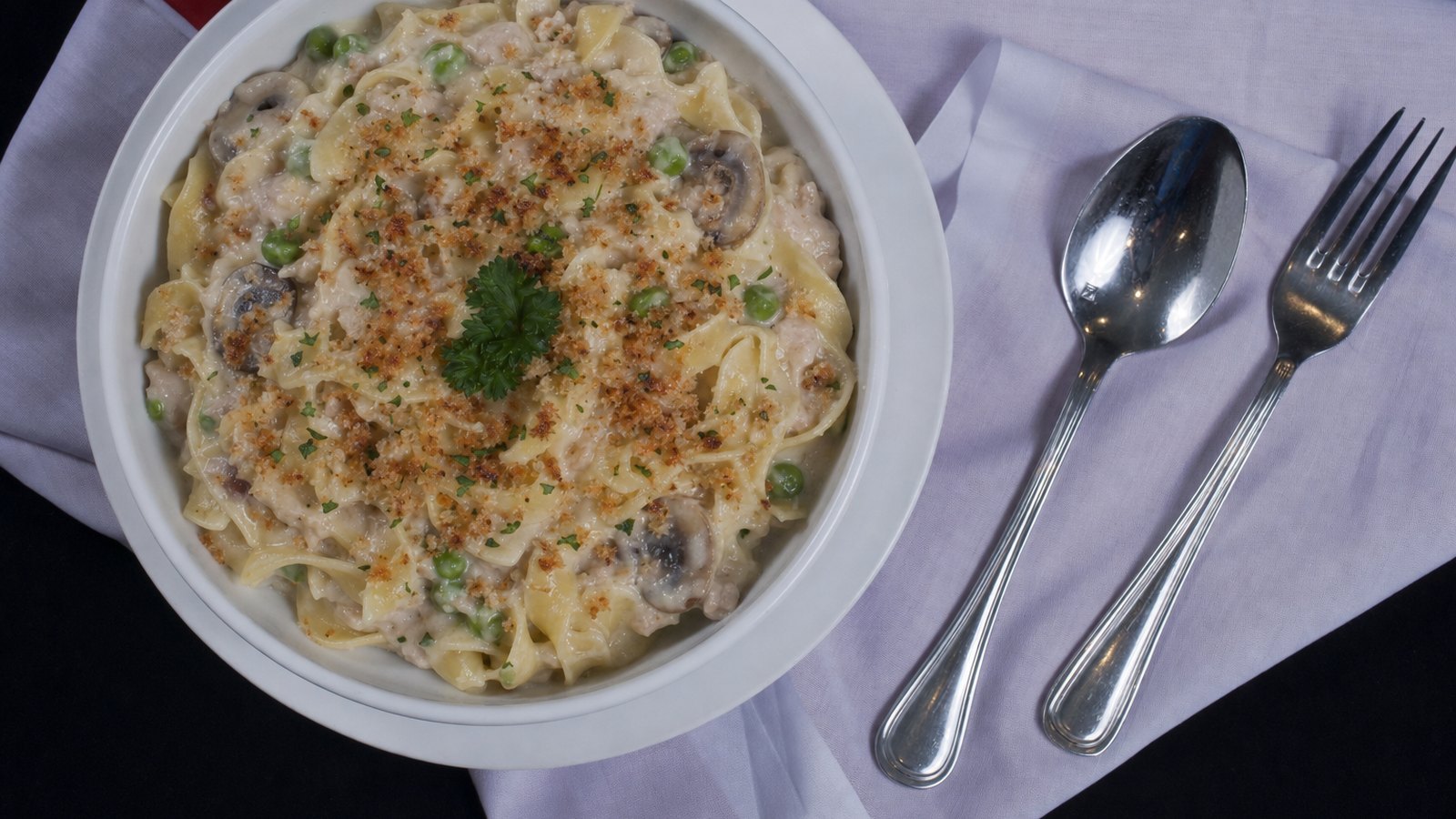
Tuna noodle casserole is a pantry dinner that deserves better than its reputation. Made with a real cream sauce instead of canned soup, good tuna, sauteed mushrooms and a crunchy buttered topping, it is genuinely delicious and still costs very little.
The whole thing comes together in about 50 minutes with one pot, one skillet and a baking dish. Most of the ingredients are already in your cupboard and freezer.
It feeds 6, reheats well and makes a solid lunch the next day. This is the version to make when you want to convince someone that tuna casserole can actually be good.
Why this recipe works
- A homemade sauce instead of canned soup. Butter, flour, milk and broth take 5 minutes and taste clean and creamy rather than salty and flat.
- Mushrooms are browned, not simmered. Cooking them in butter until golden gives real savory depth to the sauce.
- Egg noodles are undercooked. Pulling them 2 minutes early keeps them tender rather than mushy after baking.
- Tuna goes in gently at the end. Folding in the tuna last keeps it in distinct flakes instead of dissolving into paste.
- A buttered panko topping. Panko tossed with melted butter and Parmesan bakes into a crisp golden crust that crushed chips or crackers cannot match.
Ingredients you’ll need
Canned tuna is the star, so buy the good stuff. Solid white albacore packed in water has firm, clean flavored chunks. You need three 5 oz cans, well drained.
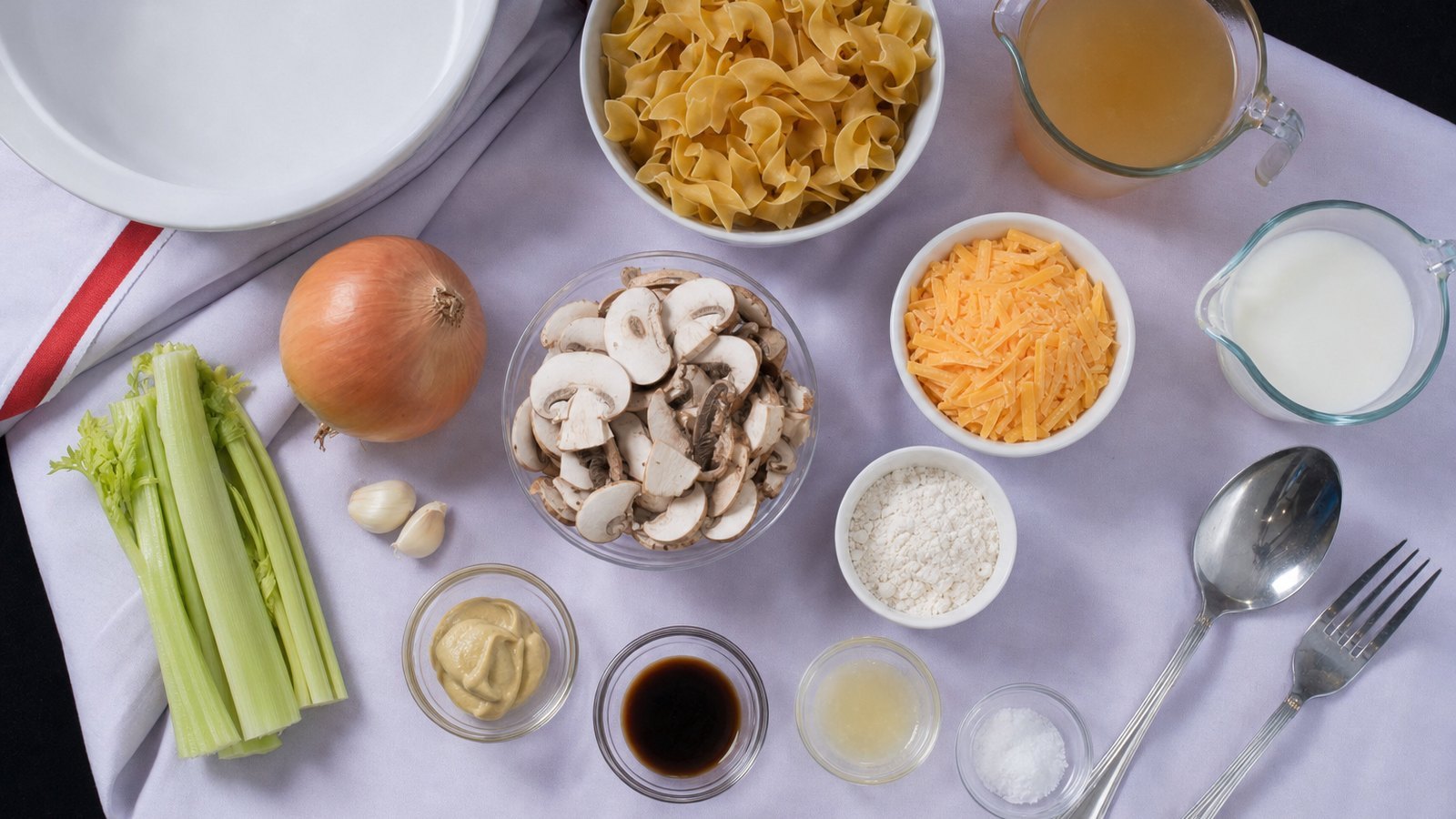
Wide egg noodles are traditional. They have a soft, rich texture that suits the creamy sauce. Twelve ounces is enough for a 9 by 13 inch dish.
Mushrooms add the savory note that canned soup was originally standing in for. Cremini or white button both work.
Onion, celery and garlic form the base. Celery gives the casserole its classic gentle crunch.
Butter, flour, milk and broth make the sauce. Whole milk gives the best body. Chicken or vegetable broth adds savory depth.
Frozen peas add color and sweetness. They go in frozen and cook in the oven.
Sharp cheddar melts into the sauce for richness. Panko and Parmesan make the topping.
Dijon mustard, lemon juice and a little Worcestershire season the sauce and keep the casserole from tasting heavy.
Ingredient notes and smart substitutions
Tuna
Chunk light tuna works but is softer and stronger tasting. Tuna packed in oil is richer. Drain it very well and reduce the butter in the sauce by 1 tbsp. Two 6 oz cans of canned salmon or 2 cups of shredded cooked chicken make a fine substitute.
Noodles
Use 12 oz of rotini, medium shells or penne if you do not have egg noodles. Cook them 2 minutes short of the package time. Gluten free pasta works too, though it softens faster, so pull it 3 minutes early.
Mushrooms
If mushrooms are not welcome at your table, skip them and add an extra celery stalk and 1/2 cup of diced red bell pepper. Use 1 tsp of soy sauce in the sauce to replace the savory depth.
Milk
Two percent milk gives a slightly thinner sauce. Half and half makes it richer. A cup of evaporated milk plus a cup of broth is a good pantry option.
Cheese
Swiss or Gruyere is a classic swap for cheddar in tuna casserole and gives a nuttier flavor. Monterey Jack melts smoothly and stays mild. Use the same 1 1/2 cups.
Topping
Crushed butter crackers, about 1 1/2 cups, replace the panko one for one. Crushed potato chips are a nostalgic option and need no extra butter. Skip the Parmesan if you use chips, since they are salty enough.
How to make it
1. Cook the noodles
Heat the oven to 375°F and grease a 9 by 13 inch baking dish. Bring a large pot of salted water to a boil and cook the egg noodles 2 minutes less than the package says. Drain and set aside.
2. Brown the mushrooms
Melt 2 tbsp of butter in a large skillet over medium high heat. Add the sliced mushrooms and cook without stirring for 3 minutes, then stir and cook 3 to 4 minutes more until golden and their liquid has evaporated.
Browning takes patience. If the mushrooms are still releasing liquid, keep going. Wet gray mushrooms make a bland sauce.
3. Cook the vegetables
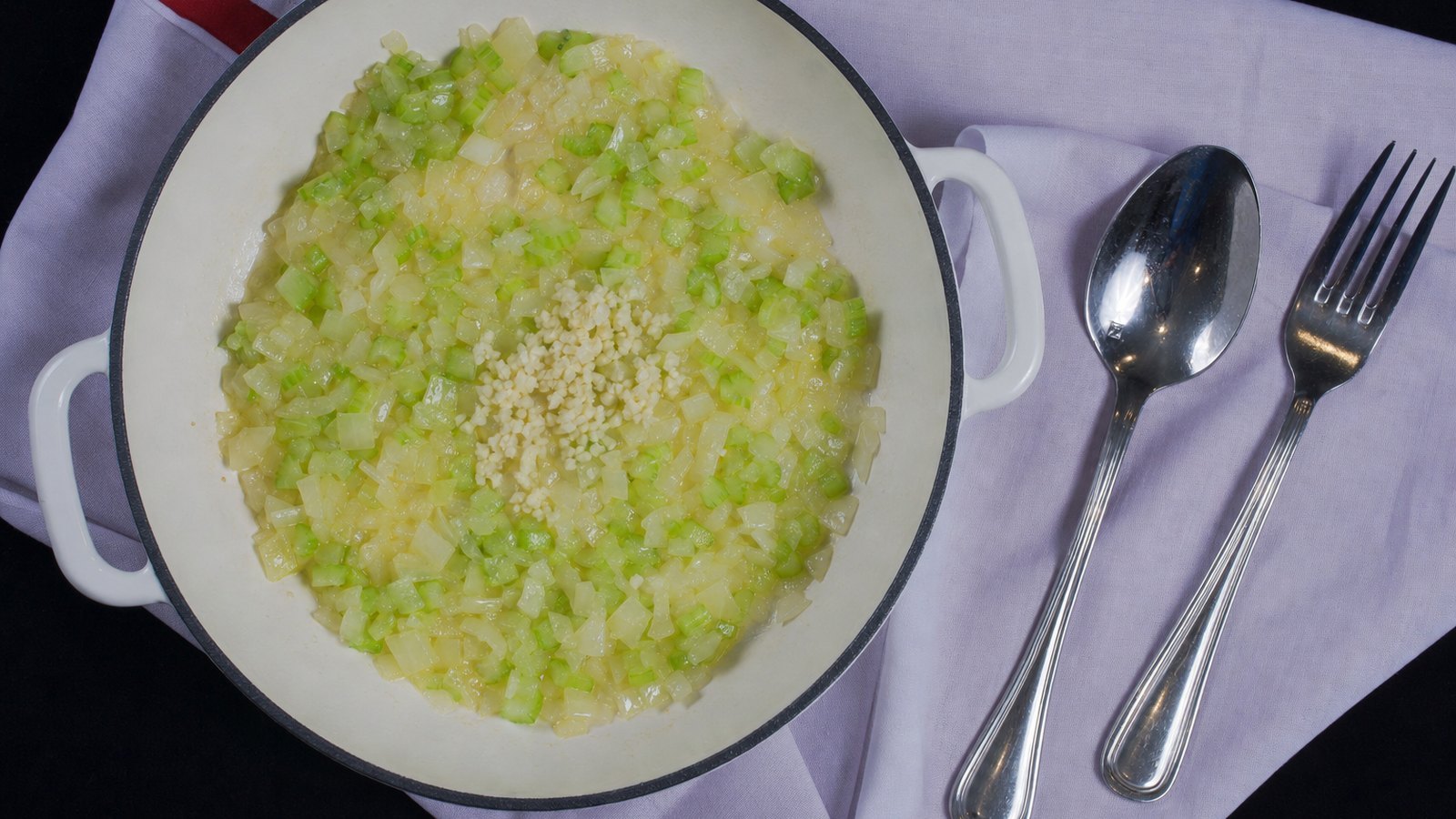
Add the onion and celery with a pinch of salt and cook for 5 minutes until soft. Stir in the garlic for 30 seconds.
4. Make the sauce
Add the remaining 3 tbsp of butter and let it melt. Sprinkle the flour over the vegetables and stir for 1 minute. Slowly whisk in the broth, then the milk. Simmer for 4 to 5 minutes, stirring often, until the sauce thickens enough to coat a spoon.
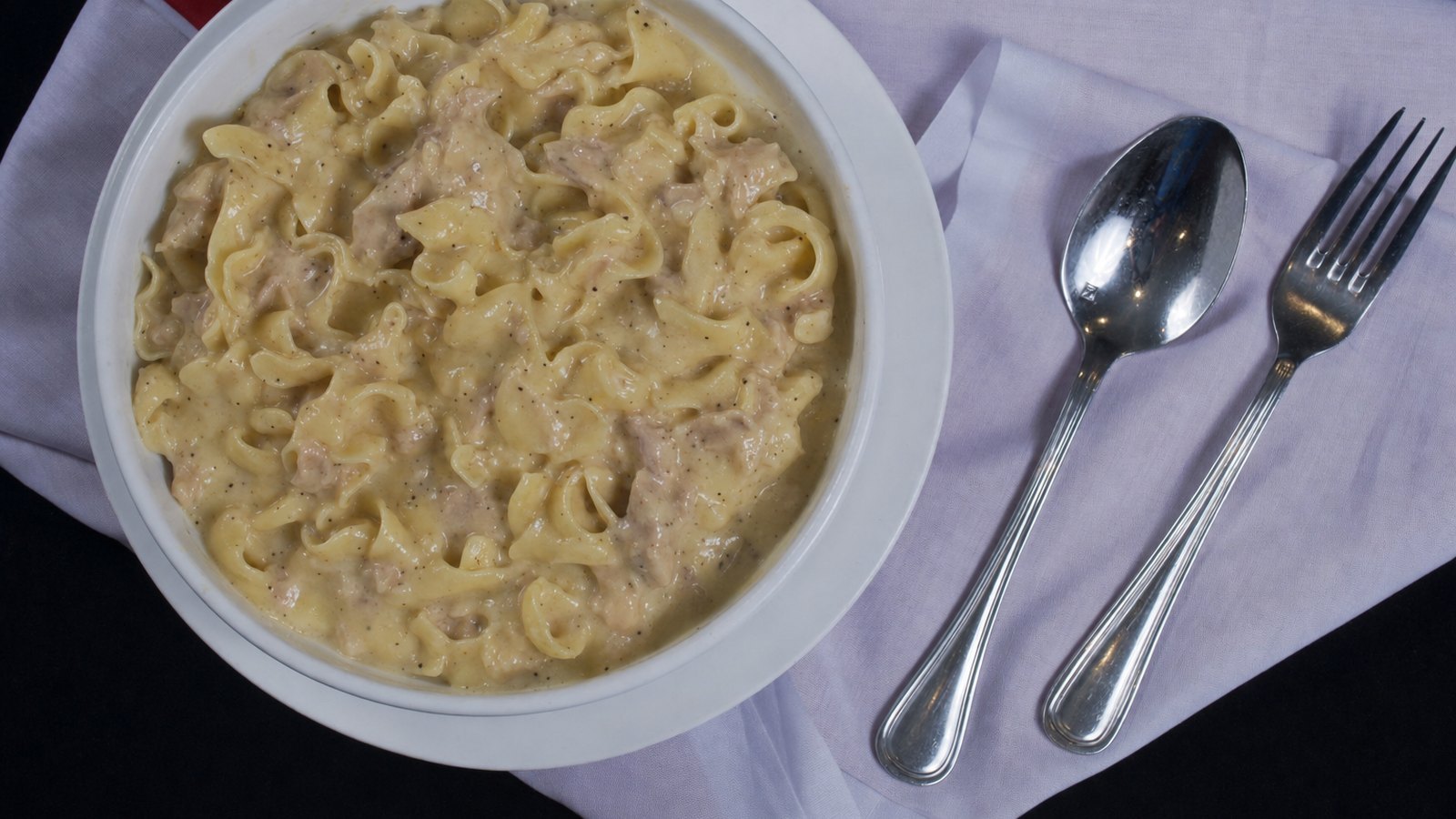
Take the skillet off the heat and stir in the cheddar, Dijon, Worcestershire, lemon juice, salt and pepper. Taste and adjust. The sauce should taste well seasoned on its own.
5. Combine
Add the noodles and frozen peas to the sauce and toss gently. Fold in the drained tuna in large flakes, taking care not to break it up too much. Transfer to the baking dish.
6. Top and bake
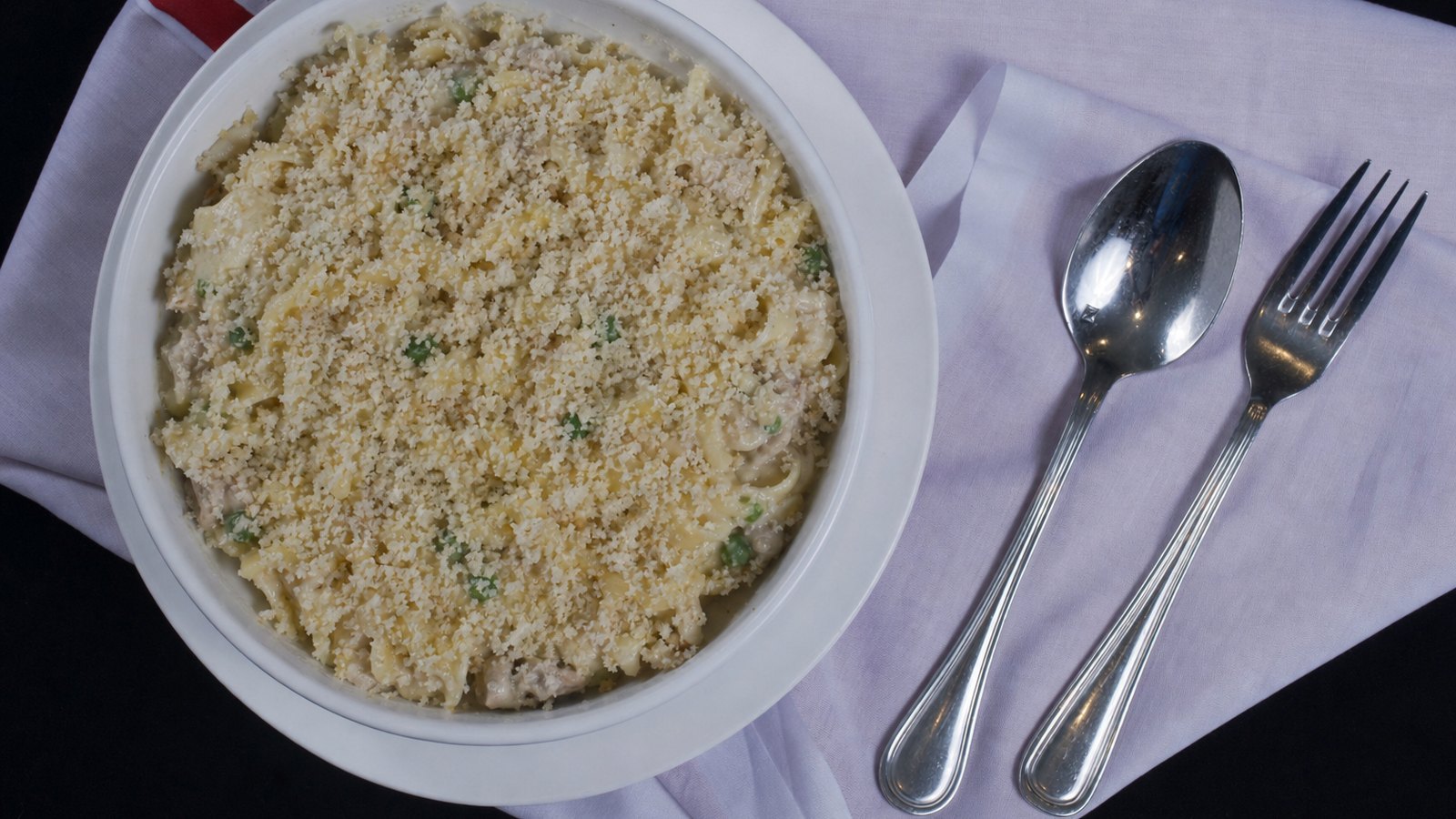
Mix the panko, Parmesan and 2 tbsp of melted butter in a small bowl and sprinkle evenly over the casserole. Bake uncovered for 20 to 25 minutes until the top is golden and the edges bubble.
Rest for 5 minutes, then sprinkle with chopped parsley or dill and serve. The short rest lets the sauce thicken slightly so portions hold together on the plate.
Common mistakes and how to fix them
The casserole is dry. The noodles kept absorbing sauce. Keep the sauce on the loose side before baking, and do not bake longer than 25 minutes. When reheating, add a splash of milk.
The noodles are mushy. They were fully cooked before baking. Pull them 2 minutes early. They should still be slightly firm when you drain them.
It tastes fishy. The tuna was not drained well or was a lower grade. Press the tuna firmly in a sieve to remove liquid and use solid white albacore. Lemon juice in the sauce also helps.
The sauce is lumpy. The liquid was added too fast. Whisk the broth in slowly, a little at a time, before adding the milk.
The topping is soggy. The panko was not tossed with butter, or the casserole was covered. Butter helps the crumbs brown, and baking uncovered lets them crisp.
The tuna disappeared. It was stirred too hard. Fold it in gently at the very end so the flakes stay whole.
Timing and make ahead plan
Total time is about 50 minutes. The noodles cook while you make the sauce, so active work is around 25 minutes, then 20 to 25 minutes in the oven.
Up to 1 day ahead: assemble the casserole without the topping, cover and refrigerate. Add the buttered panko right before baking and bake for 30 to 35 minutes since it starts cold. The center should reach 165°F.
Up to 3 days ahead: make the sauce and refrigerate it separately. Reheat it gently on the stove with a splash of milk, then toss with freshly cooked noodles, peas and tuna.
Freezer: assemble without the topping in a freezer safe dish and freeze for up to 2 months. Thaw overnight in the fridge, add the topping and bake. The texture is best fresh, but it holds up reasonably well.
For a pantry heavy week, this pairs well with a big pot of creamy tomato soup made the same afternoon. Both rely on ingredients you likely already have. Our guide to organizing your pantry for fall cooking makes nights like this easier.
Tips for the best tuna noodle casserole
Drain the tuna thoroughly. Extra liquid thins the sauce and adds a strong flavor. Pressing it in a fine sieve for a minute makes a difference.
Season the sauce boldly. Noodles and tuna are both fairly plain, so the sauce carries the flavor of the whole dish.
Do not skip the lemon and Dijon. That small amount of acidity and sharpness keeps a creamy casserole from tasting heavy.
Slice the mushrooms thin so they brown quickly and distribute evenly through the sauce. Thick slices stay chewy and clump together in a few bites.
Serve promptly. Like most creamy pasta dishes, this one is at its best within 15 minutes of leaving the oven.
Taste the sauce before the noodles go in. Once everything is combined it is much harder to fix the seasoning, and a bland sauce cannot be rescued by the topping.
Warm the milk for 30 seconds in the microwave before whisking it in. Warm milk blends into the roux faster and lowers the chance of lumps.
Variations
Extra cheesy: stir an additional 1/2 cup of cheddar into the noodles and scatter 1/2 cup over the top before adding the panko.
Broccoli: replace the peas with 2 cups of small broccoli florets, blanched for 2 minutes in the noodle water before you add the noodles.
Dill and lemon: add 2 tbsp of chopped fresh dill and the zest of a lemon to the sauce for a brighter, Scandinavian feel.
Spicy: add 1/2 tsp of cayenne or a few dashes of hot sauce to the sauce and use pepper Jack in place of cheddar.
Salmon: use two 6 oz cans of salmon or 12 oz of flaked cooked salmon in place of the tuna.
Chip topped: for the nostalgic version, skip the panko and Parmesan and top with 2 cups of lightly crushed potato chips in the last 10 minutes of baking.
Equipment that makes this easier
A 12 inch skillet with sides at least 2 inches high holds the sauce and lets you toss all the noodles in it. A saute pan or a wide Dutch oven both work.
A 9 by 13 inch baking dish is the right size. A 3 quart oval dish also works.
A whisk keeps the sauce smooth. A fine mesh sieve makes draining tuna quick and thorough.
A large colander drains the noodles fast, and a rubber spatula folds the tuna in gently without breaking it up.
An instant read thermometer is useful for checking that a make ahead casserole has reached 165°F in the center before it comes out of the oven.
Scaling up or down
To double it, make the sauce in a Dutch oven and divide the mixture between two 9 by 13 inch dishes. Baking time stays the same. Do not use one deep dish, since the center will take too long to heat and the noodles at the edges will dry out.
To halve it, use 6 oz of noodles, two cans of tuna and half of everything else in an 8 by 8 inch dish. Bake for 18 to 20 minutes.
As written, it serves 6 as a main dish. Add a salad and it stretches to 8.
What to serve with it
A crisp green salad with a sharp vinaigrette is the ideal partner for this creamy casserole. Steamed green beans or roasted carrots also work well.
A cup of creamy tomato soup to start turns it into a classic diner style supper.
Sliced tomatoes with salt and pepper, or quick pickled cucumbers, add welcome acidity. For more ideas, browse our fall side dishes.
How to store, freeze and reheat
Refrigerator: cool, cover and refrigerate for up to 3 days. The noodles will absorb more sauce as they sit, so leftovers are firmer than the fresh casserole.
Portion leftovers into single serving containers before chilling. They cool faster, which is safer, and they reheat more evenly than a big block.
Freezer: baked leftovers freeze for up to 2 months, though the texture of the noodles softens. Unbaked casserole freezes better, as described above.
Reheat: place portions in a baking dish, add a splash of milk, cover with foil and warm at 350°F for 20 minutes. For a single portion, microwave covered in 90 second bursts with a spoonful of milk. Leftovers should reach 165°F.
Leftover ideas
Stir cold leftovers with a beaten egg, form into patties and pan fry in butter until golden on both sides for tuna noodle cakes.
Spoon reheated casserole into a hollowed roll or over a split baked potato for a quick lunch.
Loosen leftovers with extra milk and broth and warm gently for a creamy tuna and noodle soup.
Top a reheated portion with fresh panko and broil for 2 minutes to bring back the crunch.
Nutrition notes
One of 6 servings lands roughly in the range of 480 to 560 calories with about 30 to 34 grams of protein. Tuna is a lean protein, so most of the fat comes from the butter, cheese and whole milk in the sauce and topping.
Using two percent milk and a little less cheese trims those figures. Treat them as an estimate, since tuna brands and noodle types vary.
Tuna Noodle Casserole
Egg noodles, albacore tuna, peas and browned mushrooms in a homemade cheddar cream sauce with a crisp panko topping.
Equipment
- Large pot
- 12 inch skillet with high sides
- 9 by 13 inch baking dish
- Whisk
Ingredients
For the casserole
- 12 oz wide egg noodles
- 5 tbsp butter, divided
- 8 oz cremini or white mushrooms, sliced
- 1 medium yellow onion, diced
- 2 celery stalks, diced
- 2 garlic cloves, minced
- 1/4 cup all purpose flour
- 1 1/2 cups low sodium chicken or vegetable broth
- 2 cups whole milk
- 1 1/2 cups shredded sharp cheddar
- 1 tbsp Dijon mustard
- 1 tsp Worcestershire sauce
- 1 tbsp fresh lemon juice
- 1 tsp kosher salt, plus more to taste
- 1/2 tsp black pepper
- 1 1/2 cups frozen peas
- 3 cans (5 oz each) solid white albacore tuna in water, drained well
For the topping
- 1 1/2 cups panko breadcrumbs
- 1/3 cup grated Parmesan
- 2 tbsp butter, melted
- Chopped parsley or dill, for serving
Instructions
- Heat the oven to 375°F and grease a 9 by 13 inch baking dish. Cook the egg noodles in salted boiling water for 2 minutes less than the package directs. Drain and set aside.
- Melt 2 tbsp of butter in a large skillet over medium high heat. Add the mushrooms and cook undisturbed for 3 minutes, then stir and cook 3 to 4 minutes more until golden and dry.
- Add the onion and celery with a pinch of salt. Cook for 5 minutes until soft. Stir in the garlic for 30 seconds.
- Add the remaining 3 tbsp of butter. Once melted, sprinkle in the flour and stir for 1 minute. Slowly whisk in the broth, then the milk. Simmer for 4 to 5 minutes until thick enough to coat a spoon.
- Remove from the heat. Stir in the cheddar, Dijon, Worcestershire, lemon juice, salt and pepper until smooth. Taste and adjust the seasoning.
- Add the noodles and frozen peas and toss to coat. Gently fold in the tuna in large flakes. Transfer to the baking dish.
- Stir together the panko, Parmesan and melted butter. Sprinkle evenly over the casserole.
- Bake uncovered for 20 to 25 minutes until golden on top and bubbling at the edges. Rest for 5 minutes, sprinkle with parsley or dill and serve.
Notes
- Make ahead: assemble without the topping up to 1 day ahead. Add the topping and bake 30 to 35 minutes from cold until the center reaches 165°F.
- Drain the tuna very well by pressing it in a fine sieve. This keeps the sauce thick and the flavor clean.
- Swap in two 6 oz cans of salmon or 2 cups of shredded cooked chicken for the tuna.
- Leftovers keep 3 days. Reheat with a splash of milk to 165°F.
Frequently asked questions
How do you make tuna noodle casserole without cream of mushroom soup?
Make a quick sauce by browning mushrooms in butter, then adding flour, broth and milk and simmering until thick. Stir in cheddar, Dijon and lemon juice. It takes about 10 minutes and tastes much fresher.
What kind of tuna is best for casserole?
Solid white albacore packed in water gives firm, mild chunks that hold their shape. Chunk light is softer and stronger tasting. Either way, drain it very well before folding it in.
Why is my tuna casserole dry?
The noodles absorb sauce as the casserole bakes and sits. Undercook the noodles by 2 minutes, keep the sauce slightly loose, bake no longer than 25 minutes and add a splash of milk when reheating.
Can I make tuna noodle casserole ahead?
Yes. Assemble it without the topping, cover and refrigerate up to a day. Add the buttered panko just before baking and bake 30 to 35 minutes until the center reaches 165°F.
Can I freeze tuna noodle casserole?
Yes, though the noodles soften a little. Freeze it unbaked without the topping for up to 2 months, thaw overnight in the fridge, add the topping and bake as directed.
About the author