
Sheet pan chicken thighs are the fall weeknight dinner that practically cooks itself. Chop the vegetables, season everything, and let a hot oven do the rest.
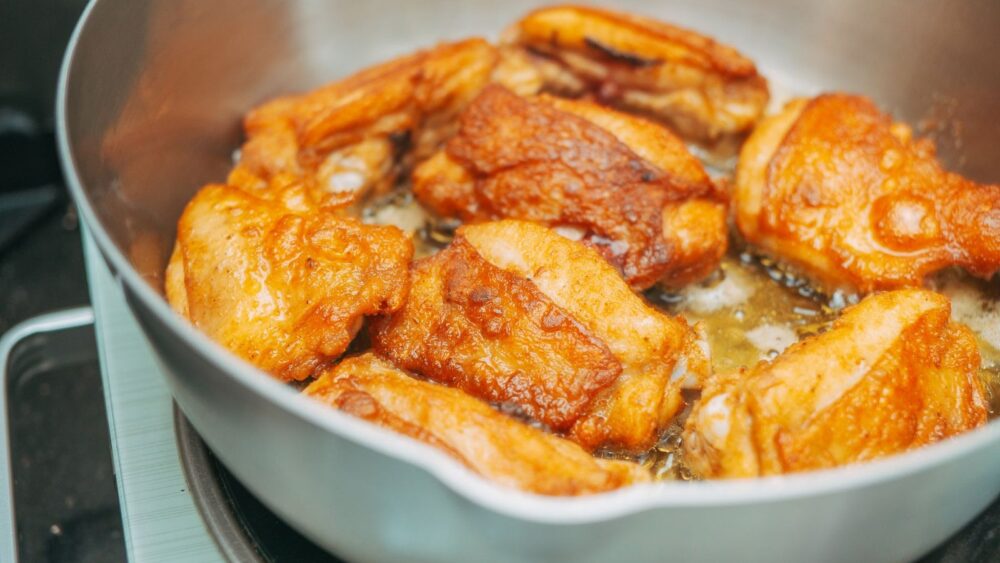
As the chicken roasts, its fat drips onto the carrots, parsnips and sweet potatoes, so the vegetables caramelize in flavorful drippings. The skin turns crackly and golden.
You get a complete dinner and only one pan to wash. That is hard to beat on a Tuesday.
Why this recipe works
- Bone-in, skin-on thighs. They are affordable, flavorful and hard to overcook. The bone keeps the meat juicy and the skin protects it while it crisps.
- High heat. Roasting at 425°F browns the vegetables and renders the chicken skin without drying out the meat.
- Evenly cut vegetables. Cutting everything to a similar size means the vegetables finish at the same time as the chicken.
- Dry skin. Patting the chicken dry before seasoning is the simplest way to get crisp skin.
- Chicken on top of the pan, not buried. Nestling the thighs skin-side up between the vegetables lets the skin get direct heat while the drippings season the vegetables.
Ingredients you’ll need
The full list and amounts are in the recipe card. Here is what matters about each ingredient.
- Bone-in, skin-on chicken thighs. Look for thighs that are similar in size, about 6 to 8 ounces each, so they cook evenly. Boneless, skinless thighs work too but cook faster; see the recipe notes.
- Carrots and parsnips. Both get sweet and caramelized in a hot oven. If your parsnips are very thick at the top, halve that part lengthwise so it cooks evenly with the thinner ends.
- Sweet potato. Adds creamy texture and color. Yukon Gold potatoes are a good swap if you prefer something less sweet.
- Red onion. Cut into wedges with the root end attached so the layers hold together and char at the edges.
- Olive oil, garlic and herbs. Dried thyme, rosemary and smoked paprika give a cozy, savory flavor. Fresh rosemary sprigs tucked into the pan add a lovely aroma.
- Lemon. A squeeze of lemon at the end brightens the rich chicken and sweet vegetables.
Ingredient notes and smart substitutions
Chicken thighs
Eight bone-in, skin-on thighs weigh about 3 pounds. Pick a package where the thighs are close in size so they finish together. Bone-in drumsticks swap 1:1 by weight and cook in the same time. Bone-in split chicken breasts also work, but they need 40 to 50 minutes and should come out at 165°F, not higher, or they dry out. Boneless, skinless thighs are covered in the recipe notes.
Carrots and parsnips
Four medium carrots and three medium parsnips is about 1 1/2 pounds total. Choose parsnips no thicker than 1 1/2 inches at the top; the very large ones have a woody core that never softens. If you can’t find parsnips, use all carrots or add turnips at the same weight.
Sweet potato
One large sweet potato, about 12 ounces, cut into 1-inch cubes. Yukon Gold potatoes, red potatoes or butternut squash (cut into 1 1/4-inch cubes, since squash cooks faster) all work at the same weight. Russets get mealy at this temperature and are best avoided.
Red onion
One large red onion cut through the root into 8 wedges. Yellow onion or 12 ounces of shallots, halved, are fine swaps. Leave the root end attached to each wedge so it stays together on the pan.
Olive oil
Three tablespoons total is enough for the vegetables and chicken; the thighs render more fat as they cook. Avocado oil is a good higher-smoke-point swap. Do not use butter alone at 425°F; it browns and then burns over 40 minutes.
Seasoning
The blend is 2 teaspoons kosher salt plus dried herbs and smoked paprika. If you use table salt, cut it to 1 1/4 teaspoons, since it is denser. Sweet paprika works in place of smoked. Italian seasoning (2 teaspoons) can replace the thyme and rosemary. Fresh thyme and rosemary can be used at triple the dried amount.
Lemon and parsley
Half a lemon squeezed over the hot pan wakes up the sweet vegetables and rich chicken. A tablespoon of apple cider vinegar or a splash of balsamic does the same job. Parsley can be swapped with chives or a little fresh thyme.
How to make it
1. Heat the oven and prep the vegetables
Heat the oven to 425°F with a rack in the center. Peel and cut the carrots, parsnips and sweet potato into pieces about 1 inch thick. Cut the red onion into wedges.
Toss the vegetables on a large rimmed sheet pan with olive oil, salt, pepper and half the herb mixture, then spread them out in an even layer.
Leave a few open spots in the pan for the chicken so the thighs sit directly on the pan rather than piled on top of the vegetables.
2. Season the chicken
Pat the chicken thighs very dry with paper towels. Rub them with a little olive oil and the rest of the seasoning, making sure some goes under the skin.
Trim any large flaps of loose skin or excess fat hanging off the edges. They won’t crisp and can make the pan greasy.
3. Roast
Nestle the chicken skin-side up among the vegetables, leaving a little space around each piece. Roast for 35 to 45 minutes, stirring the vegetables around the chicken once halfway through.
The chicken is safe to eat at 165°F, but thighs are most tender when they reach 175°F to 185°F, which gives the connective tissue time to soften. Check with an instant-read thermometer in the thickest part, not touching the bone.
4. Finish and serve
If the skin needs more color, switch to the broiler for 2 to 3 minutes, watching closely. Let the chicken rest for 5 minutes, then squeeze lemon over the pan and sprinkle with parsley.
Common mistakes and how to fix them
The skin is pale and flabby. The chicken was wet, the pan was crowded, or the oven was not hot enough. Pat every thigh dry, give each one an inch of space and let the oven heat fully. For chicken already out of the oven, a 2- to 3-minute broil crisps the skin.
The vegetables are steamed and soft, not browned. Too many pieces on the pan trap steam. Spread them in a single layer with gaps, and use two pans if needed. Also make sure they are tossed in oil; dry spots do not brown.
The vegetables are browned but still hard inside. The pieces were cut too large, or the parsnips had woody cores. Stick to 1-inch pieces. If the chicken is done first, rest it on a plate and give the pan 5 to 10 more minutes.
The sweet potato turned to mush. It was cut smaller than the other vegetables. Sweet potato cooks faster than carrots and parsnips, so cut it slightly larger, about 1 1/4 inches.
The chicken is at 165°F but tough and chewy. Thighs have a lot of connective tissue that softens between 175°F and 185°F. Leave them in longer; unlike breasts, thighs get more tender with extra time.
The pan is swimming in grease. Fatty thighs with big flaps of skin render a lot. Trim excess skin and fat before seasoning, and tilt the pan to spoon off drippings halfway through if there is more than a thin film.
The garlic burned. Peeled whole cloves scorch if they sit directly on the hot pan for 45 minutes. Tuck them under the vegetables or next to the chicken, where they roast gently and turn sweet.
Timing and make-ahead plan
- The day before: Mix the seasoning. Salt and season the chicken, set it on a rack over a plate and refrigerate uncovered overnight. This dries the skin for the crispest result.
- Morning of: Peel and cut the carrots, parsnips and onion. Store them covered in the fridge. Cut the sweet potato and keep it submerged in cold water so it does not brown.
- 50 minutes before dinner: Heat the oven. Drain and dry the sweet potato, toss all the vegetables with oil and seasoning, and add the chicken.
- 10 minutes before: Check temperatures, broil if needed and rest the chicken.
- Holding it warm: Tent the pan loosely with foil and keep it in a 200°F oven for up to 30 minutes. The skin softens slightly under foil, so leave a gap for steam to escape.
Tips for the best sheet pan chicken thighs
- Use a big pan. A half-sheet pan (18×13 inches) is the right size. Crowded vegetables steam instead of browning. If your pan is smaller, use two.
- Dry the chicken well. Moisture is the enemy of crispy skin. For even better results, salt the thighs and refrigerate them uncovered for a few hours or overnight.
- Keep vegetables in one layer. Space between pieces lets hot air circulate and caramelize them.
- Don’t flip the chicken. Keep the skin side up the whole time so it stays exposed to the heat.
- Use a thermometer. It’s the most reliable way to know the chicken is done without cutting into it.
- Line the pan with foil if you like. Foil makes cleanup even easier, but skip parchment at this temperature near the broiler, since it can scorch.
- Taste the vegetables. Root vegetables are done when a knife slides in easily and the edges are browned. If they need more time after the chicken is ready, move the chicken to a plate to rest and return the pan to the oven for 5 to 10 minutes.
Variations
- Maple-Dijon. Brush the chicken with 2 tablespoons Dijon mustard mixed with 1 tablespoon maple syrup for the last 10 minutes.
- Different vegetables. Swap in butternut squash, Brussels sprouts, turnips or baby potatoes. Add Brussels sprouts halfway through, since they cook faster.
- Apples. Add 2 cored apple wedges for the last 15 minutes for a sweet, fall-inspired twist.
- Spice it up. Replace the herbs with 1 tablespoon of za’atar or a spoonful of harissa mixed with the oil.
- Drumsticks. Use 8 to 10 bone-in drumsticks and roast for about the same time, checking the temperature.
Equipment that makes this easier
- An 18×13-inch half-sheet pan. Heavy-gauge aluminum heats evenly and does not warp at 425°F. Thin pans buckle and dump the drippings to one side.
- An instant-read thermometer. It is the only reliable way to know when thighs pass 175°F without cutting into them.
- A sturdy vegetable peeler. Parsnips and sweet potatoes have tough skins, and a sharp Y-peeler makes prep fast.
- A large bowl for tossing. Coating the vegetables with oil in a bowl gives more even coverage than tossing them on the pan.
- A thin metal spatula. It gets under the browned vegetables to flip them without tearing.
- Paper towels. Not glamorous, but drying the chicken thoroughly is the single biggest factor in crisp skin.
Scaling up or down
To halve it: Four thighs and half the vegetables still need a full half-sheet pan so nothing crowds; use a quarter-sheet pan only if you cut the vegetables back further. Cooking time stays the same, since it depends on the thickness of each piece, not the total amount.
To double it: Use two half-sheet pans on two racks and swap their positions halfway through, since most ovens run hotter at the top. Do not try to fit 16 thighs on one pan; the vegetables will steam and the skin will not crisp. Plan on 5 to 10 extra minutes because two pans of cold food drop the oven temperature more.
For a crowd: Roast the vegetables on one pan and the chicken on another. The chicken pan crisps better without vegetables around it, and you can spoon the drippings over the vegetables at the end.
What to serve with it
This is a complete meal, but a crisp green salad or a slice of crusty bread for the pan juices rounds it out. For more ideas, browse our fall side dishes.
If you enjoy easy roasted dinners, try our apple cider pork chops or the sausage and apple stuffed acorn squash next. Both are cozy fall dinners with similar flavors.
It also appears in our 2-week fall weeknight dinner plan, where the leftovers turn into a second meal.
How to store, freeze and reheat
Refrigerate: Store the chicken and vegetables in an airtight container for up to 4 days.
Freeze: The chicken freezes well for up to 3 months. The roasted vegetables can be frozen too, though they soften after thawing. They work well chopped into soups or hash.
Reheat: For crispy skin, reheat on a sheet pan at 375°F for 12 to 15 minutes, until the chicken is heated through to 165°F. The microwave works in a pinch but softens the skin.
Leftover ideas: Shred leftover chicken into grain bowls or salads, or chop the vegetables and chicken for a quick breakfast hash with a fried egg on top.
Leftover ideas
- Breakfast hash. Chop the vegetables and chicken, crisp them in a skillet with a little oil and top with fried eggs.
- Chicken and root vegetable soup. Simmer chopped leftovers in 4 cups chicken broth with a handful of pasta or barley for 15 minutes.
- Grain bowls. Shred the chicken over warm farro or quinoa with the roasted vegetables, a spoonful of yogurt and a squeeze of lemon.
- Pot pie filling. Chop everything, stir into 1 1/2 cups of quick gravy or cream sauce and bake under a sheet of puff pastry at 400°F for 25 minutes.
- Chicken salad. Dice cold chicken and toss with mayo, Dijon, celery and the roasted onion for sandwiches.
- Mashed root vegetables. Mash the leftover carrots, parsnips and sweet potato with a splash of milk and butter as a side for another night.
Nutrition notes
One serving (2 thighs with a quarter of the vegetables) is roughly 650 to 750 calories, 40 to 45 grams of protein, 35 to 40 grams of carbohydrates and 38 to 45 grams of fat. Most of the fat is in the chicken skin and rendered drippings. These are estimates; thigh size and how much skin you eat make a big difference.
- Lighter: Remove the skin after roasting, or use boneless, skinless thighs as in the recipe notes. Either change cuts roughly 150 calories per serving.
- Lower carb: Replace the sweet potato with cauliflower florets or Brussels sprouts added halfway through.
- Gluten-free and dairy-free: The recipe is both as written. Just check that your smoked paprika and any spice blend contain no additives.
- More fiber: Leave the skin on the carrots and sweet potato (scrub them well) and add a can of drained chickpeas to the pan for the last 20 minutes.
Sheet Pan Chicken Thighs with Root Vegetables
Crispy-skinned bone-in chicken thighs roasted on one pan with carrots, parsnips, sweet potatoes and red onion.
Equipment
- Large rimmed half-sheet pan (18×13 inches)
- Instant-read thermometer
Ingredients
For the seasoning
- 2 tsp kosher salt
- 1 tsp dried thyme
- 1 tsp smoked paprika
- 1/2 tsp dried rosemary, crumbled
- 1/2 tsp garlic powder
- 1/2 tsp black pepper
For the pan
- 4 medium carrots, peeled and cut into 1-inch pieces
- 3 medium parsnips, peeled and cut into 1-inch pieces
- 1 large sweet potato (about 12 oz), peeled and cut into 1-inch cubes
- 1 large red onion, cut into 8 wedges
- 3 tbsp olive oil, divided
- 6 cloves garlic, peeled and left whole
- 8 bone-in, skin-on chicken thighs (about 3 lb)
- 2 sprigs fresh rosemary, optional
- 1/2 lemon
- 2 tbsp chopped fresh parsley
Instructions
- Heat the oven to 425°F with a rack in the center. Stir together the seasoning ingredients in a small bowl.
- On a large rimmed sheet pan, toss the carrots, parsnips, sweet potato, onion and garlic cloves with 2 tbsp olive oil and half of the seasoning. Spread in an even layer.
- Pat the chicken thighs very dry with paper towels. Rub with the remaining 1 tbsp olive oil and the remaining seasoning, working some under the skin.
- Nestle the chicken skin-side up among the vegetables, leaving space between pieces. Tuck in the rosemary sprigs, if using.
- Roast for 20 minutes. Stir the vegetables around the chicken, then continue roasting for 15 to 25 minutes more, until the skin is crisp and the chicken registers at least 165°F (ideally 175°F to 185°F for tender thighs) in the thickest part, not touching the bone.
- If the skin needs more color, broil for 2 to 3 minutes, watching closely.
- Let rest for 5 minutes. Squeeze the lemon over the pan, sprinkle with parsley and serve.
Notes
- Boneless, skinless thighs: Roast the vegetables alone for 15 minutes first, then add the chicken and roast 18 to 22 minutes more, until 165°F.
- Crispier skin: Salt the chicken and refrigerate uncovered on a rack for 4 to 24 hours before cooking.
- Two pans: If your pan is smaller than 18×13 inches, divide between two pans and rotate them halfway through.
Frequently asked questions
What temperature should chicken thighs be cooked to?
Chicken is safe at 165°F, but thighs are more tender at 175°F to 185°F because the extra heat breaks down their connective tissue.
How long do bone-in chicken thighs take at 425°F?
Usually 35 to 45 minutes, depending on their size. Check the thickest part with an instant-read thermometer.
Why isn't my chicken skin crispy?
The most common reasons are wet skin and a crowded pan. Pat the chicken dry, give each piece space, and keep it skin-side up. A quick broil at the end helps too.
Can I use boneless thighs?
Yes. Give the vegetables a 15-minute head start, then add boneless thighs and roast 18 to 22 minutes, until they reach 165°F.